Freddie - The Exhibition in Budapest: a visit to the exhibition
Inside Freddie - The Exhibition in Budapest: stage costumes, handwritten lyrics, letters and keepsakes from Freddie Mercury's home, from 1973 to his final months.
Seventeen cameras, eighty thousand people in the stands and Freddie singing a Hungarian folk song with the lyrics written on his hand. That is how Budapest remembers July 1986. Forty years later, the House of Music Hungary hosts an exhibition that shows Freddie Mercury not only on stage, but also at home. I went on 7 November with my friend Tomek. The organisers say a visit takes about two hours. It took us three and a half. And the whole weekend came together better than any script: Peter Freestone the day before, and Mike Moran at the piano on the evening after the exhibition.
Friday: an evening with Peter Freestone
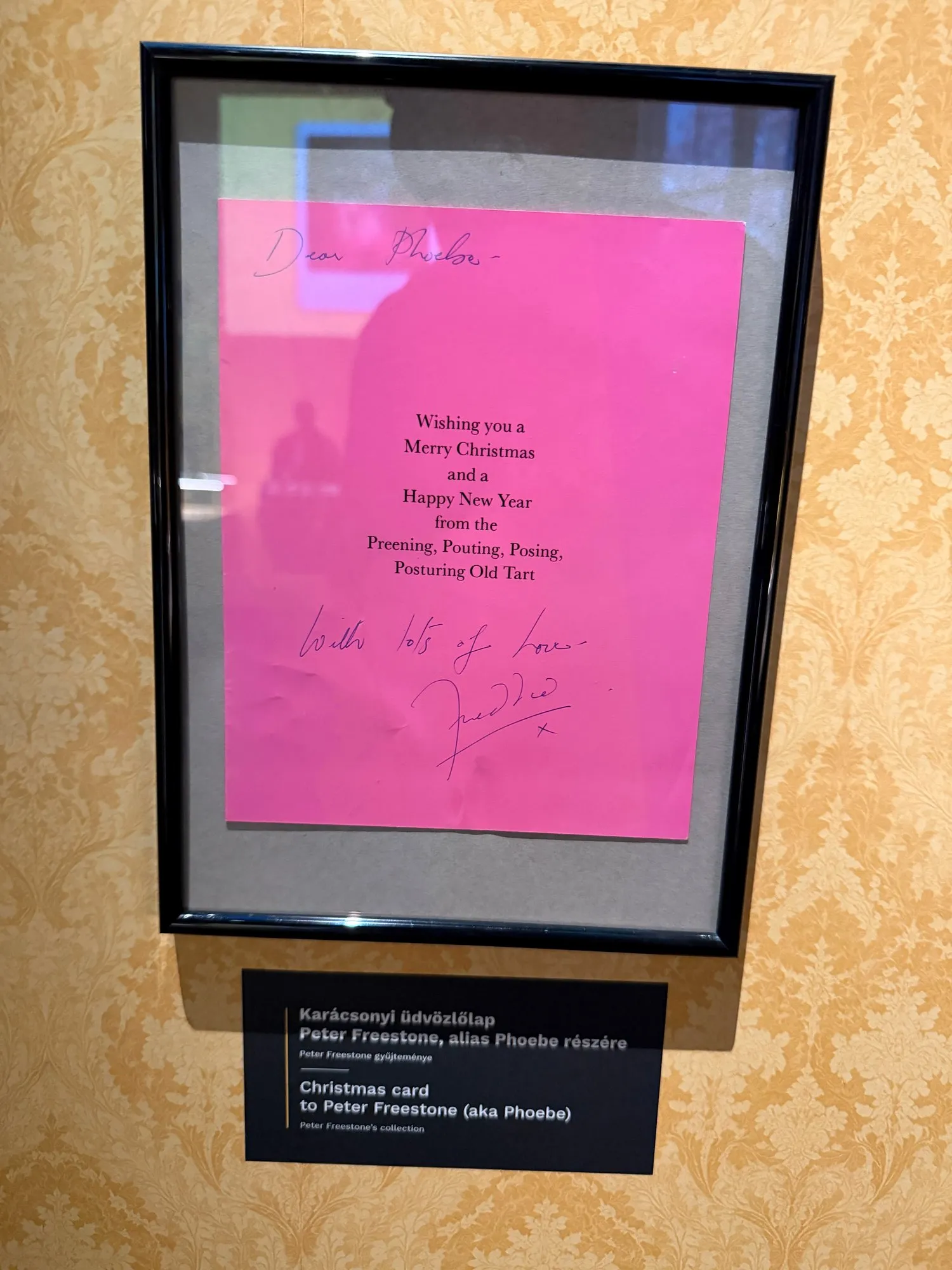
The weekend started on 6 November in the House of Music concert hall. The evening “Remembering Freddie Mercury” was hosted by Peter Freestone, a man who knew Freddie like few others did. They met in 1979 at a Royal Ballet gala, soon Peter was looking after Queen’s costumes, and from 1980 he was Freddie’s personal assistant: cook, butler, secretary, bodyguard and, in the final months, carer. He stayed with him to the end. Freddie called him “Phoebe”.
Peter talked about the tours, about everyday life at Garden Lodge and about Freddie’s last years.
Musically, the evening belonged to Milan Devinne and his band, who played Queen songs between the stories. Devinne is a Czech singer, producer and multi-instrumentalist, the only Czech performer to appear in the film “Bohemian Rhapsody”. He has worked with Peter for years and was his manager from 2017 to 2023. He also founded Up2Life, an organisation working on HIV and AIDS prevention, so the cause connects him to Freddie through more than music. With him were Michal Winter on drums, Daneš Marinica on piano and backing vocals, and Jan Vacek. Afterwards we exchanged a few words and Peter signed his books for me. In one of them, on a photo of Garden Lodge with the magnolia in bloom, he wrote that it was a house full of friends, laughing and crying, but almost always happy.
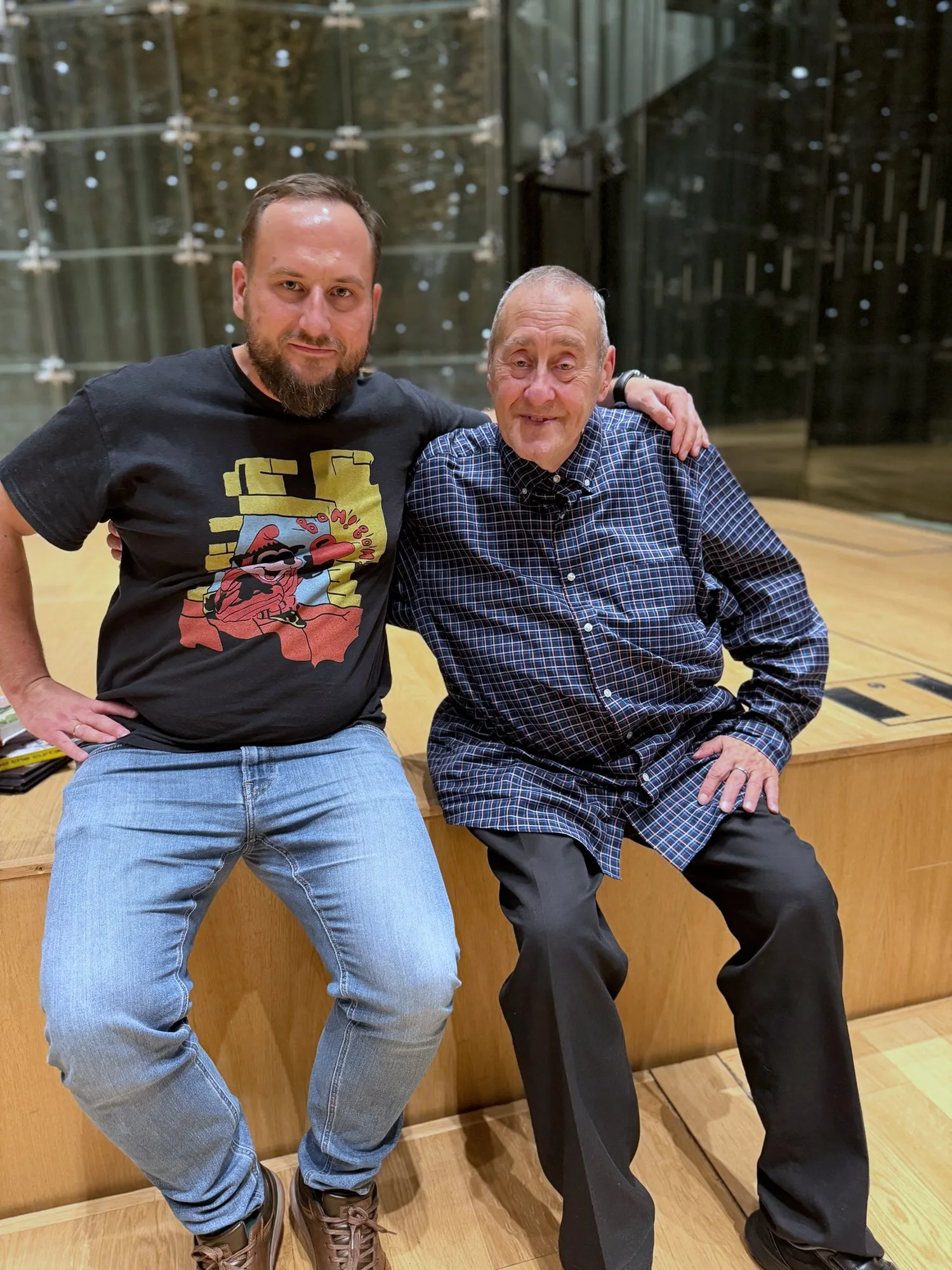
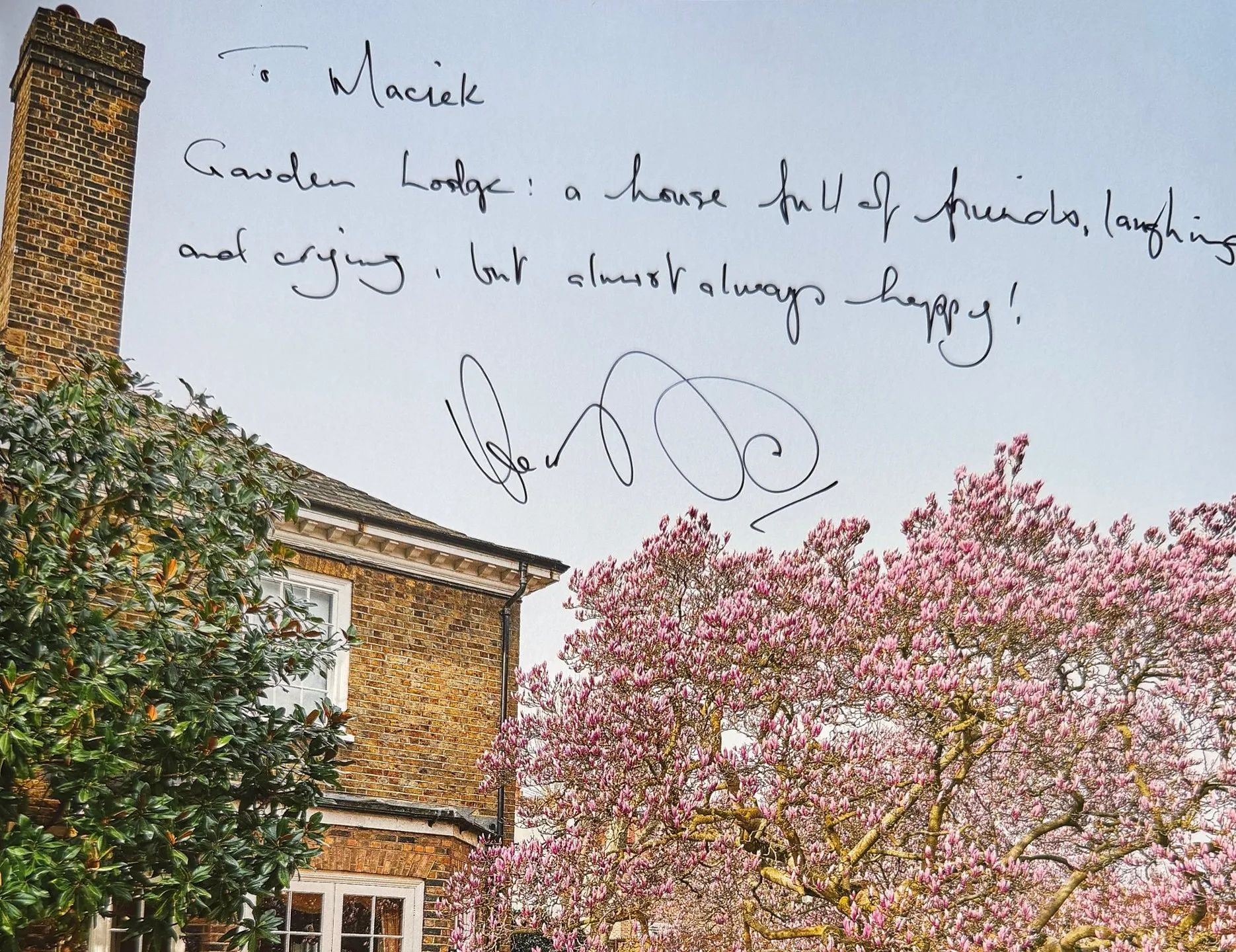
It wasn’t our first meeting this season. A few weeks earlier, Peter and Mike Moran were in Gdańsk for “A Night At The Philharmonic” at the Polish Baltic Philharmonic, celebrating what would have been Freddie’s 80th birthday. Twice in three weeks with people who were by Freddie’s side so often. You can’t plan that.
Peter in your headphones
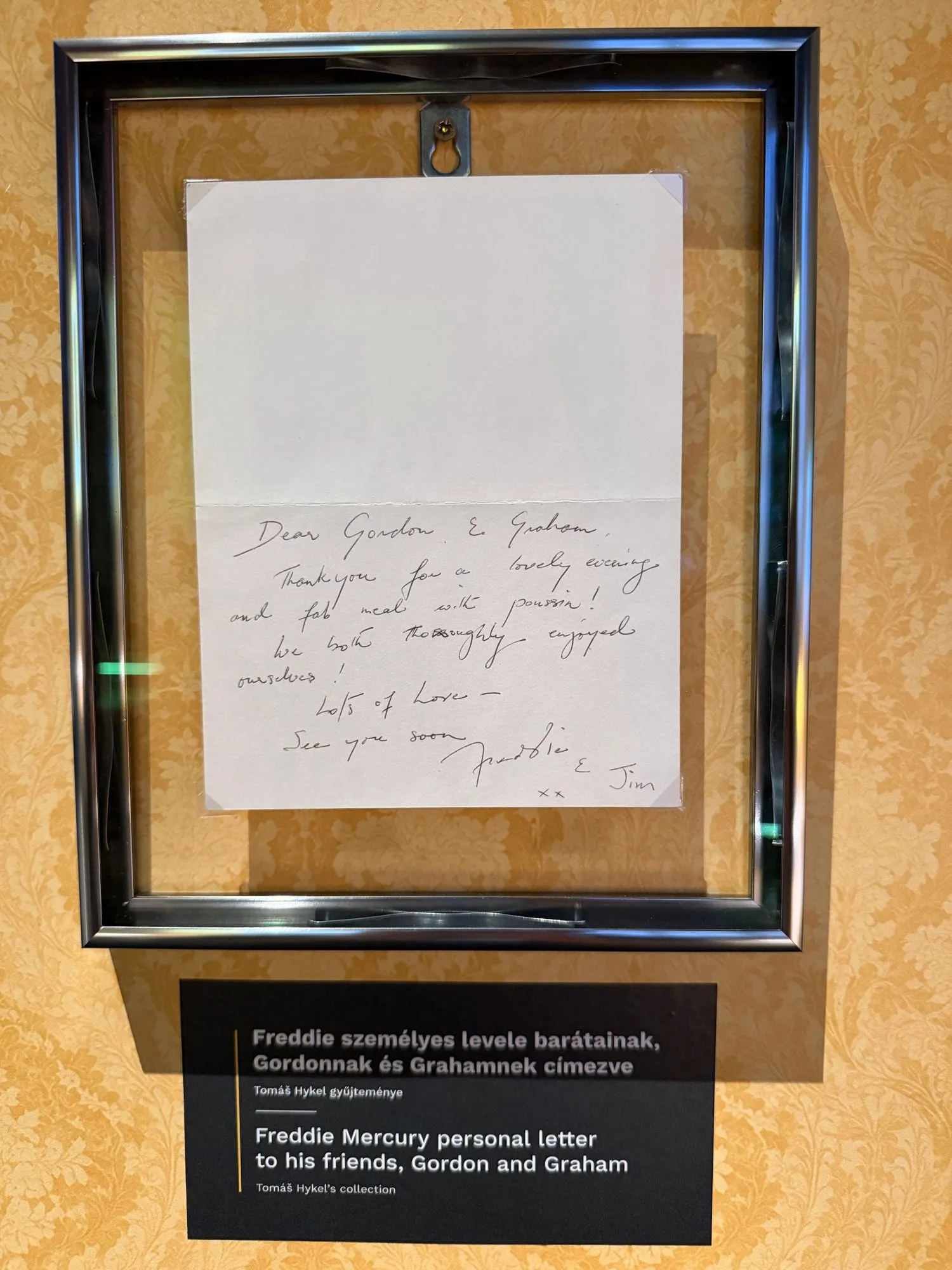
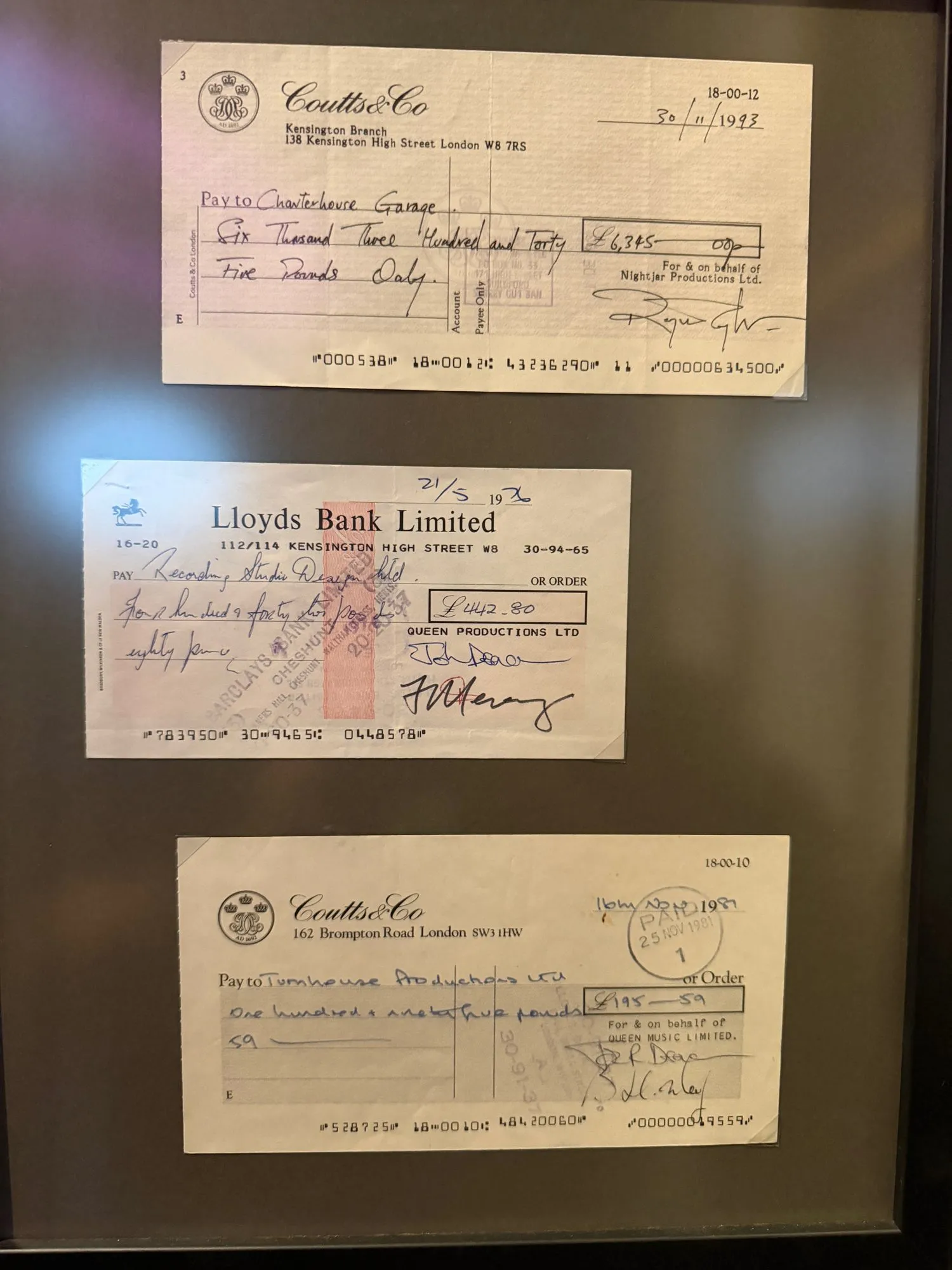
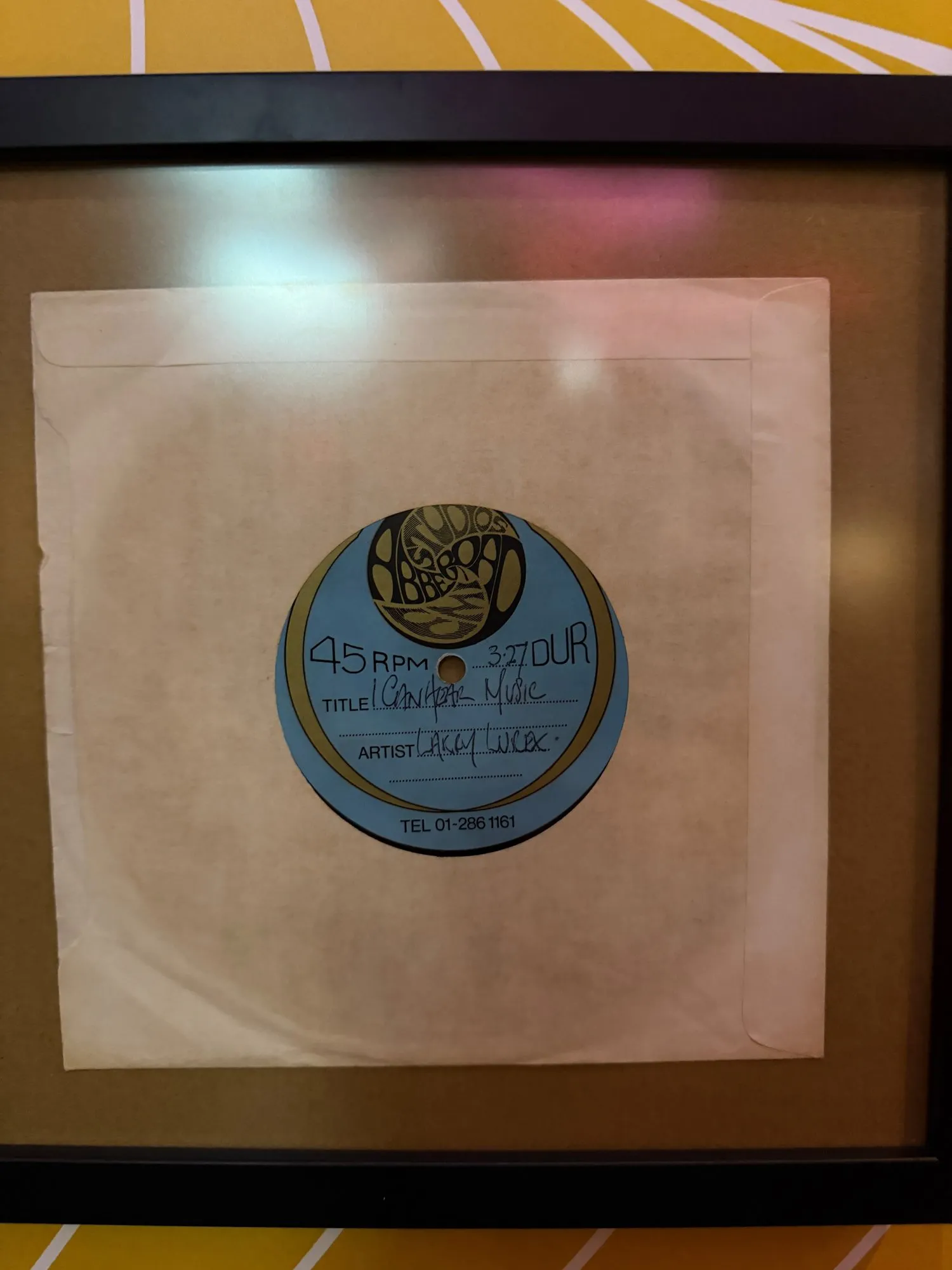
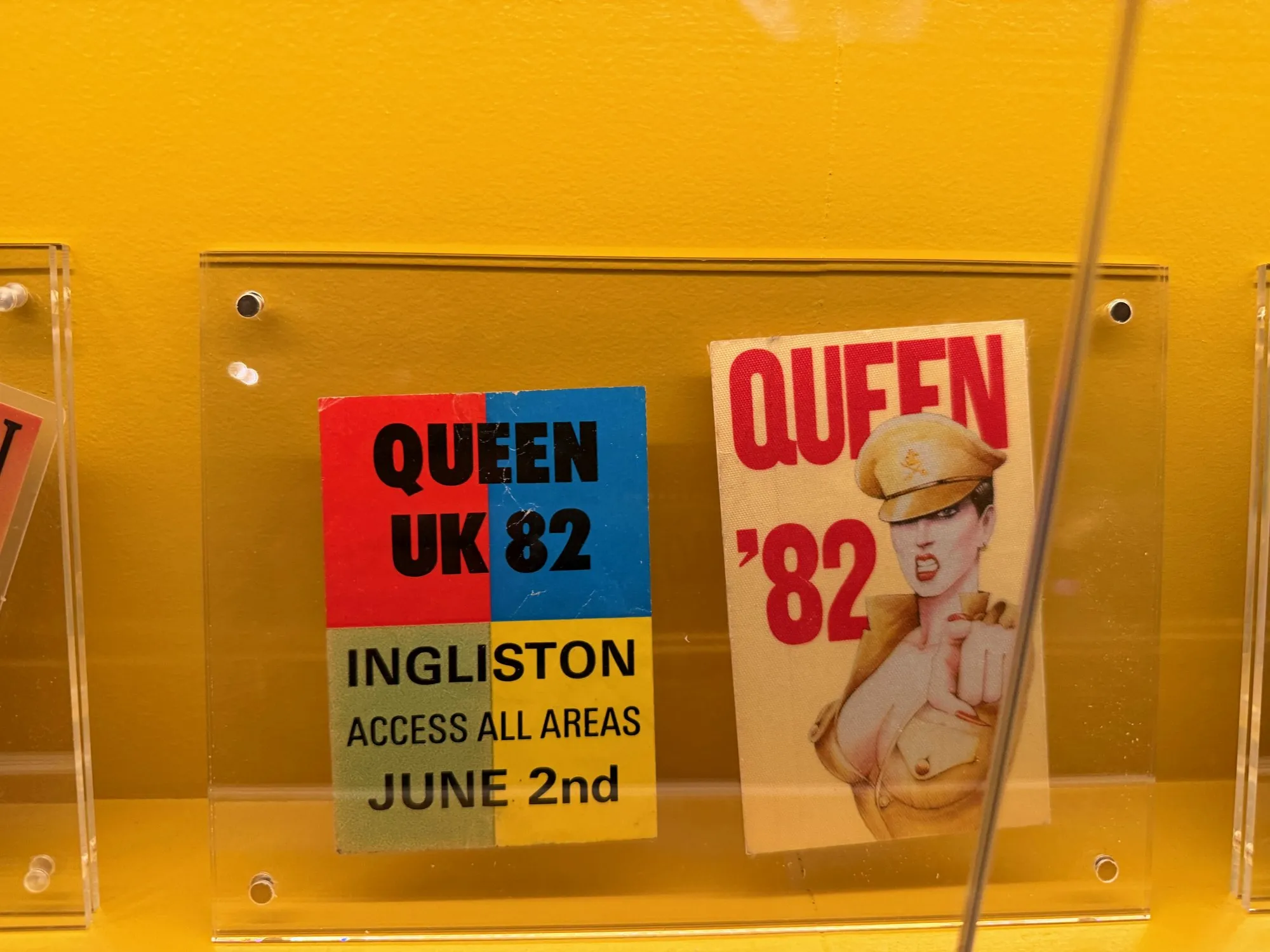
The exhibition was put together by the House of Music Hungary and World of Freddie, Tomáš Hykel’s collection. It isn’t a textbook history of Queen but a series of spaces: the beginnings, the big concerts, the music videos, songwriting, the parties, home, passions and the final years. Stage costumes, manuscripts, furniture, little things from drawers and cupboards.
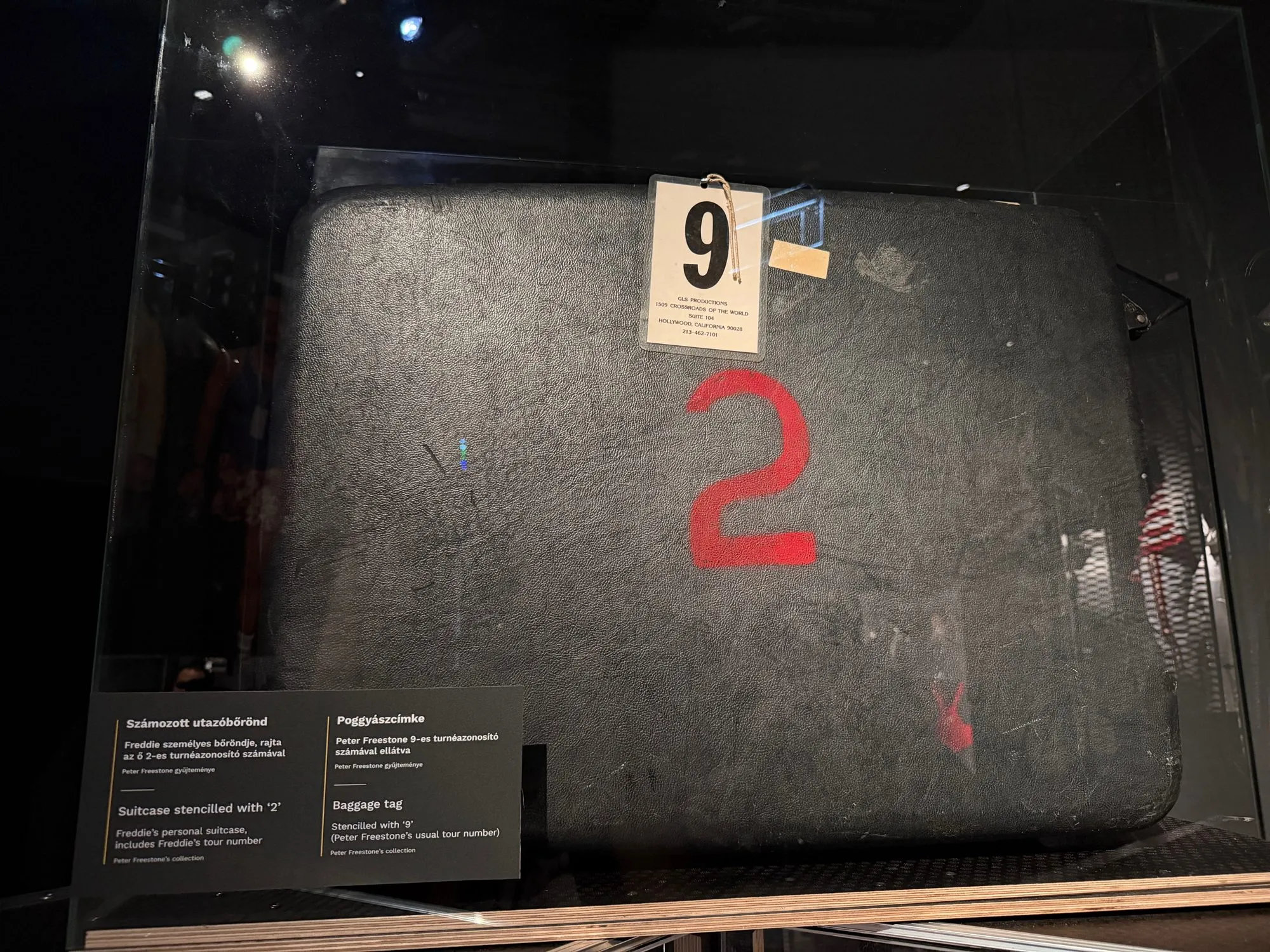
Peter Freestone guides you through the whole route. It’s his voice in the headphones at each display and his face on the screens. After the evening before, it felt completely different, because I had already heard some of these stories from Peter in person. Many of the exhibits come from his own collection, including Freddie’s suitcase with the number 2 stencilled on it. Everyone on the crew had their own luggage number on tour. Peter’s was nine.
From £60 a gig to stadiums
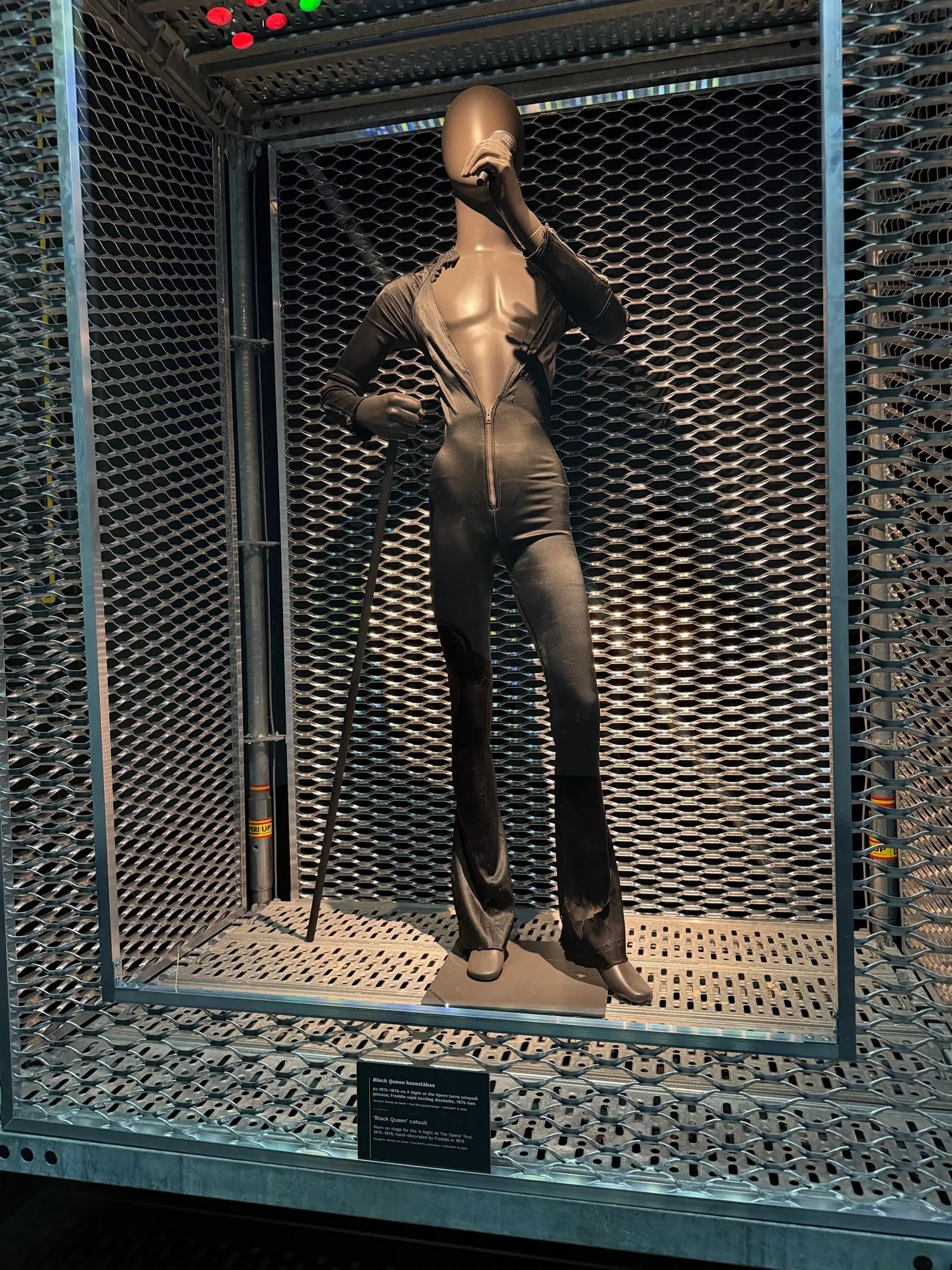
The stage costumes stand in metal cages, like parts of a stage rig. The red sequinned catsuit with short legs was designed by Natasha Korniloff. Freddie wore it on the European News of the World tour in 1978 and a year later in Japan, on the Live Killers tour. Yes, the same one this blog is named after.
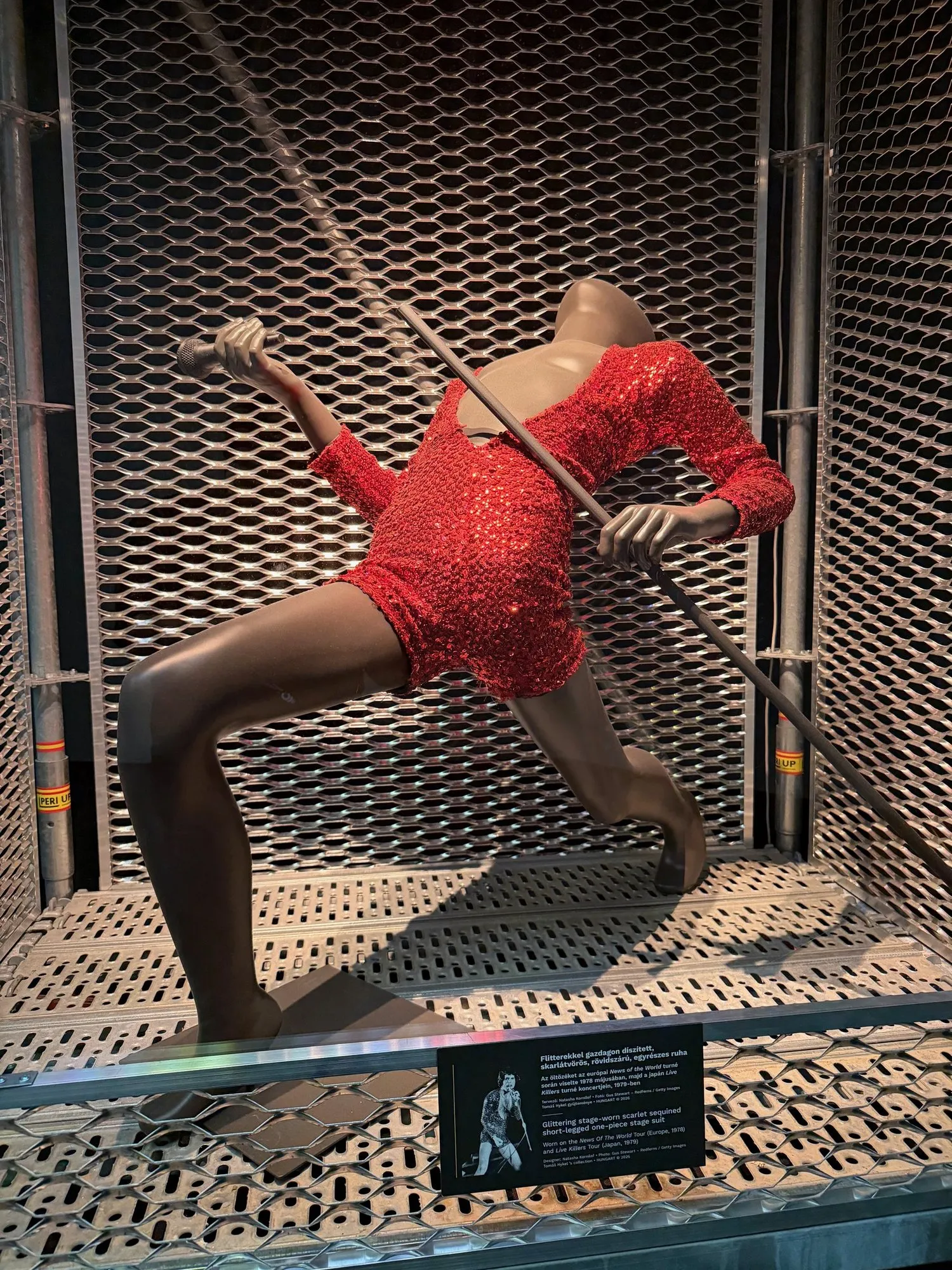
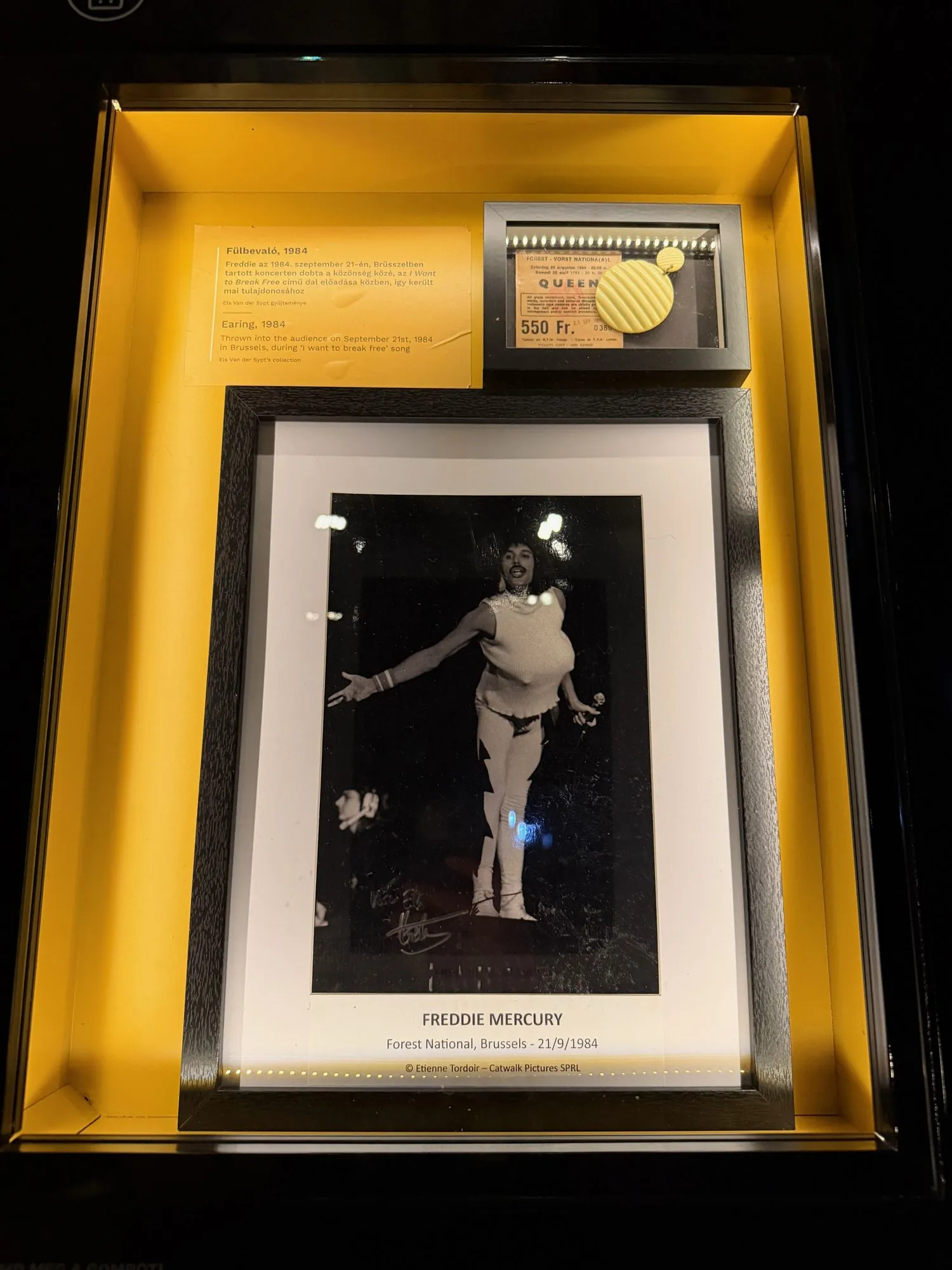
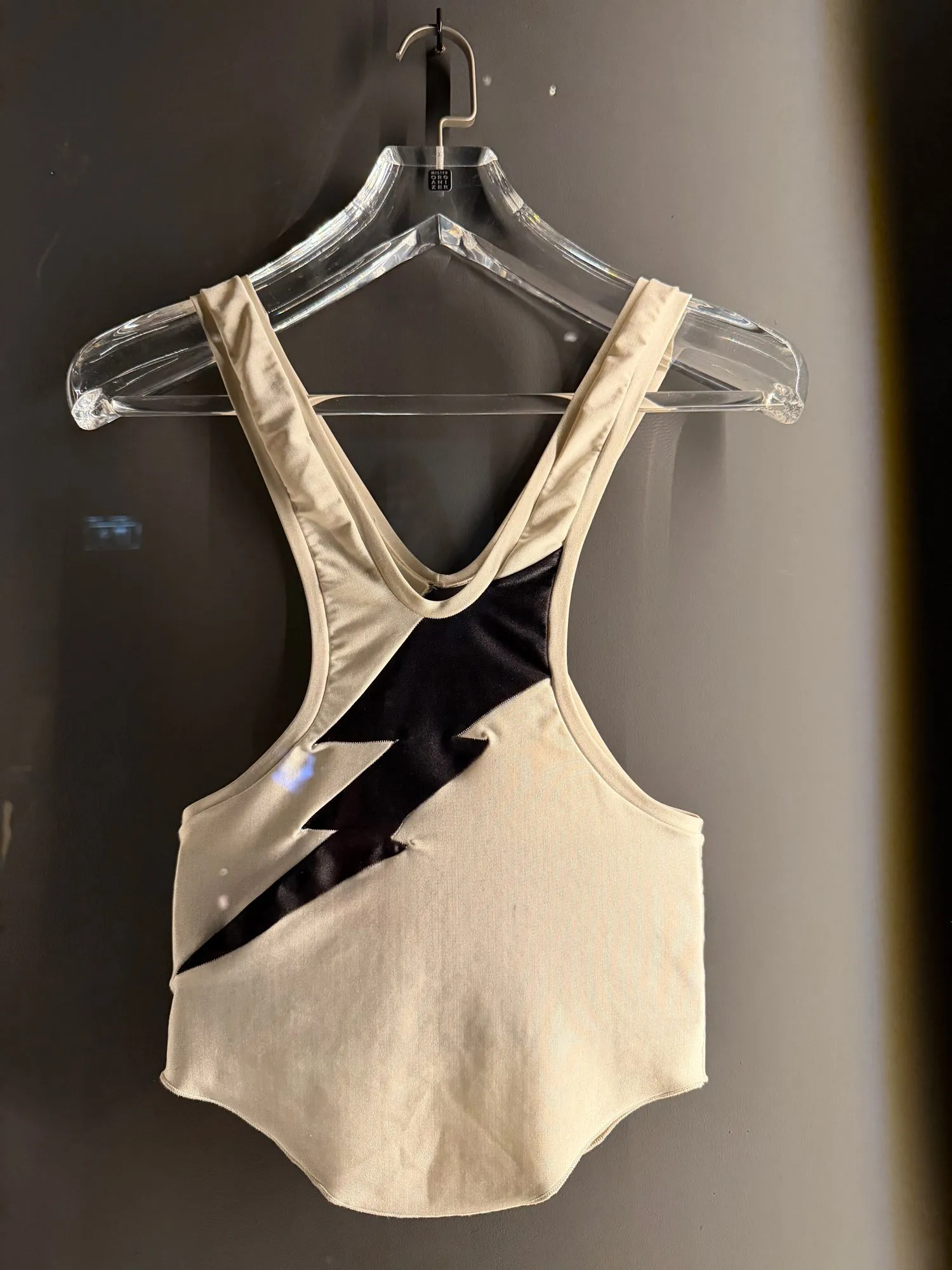
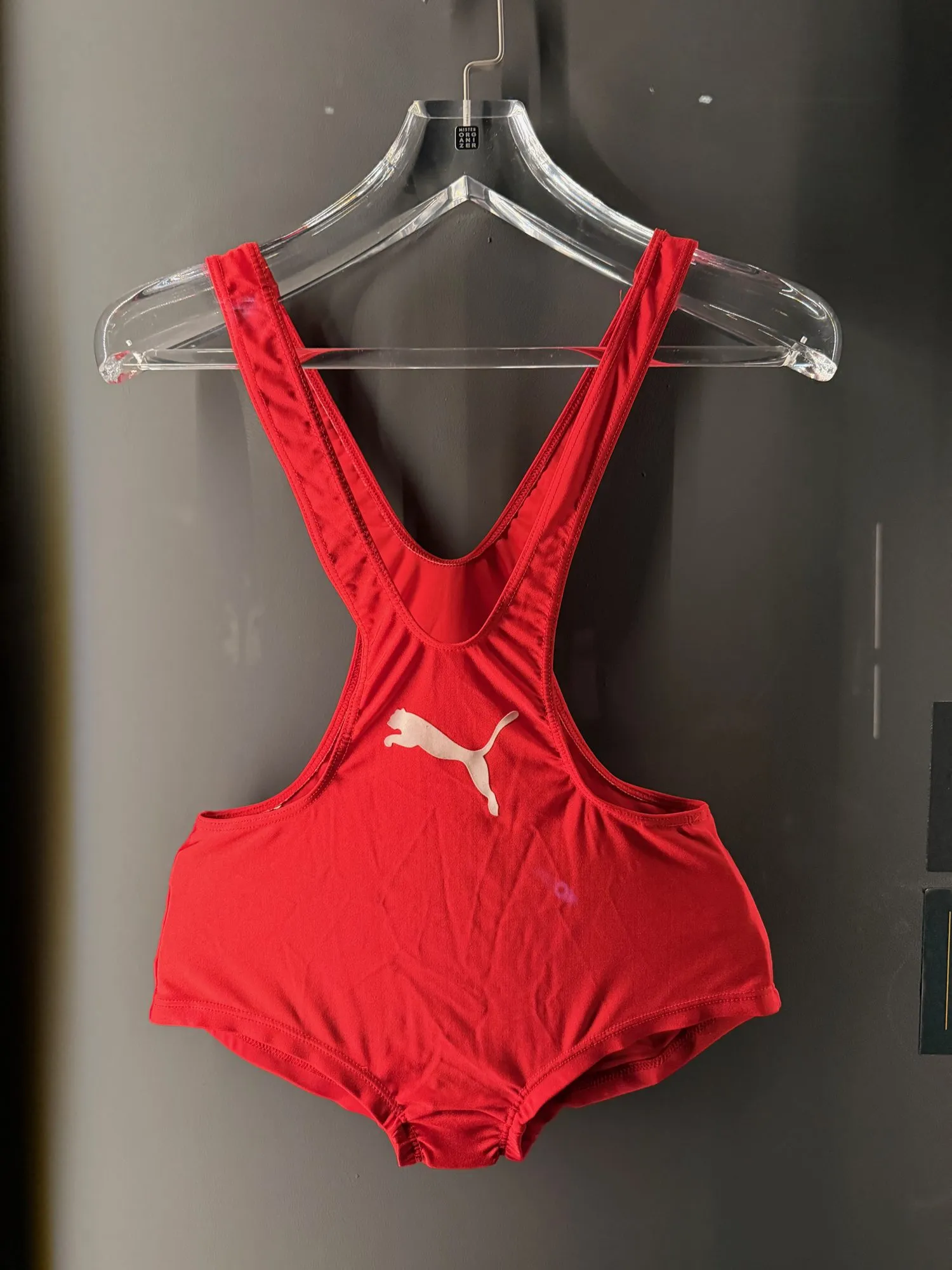
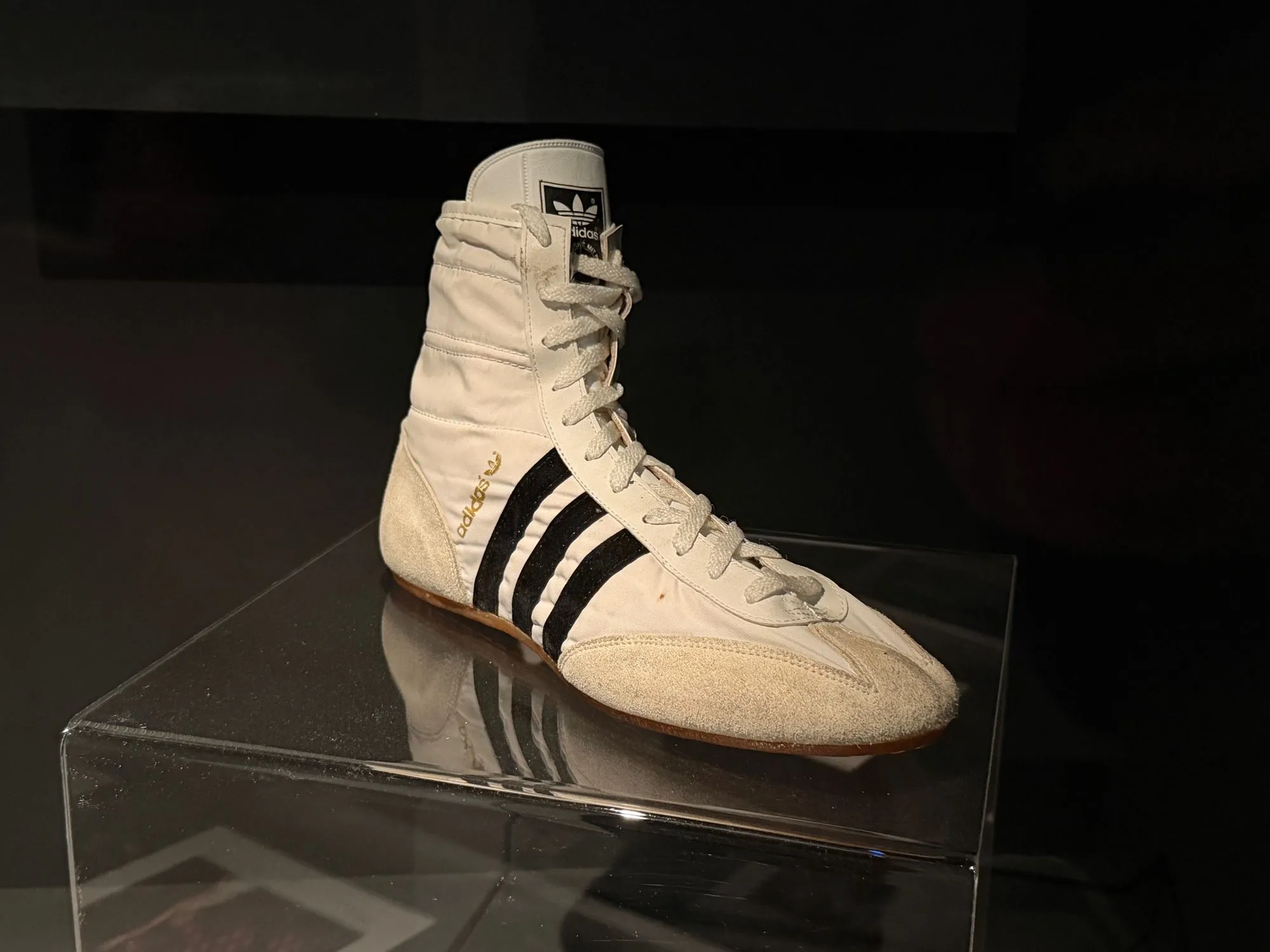
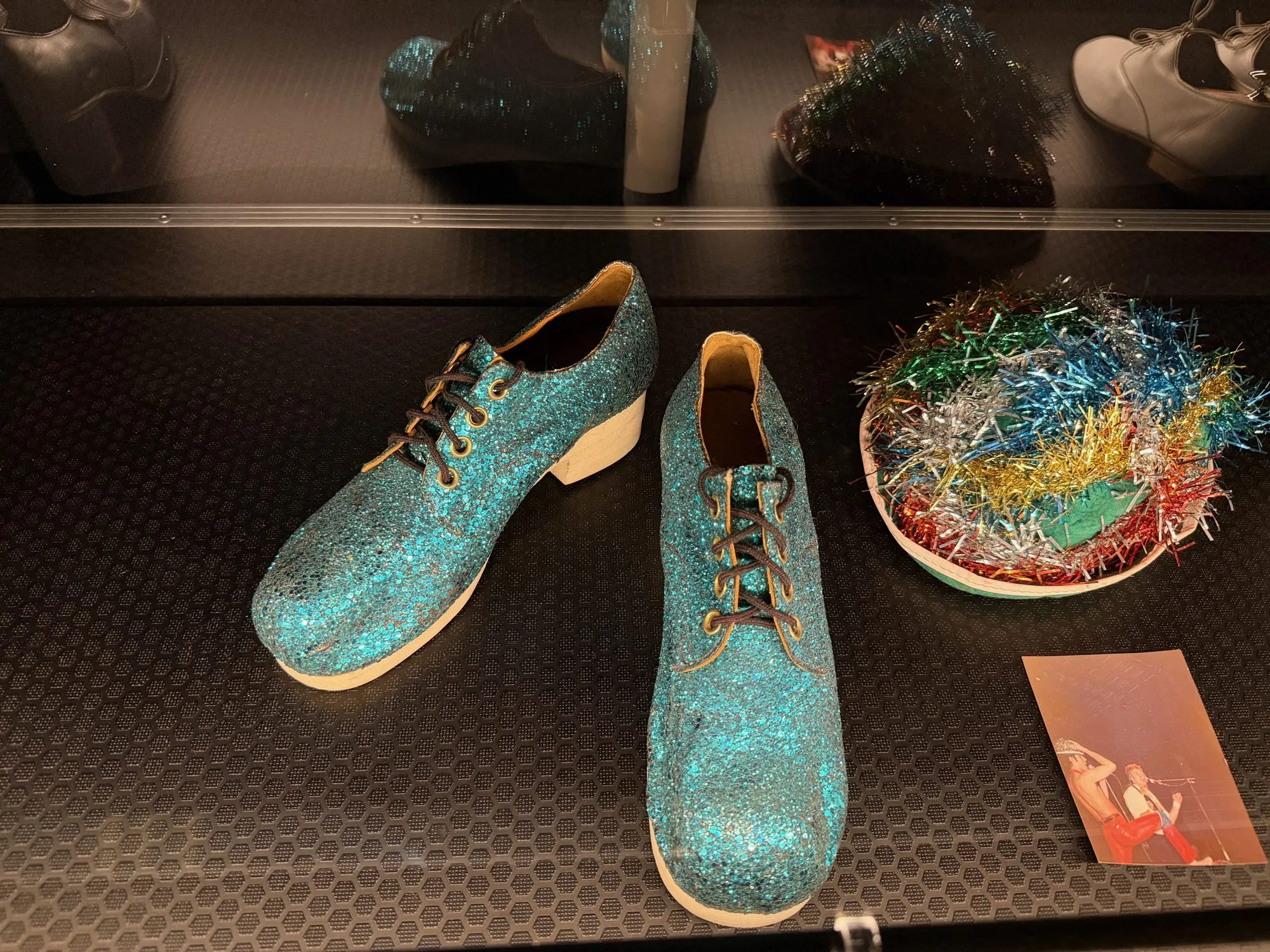
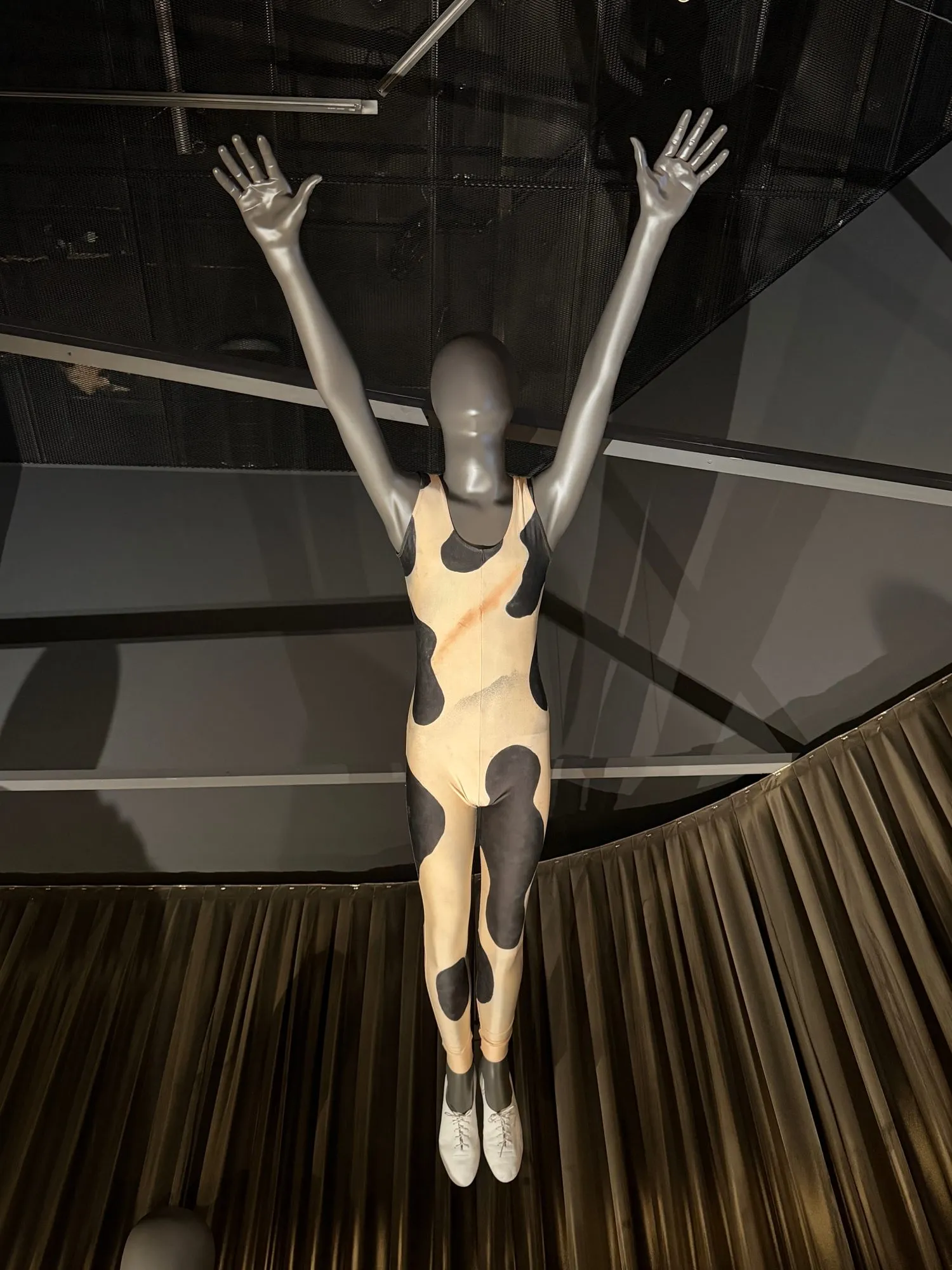
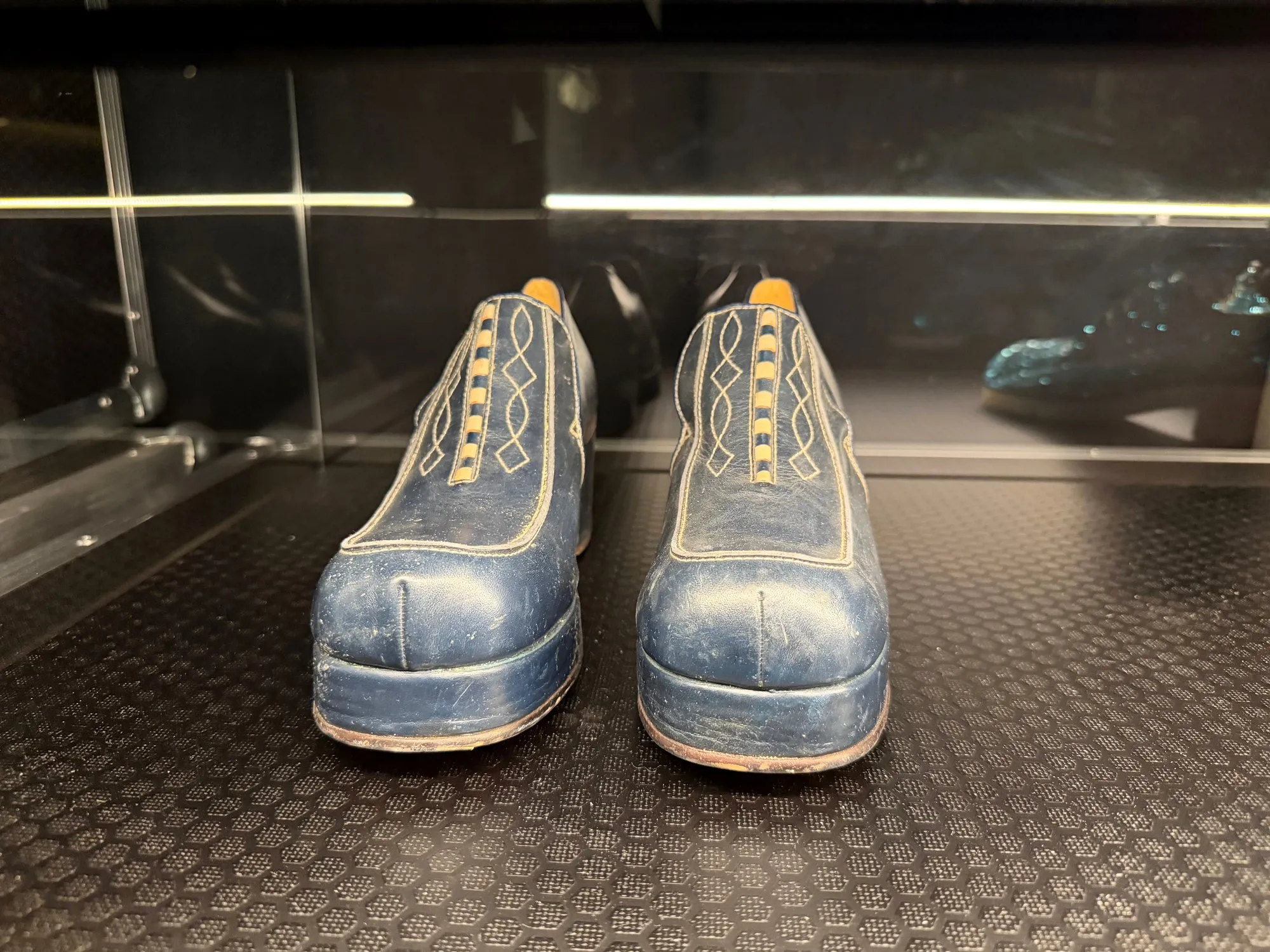
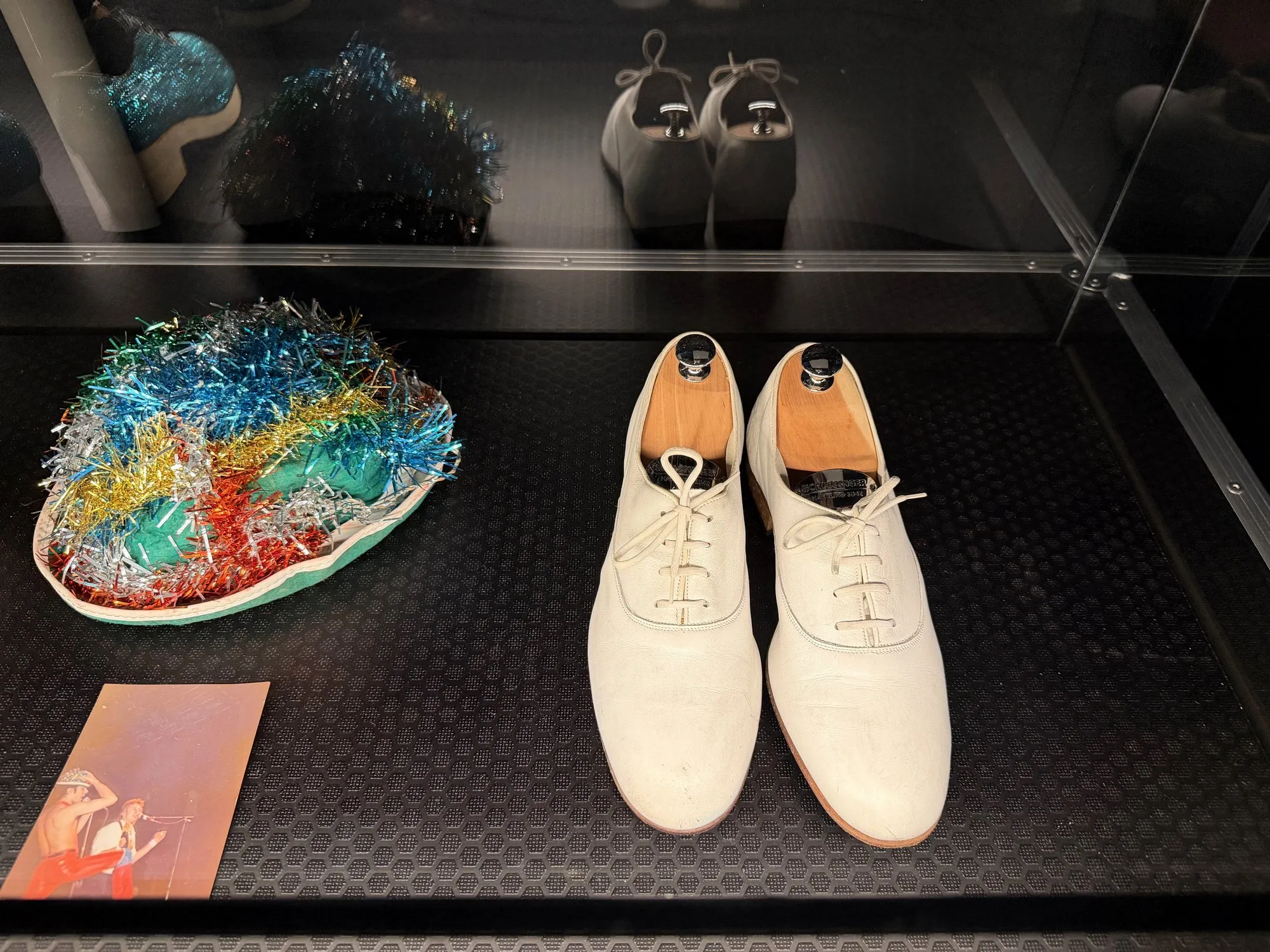
From the 1980s there is the lightning bolt leotard from The Works tour and white Adidas shoes with black stripes. According to the label, Freddie first wore this kind on The Works Tour in 1984, and from then on they were his main stage footwear. There is also a small object with a big story: an earring he threw into the crowd in Brussels on 21 September 1984 during “I Want to Break Free”. Someone caught it and kept it together with their ticket.
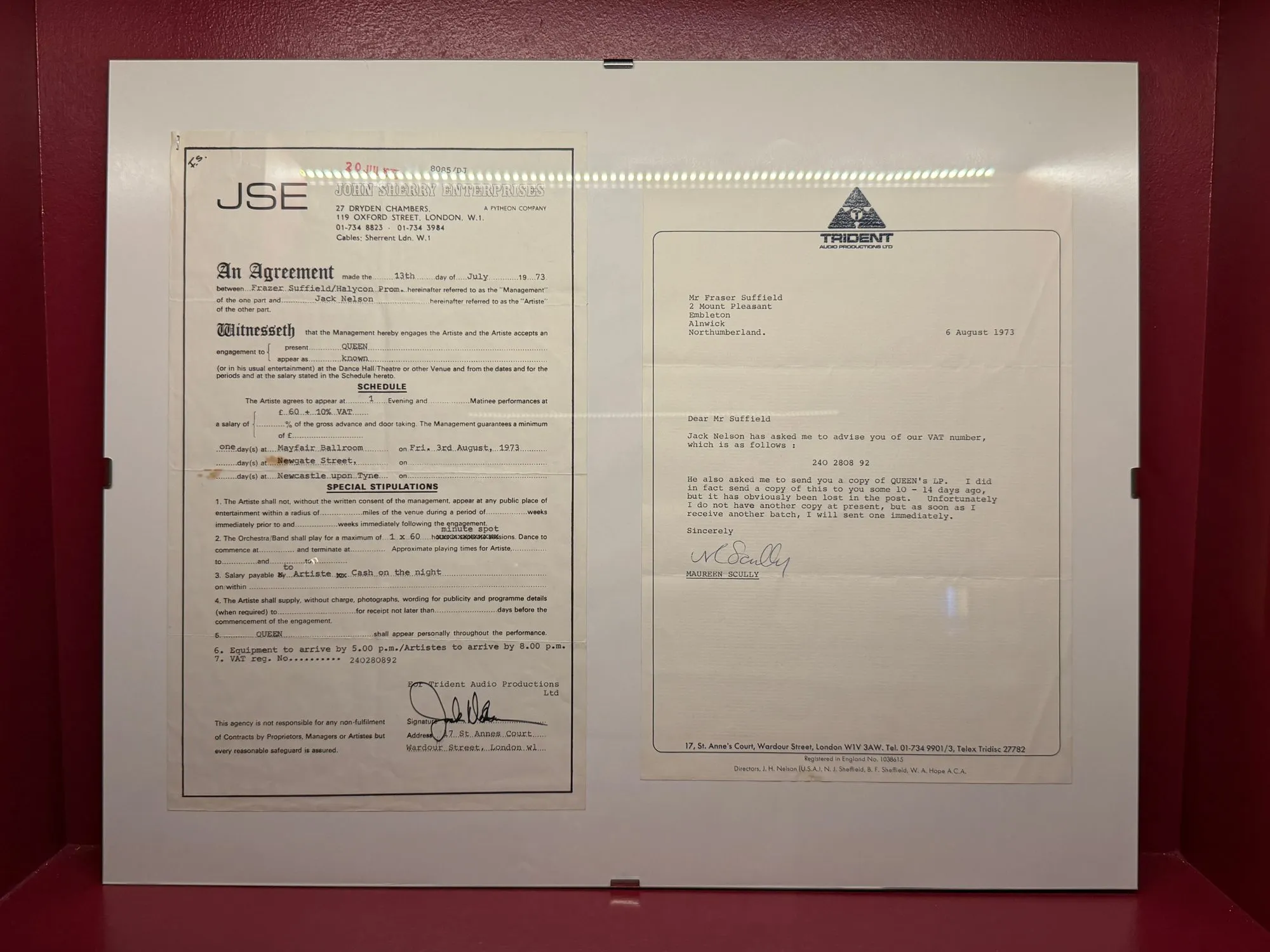
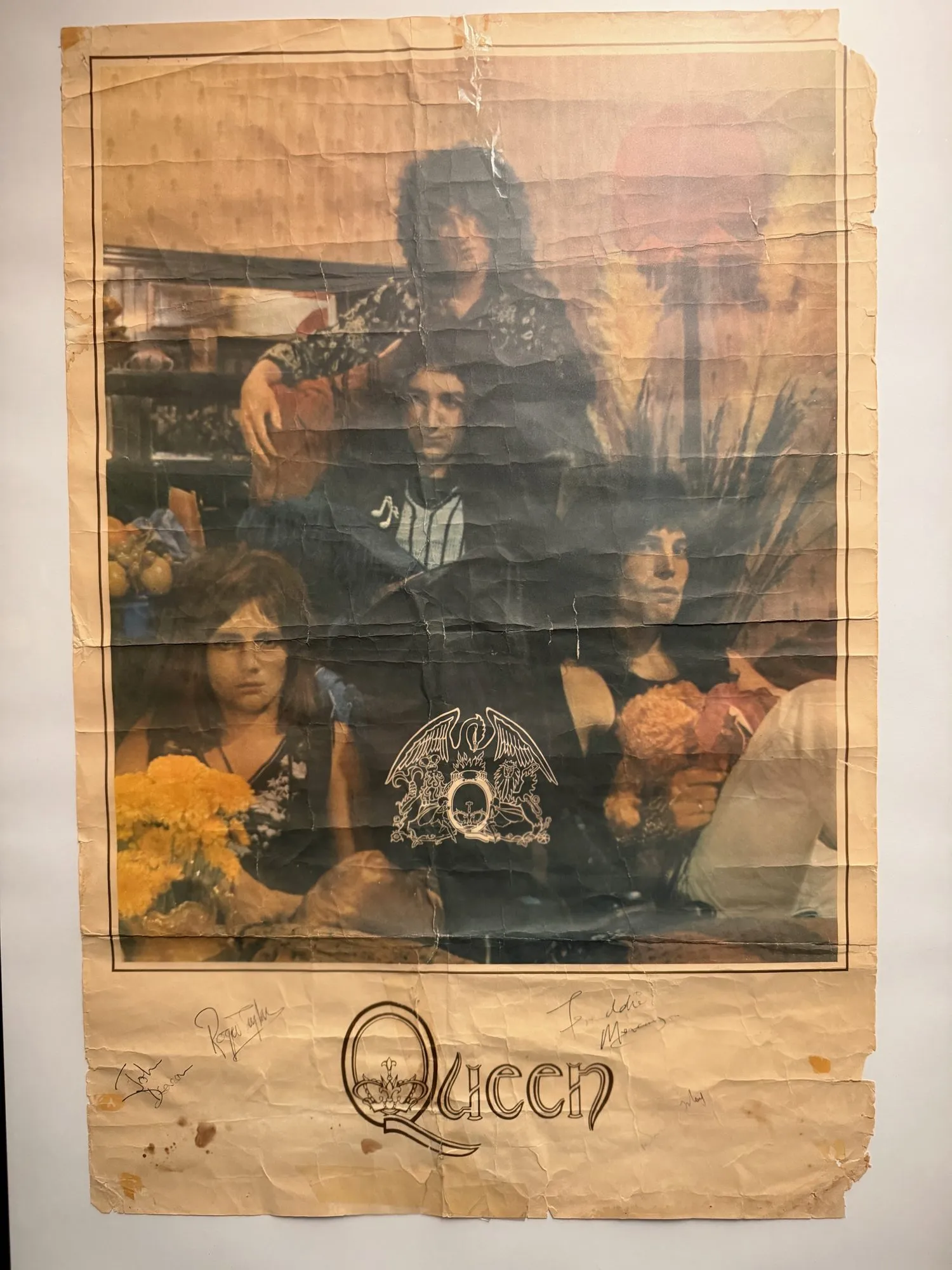
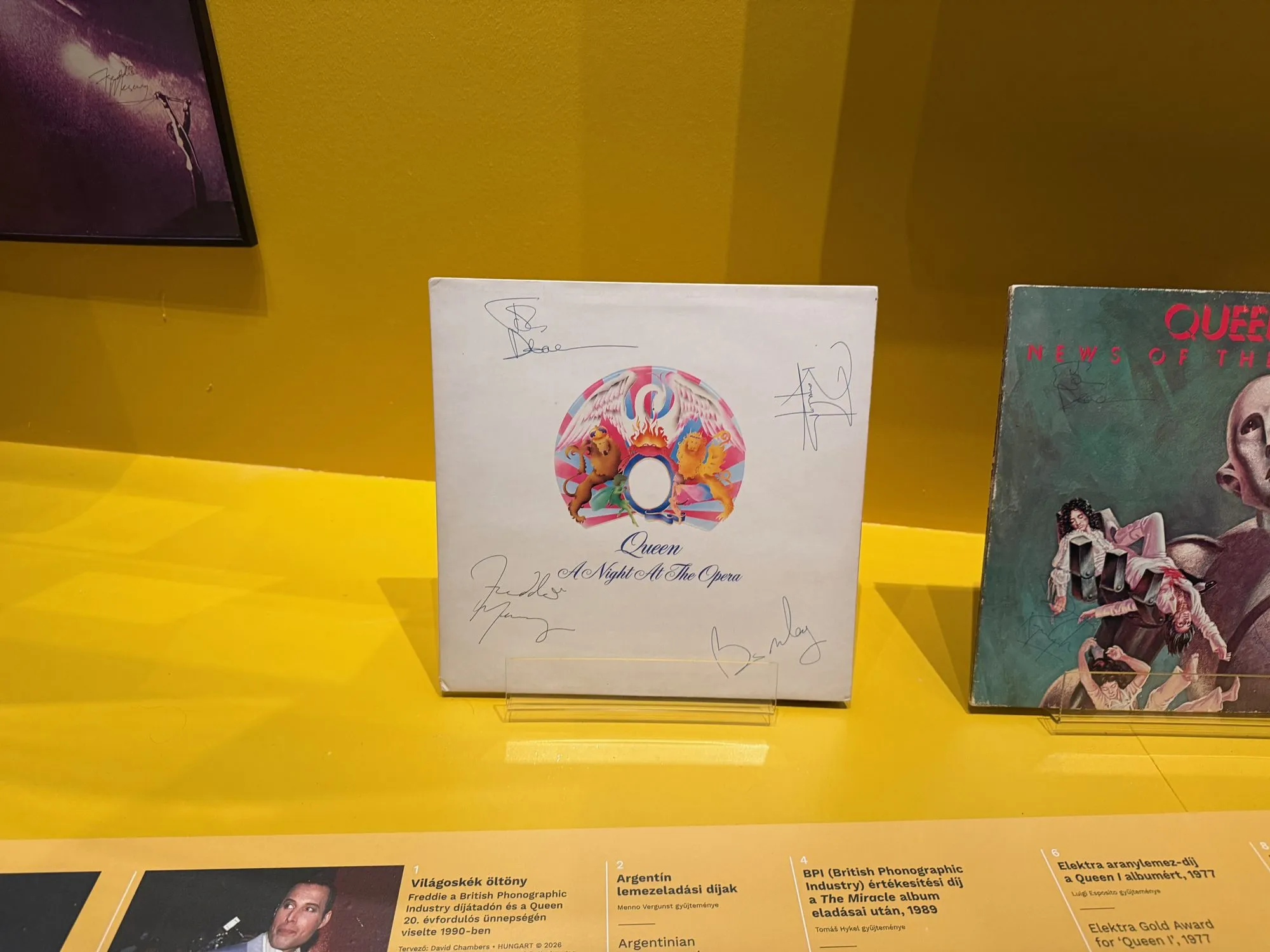
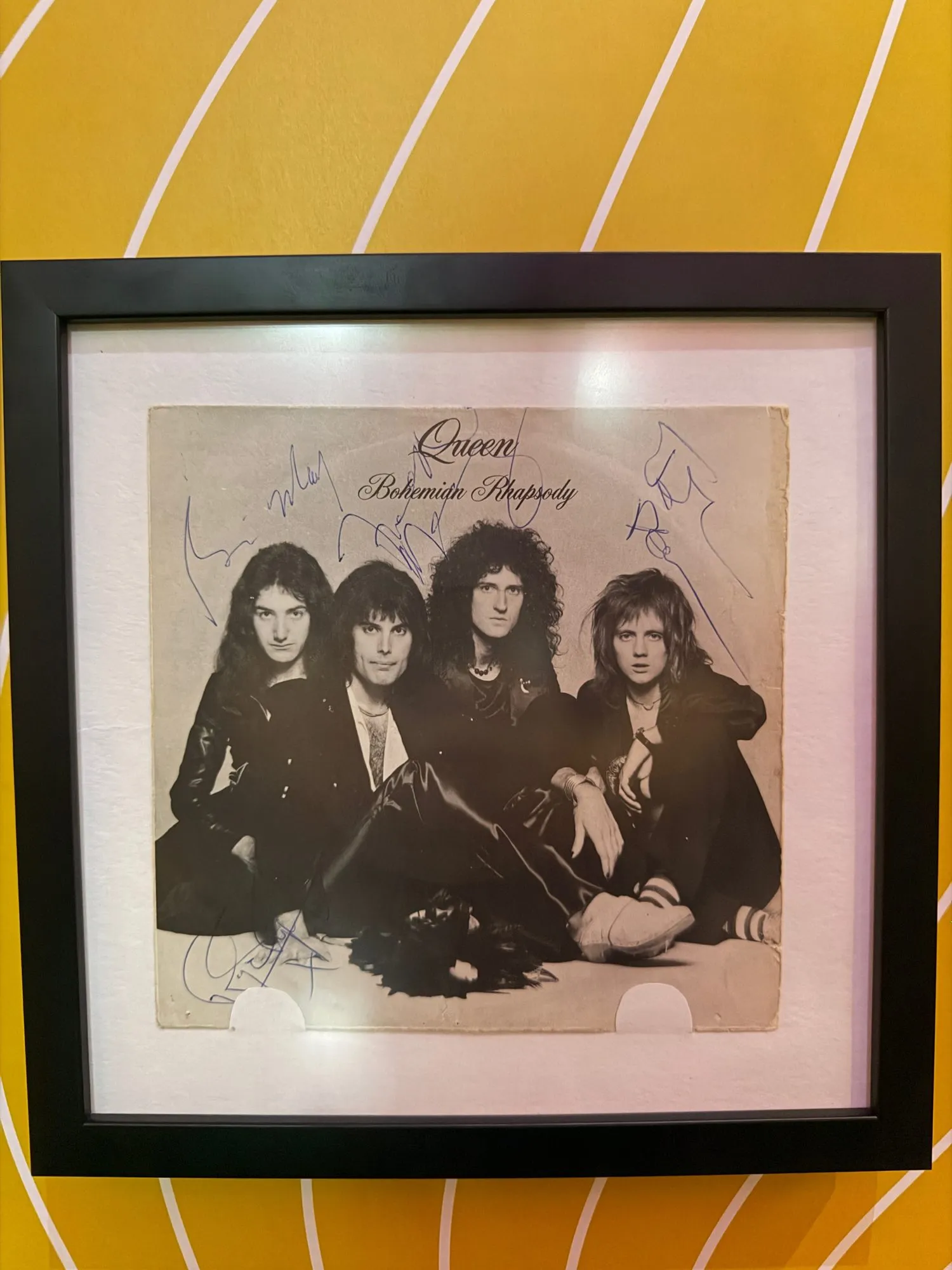
Against all this, two keepsakes from the very beginning hit even harder. The first is the contract for a Queen show at the Mayfair Ballroom in Newcastle on 3 August 1973: one one-hour set, £60 plus VAT, cash on the night. The contract is dated 13 July 1973, the day the band’s debut album came out. Next to it is a letter from Trident Audio Productions apologising that the copy of the album sent earlier “appears to have been lost in the post”. The second is a 1973 promotional poster signed by all four.
Budapest 1986: a concert behind the Iron Curtain
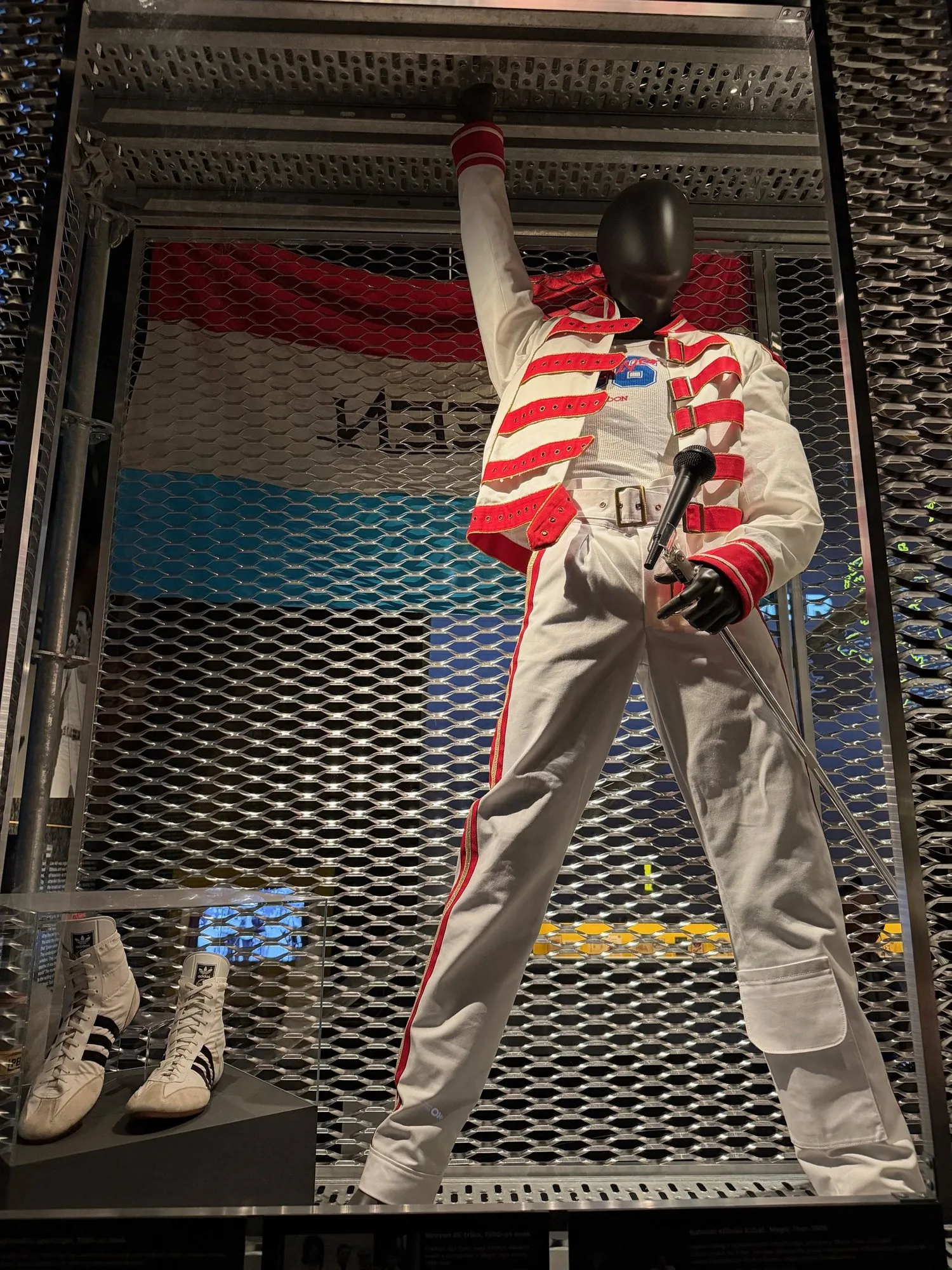
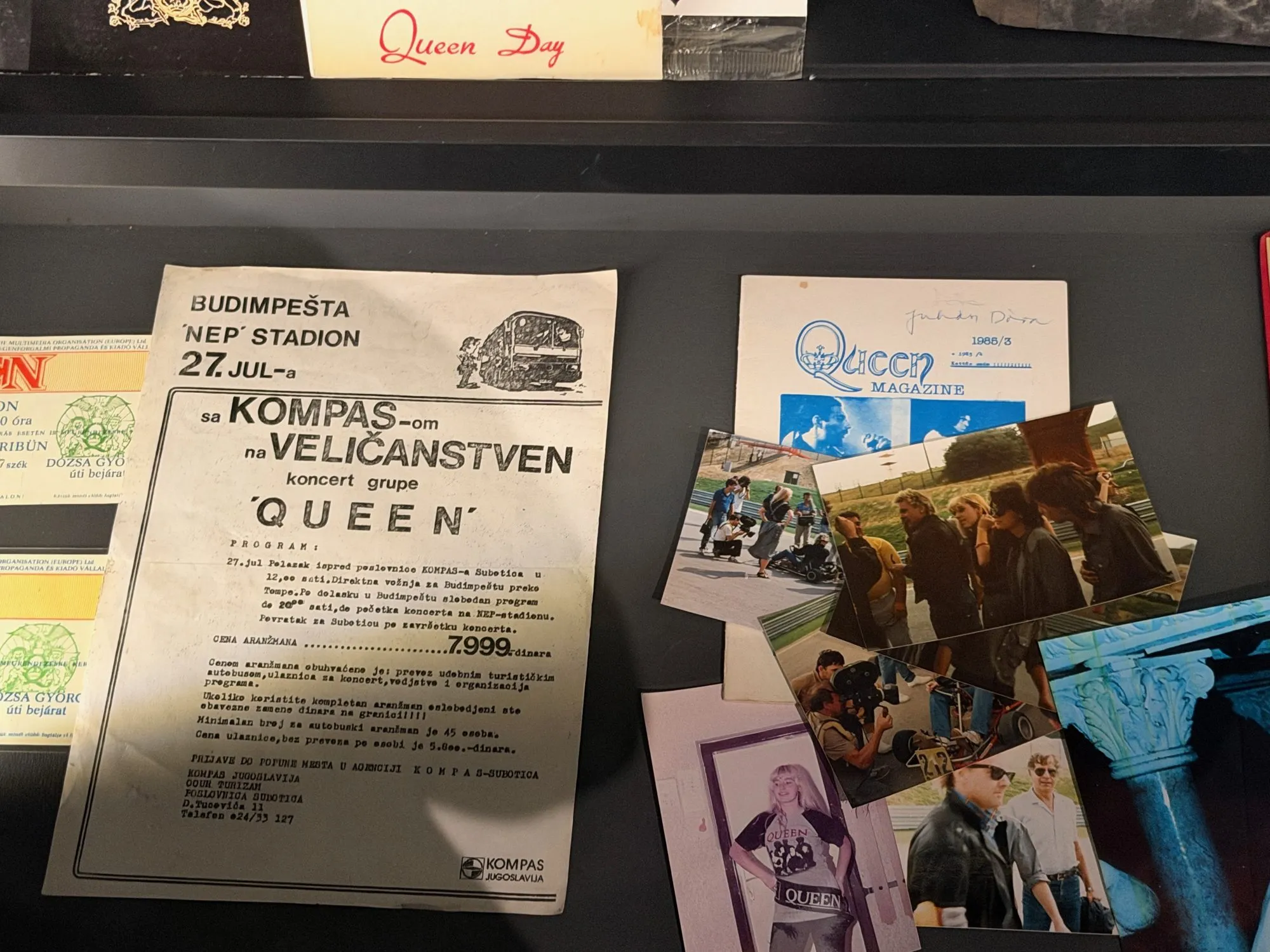
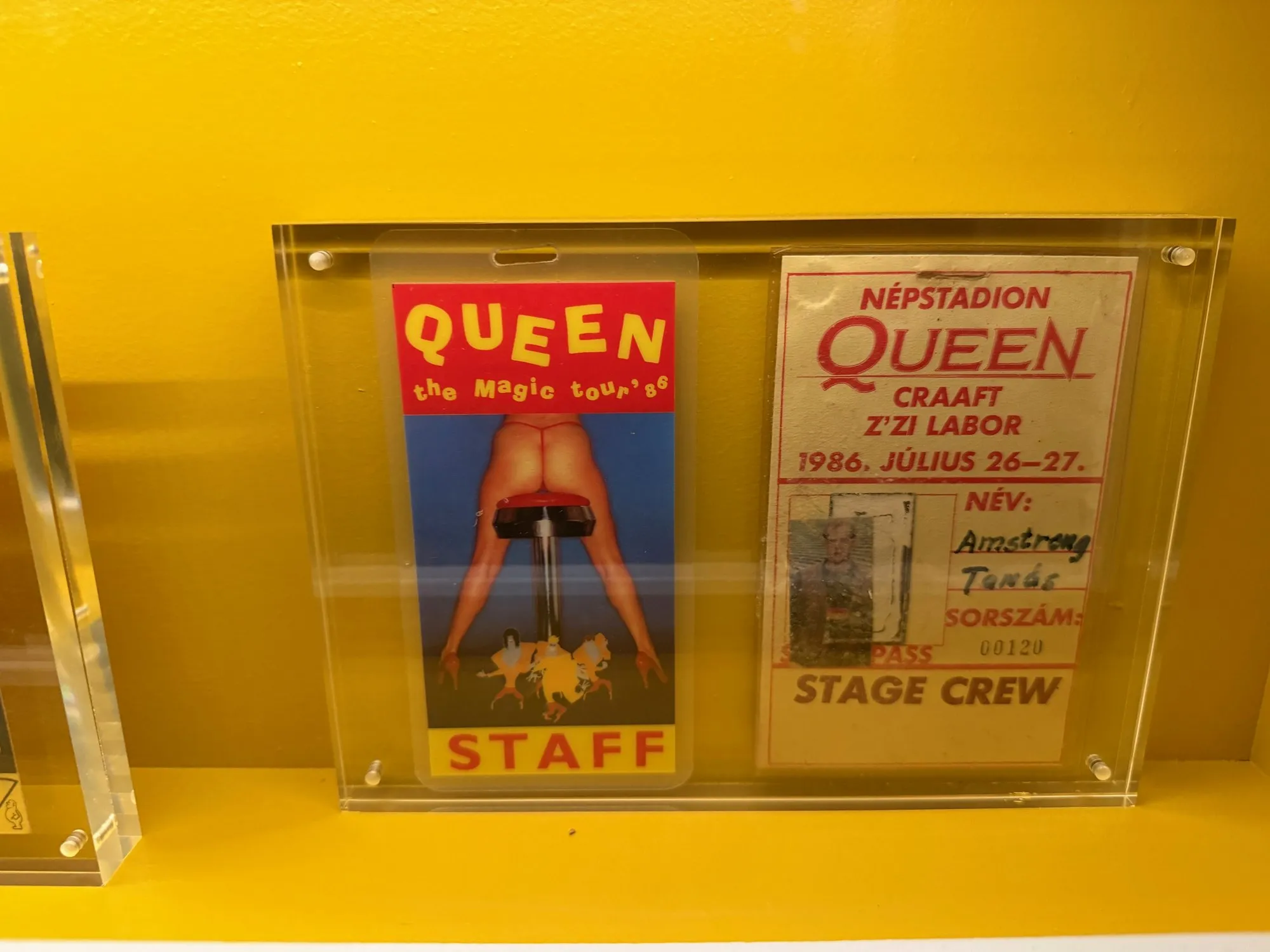
The exhibition marks the 40th anniversary of the concert, so the Hungarian story has its own section. On 27 July 1986 Queen played the Népstadion, the first major rock band to play a stadium in the Eastern Bloc. Around 80,000 people were in the stands, and according to accounts from the time, tens of thousands more listened outside. People came from all over the Bloc, Poland included.
The best detail comes from the exhibition label: Hungary didn’t have enough hard currency to pay the band its usual fee. So the promoter, László Hegedűs, proposed covering a large part of it by filming the concert. Seventeen cameras recorded the show; the film “Magic: Queen in Budapest” was directed by János Zsombolyai and produced by György Mihály. The band arrived by hydrofoil from Vienna and stayed in the city for almost a week.
And in the middle of the show, Freddie and Brian May, alone with an acoustic guitar, performed “Tavaszi szél vizet áraszt”, a Hungarian folk song. Freddie had the lyrics written phonetically on his hand. The whole stadium sang along, and it’s a moment Hungary still remembers.
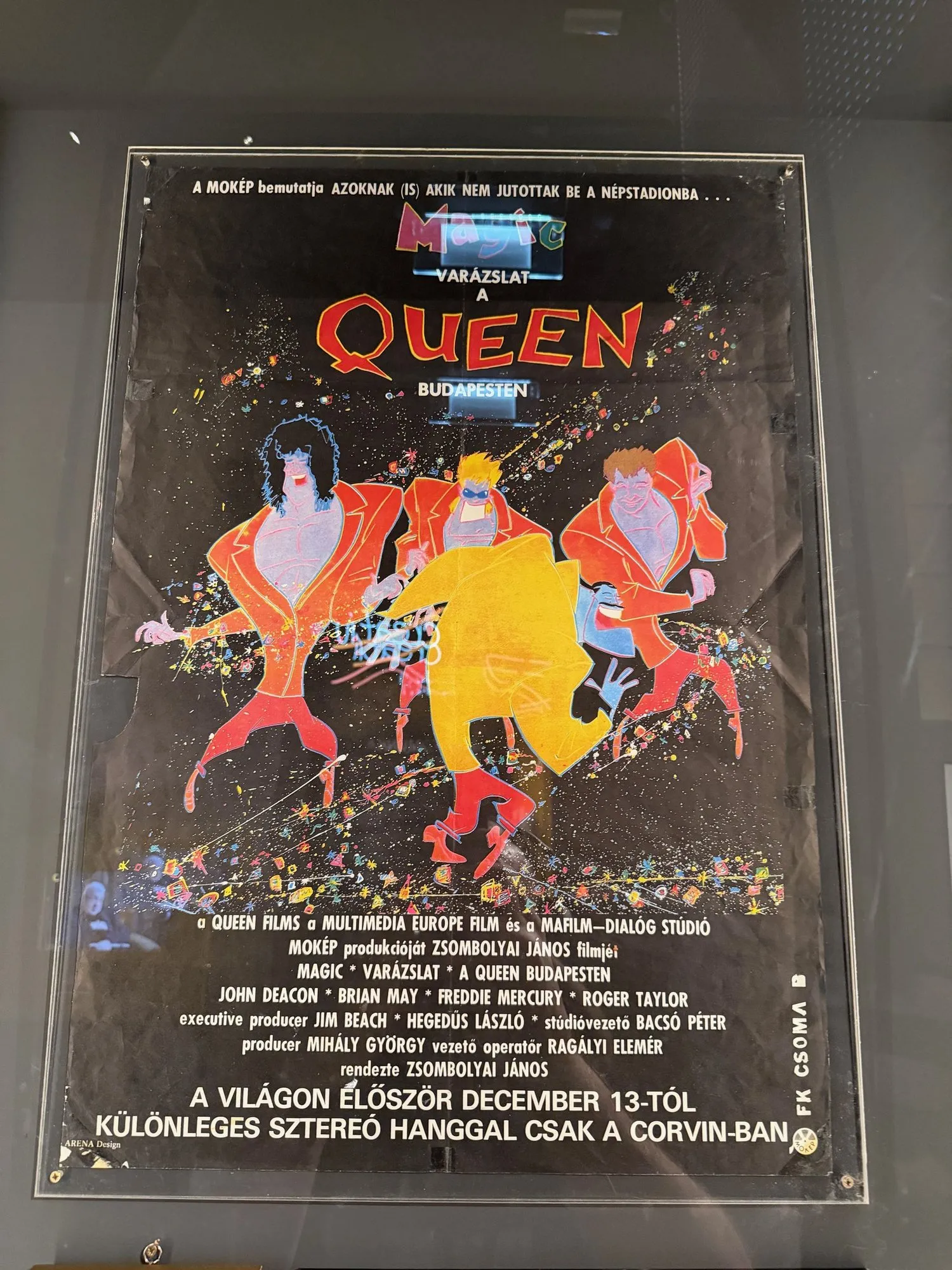
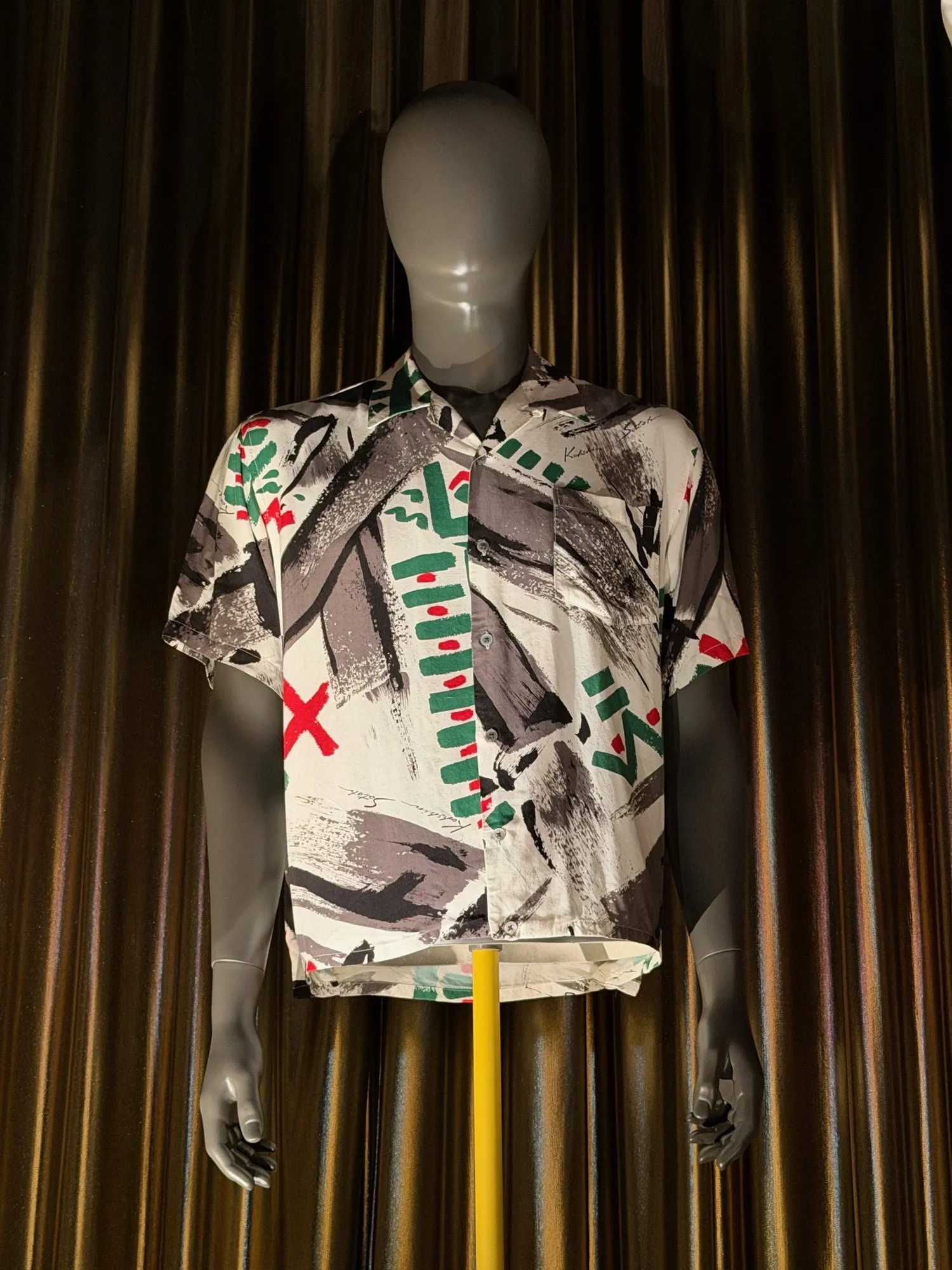
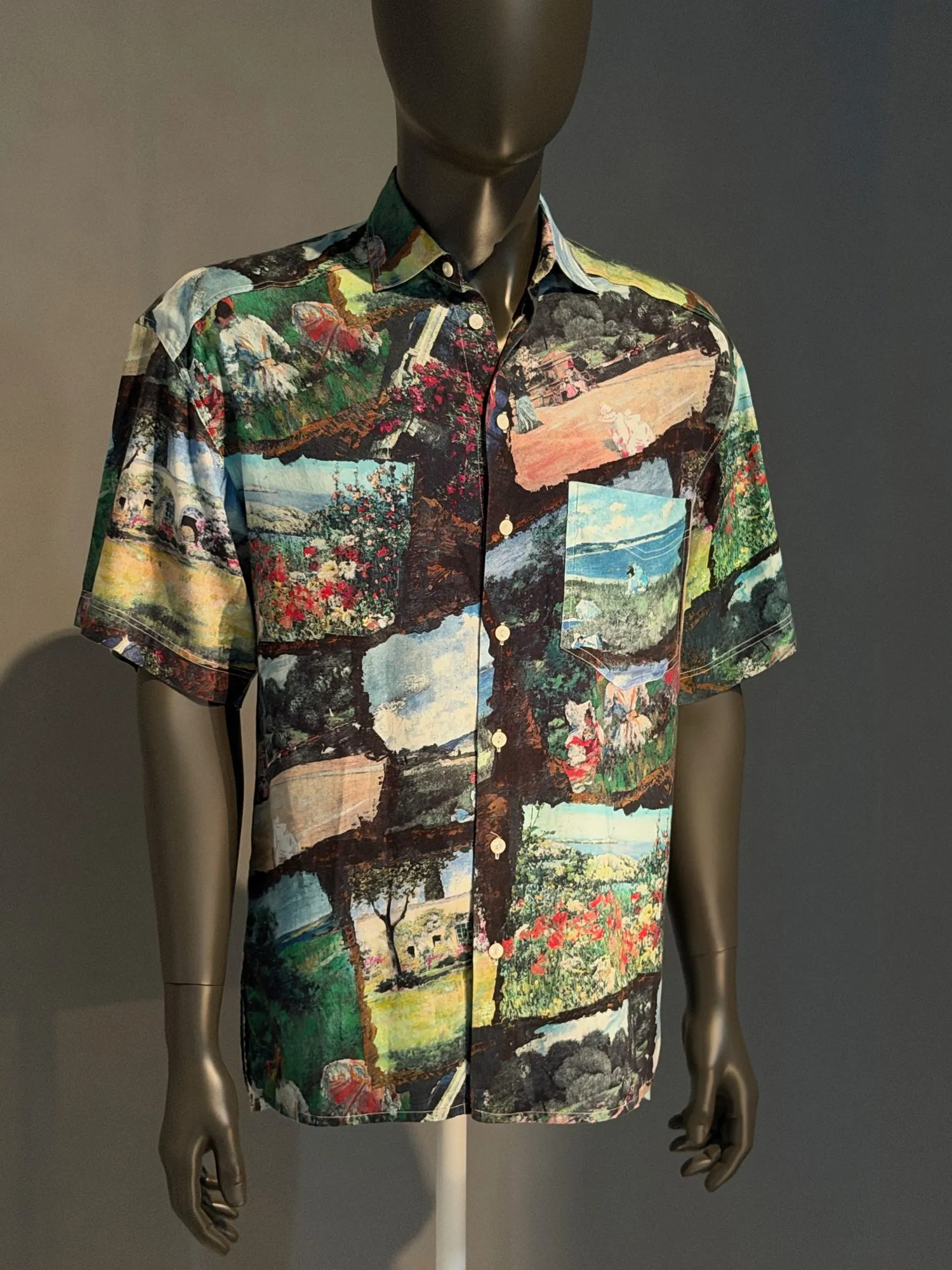
The exhibition even has the shirt Freddie wore around town back then. It’s the colourful shirt from the 1985 “One Vision” video, designed by Kohshin Satoh. According to the label, he wore it while shopping in Budapest in 1986.
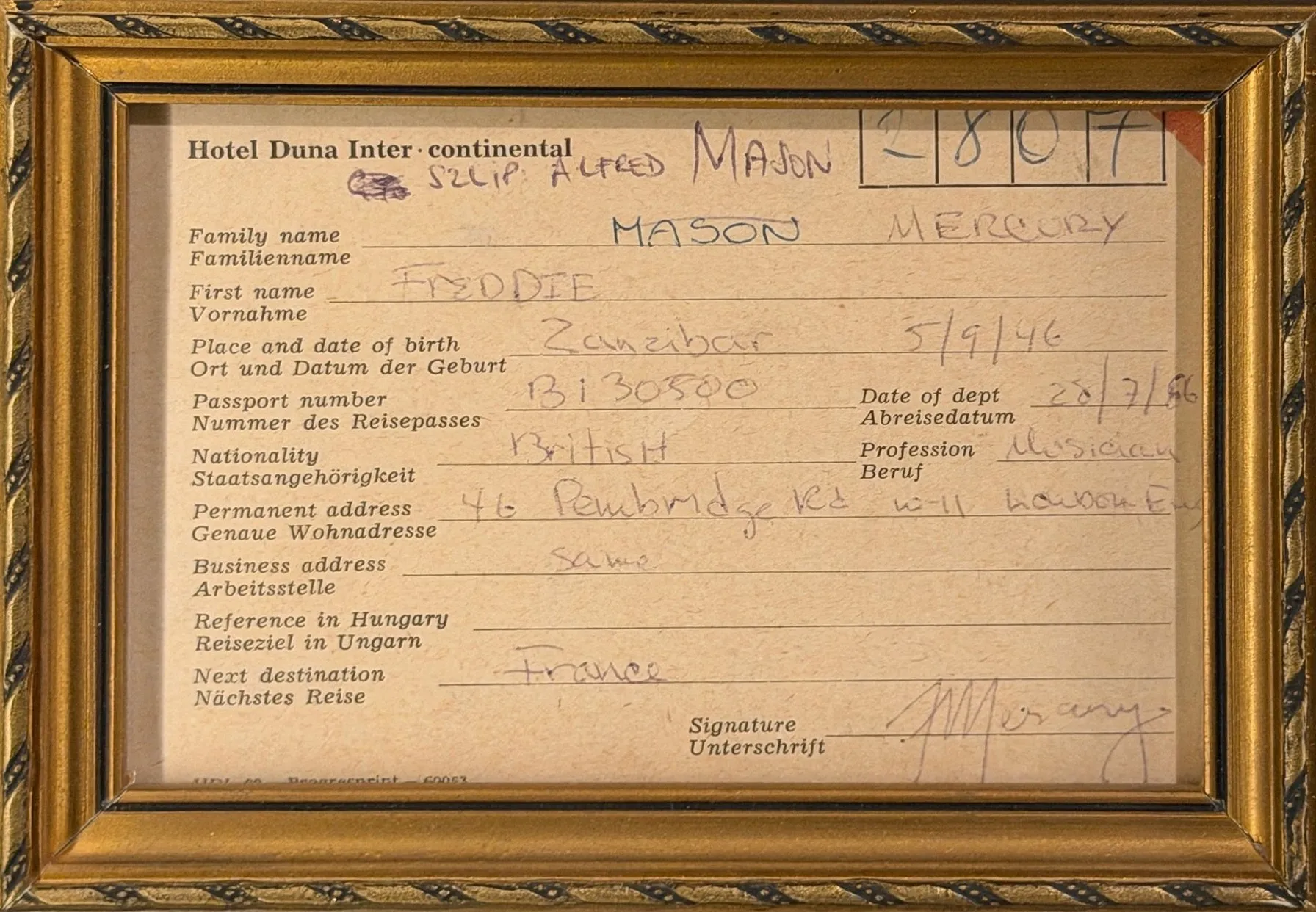
The most surprising trace of that visit is an ordinary hotel form: the registration card from the Duna Intercontinental. At the top: “Alfred Mason”, the pseudonym used for Freddie’s bookings. For obvious reasons, under his own name he wouldn’t have had a moment’s peace in the hotel. Then Zanzibar as the place of birth, occupation “Musician”, departure 28 July 1986, next destination: France. And the signature.
That France was Fréjus. On 30 July 1986 Queen played its amphitheatre, although the show was originally meant to be in Nice. Freddie only found out about the change of venue on the day and refused to turn up for soundcheck. When it became clear the contract couldn’t be broken, he arrived late, got out of the car shouting “Let’s f***ing do this” and walked straight onto the stage. The amphitheatre held 15,000 people, intimate by Magic Tour standards. Freddie commented on it before “Another One Bites the Dust”: “It’s nice to be here tonight in this little bedroom. Now that we’re in this bedroom, let’s do a little boogie, huh?”
Three displays I stood at the longest
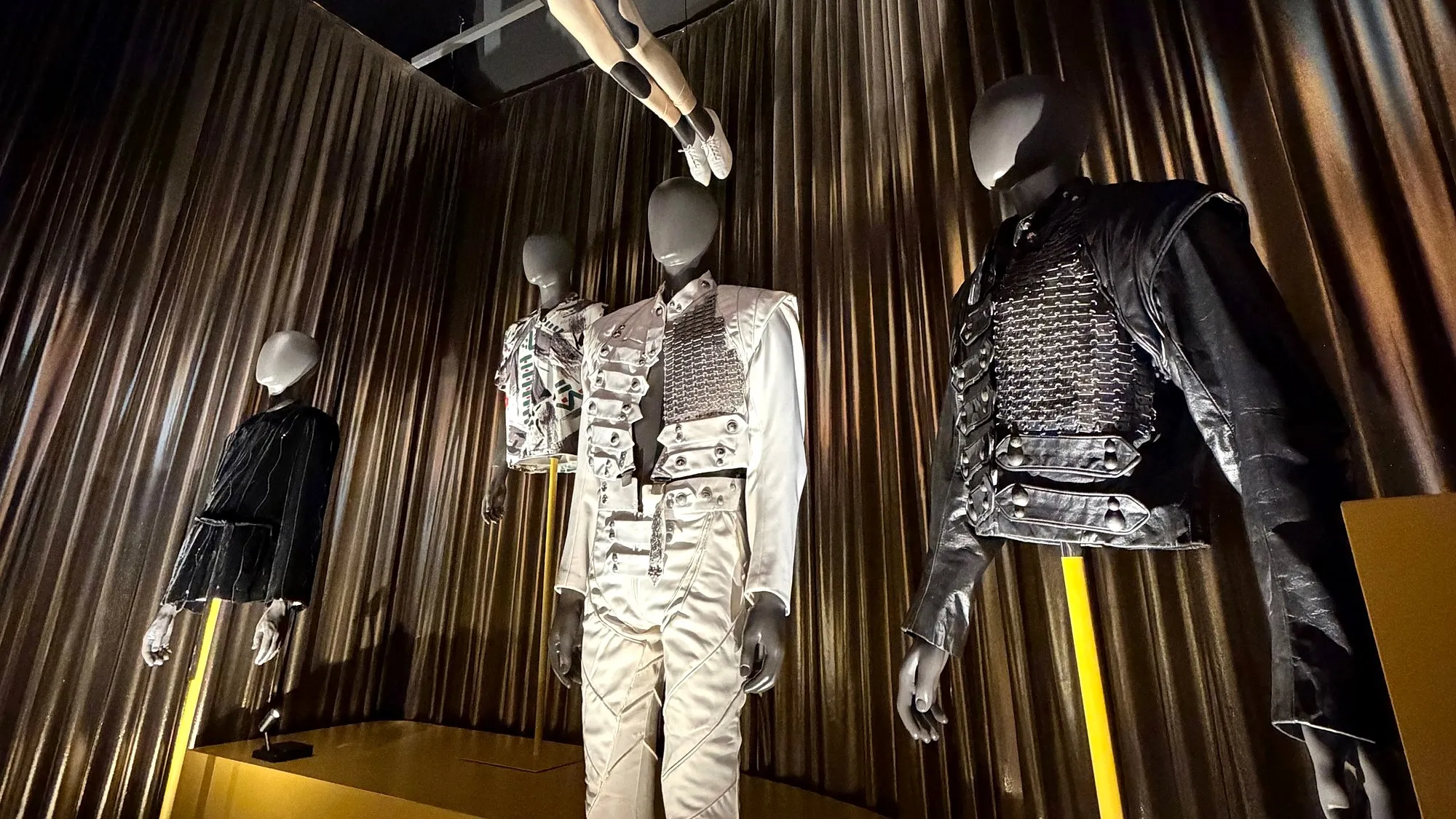
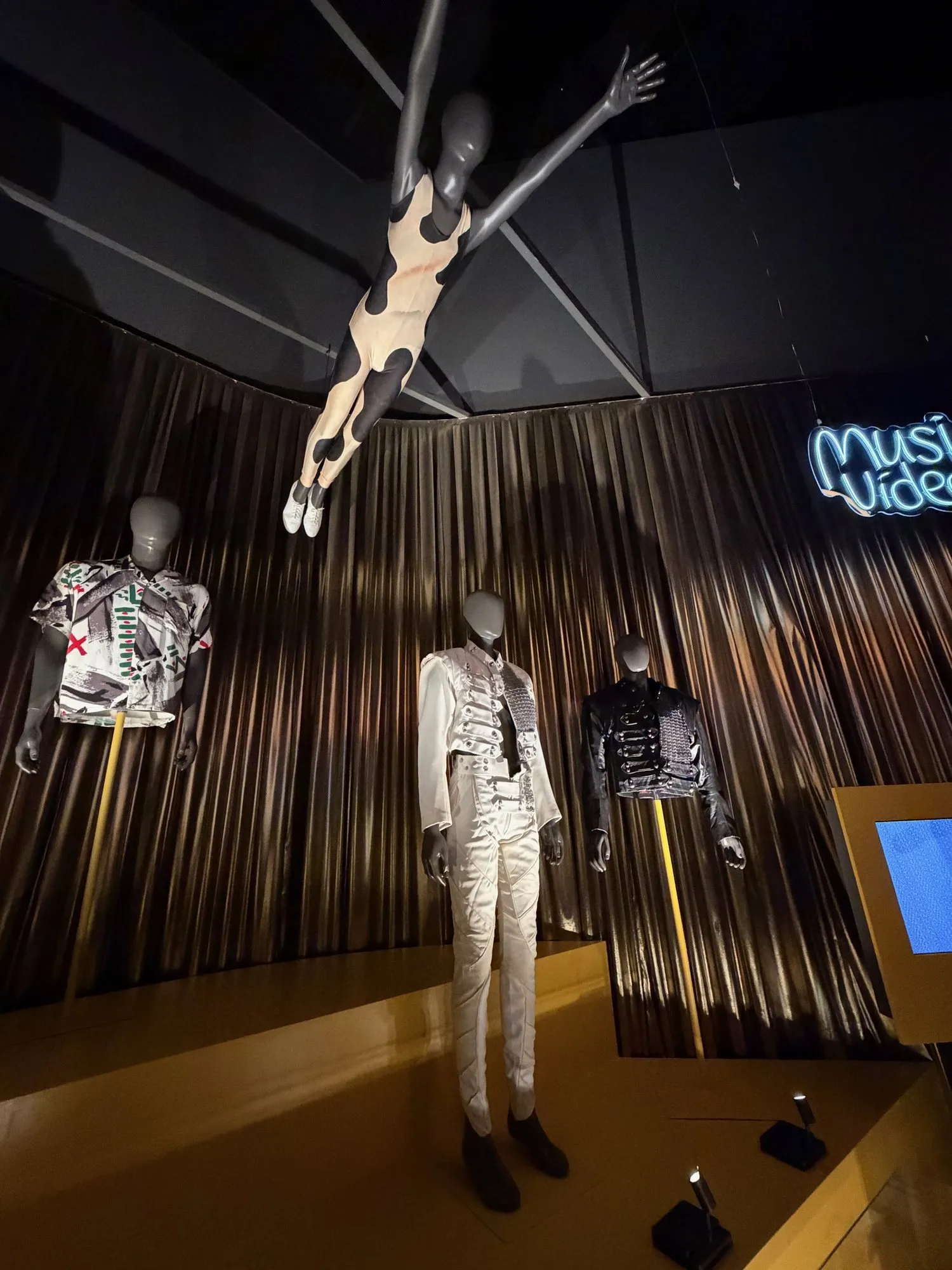
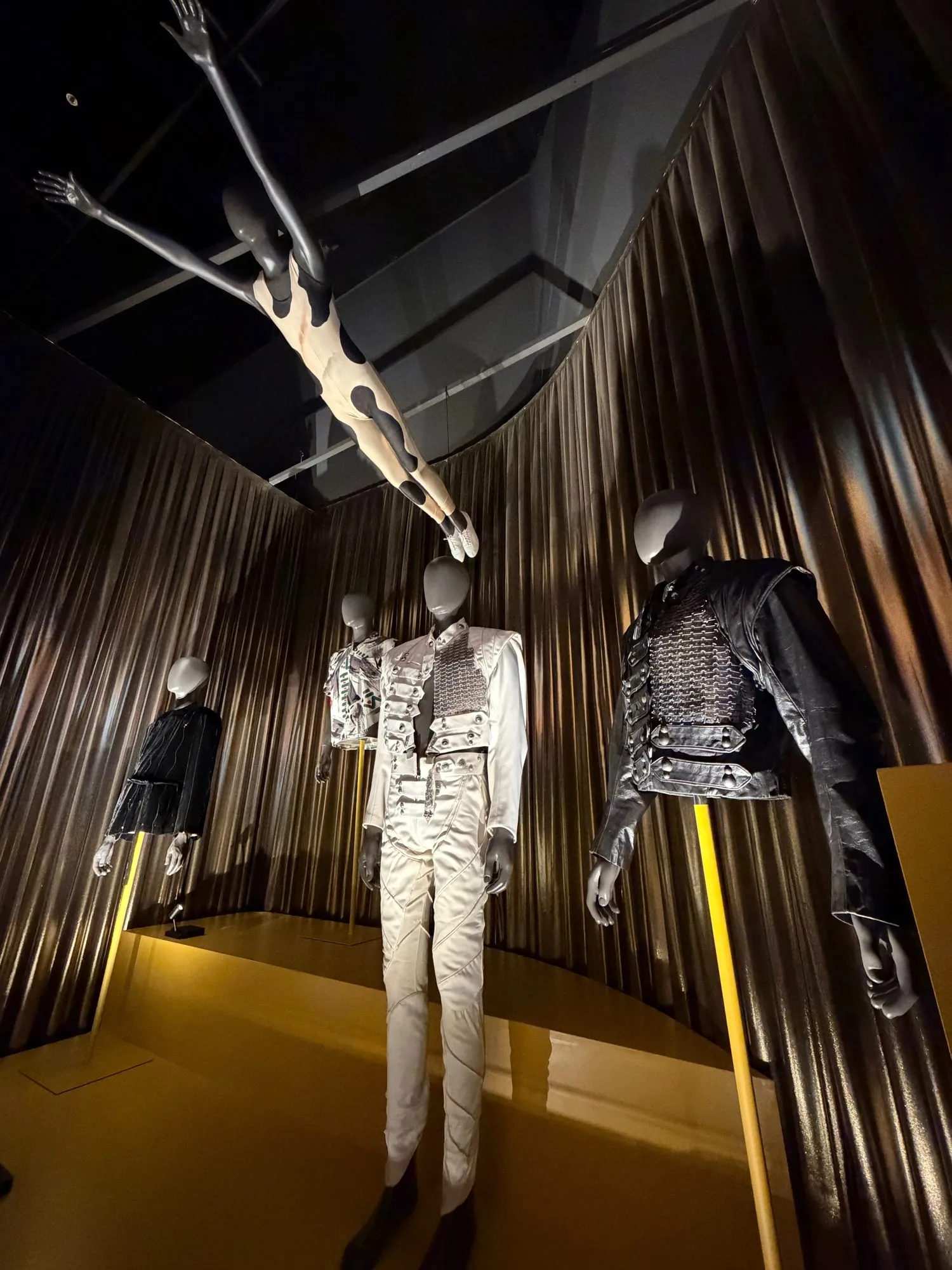
For me, the heart of the exhibition is the “Music Videos” zone. Five original costumes from the videos, and according to their designers Freddie wasn’t just a model here: he co-created every one of them.
The “Bohemian Rhapsody” jacket
On 10 November 1975 Bruce Gowers shot the “Bohemian Rhapsody” video in about four hours, for roughly £4,500. The band was on tour and couldn’t appear on “Top of the Pops”, so the programme played the clip. The song spent nine weeks at number one in the UK, and the video changed the way music is promoted.
At the very start of the clip Freddie wears a black silk velvet jacket. And here it is, without any glass, inches from your face. You know it from hundreds of plays, and suddenly you can see the texture of the fabric and the seams.
The “I Was Born to Love You” outfit
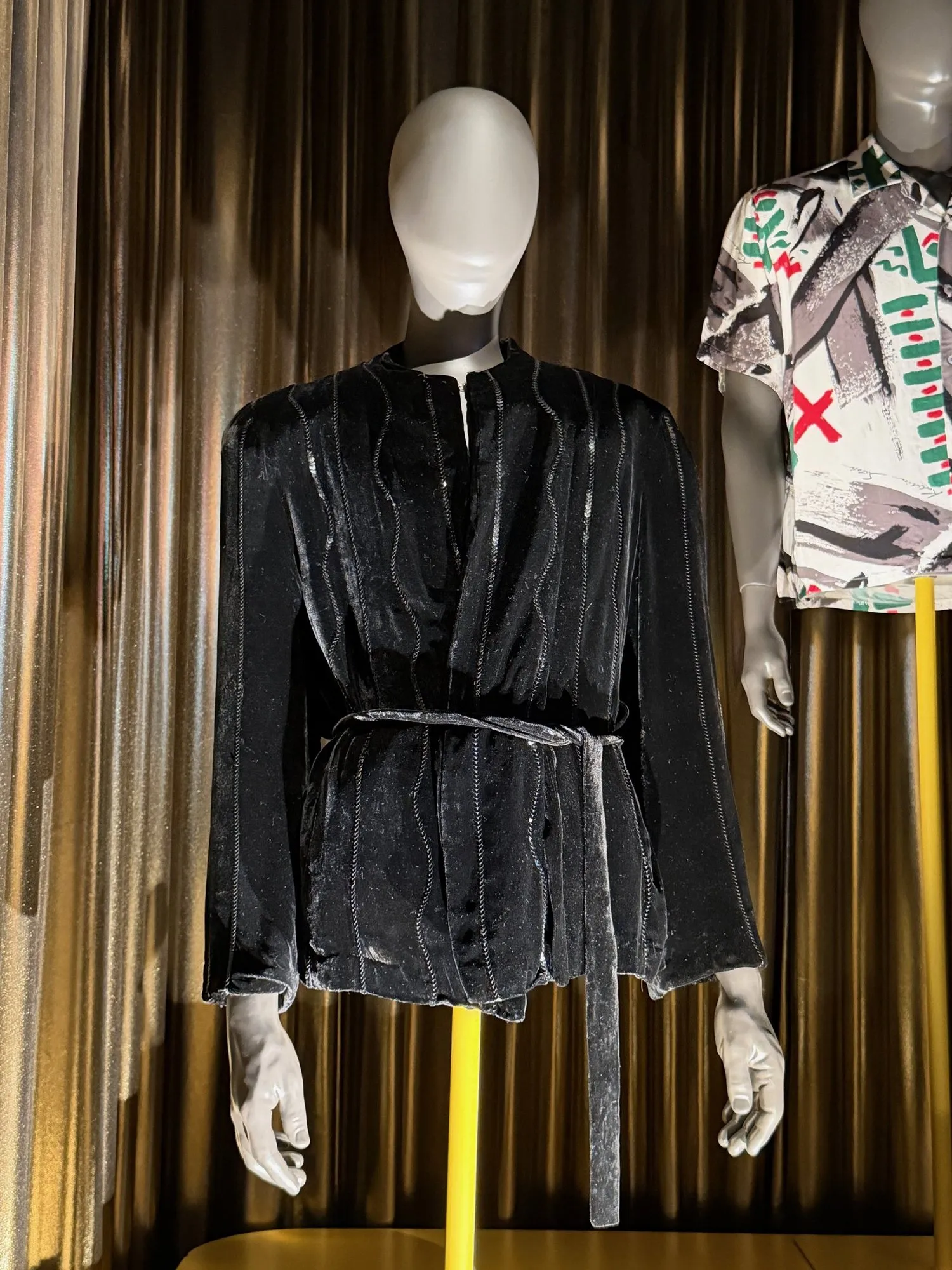
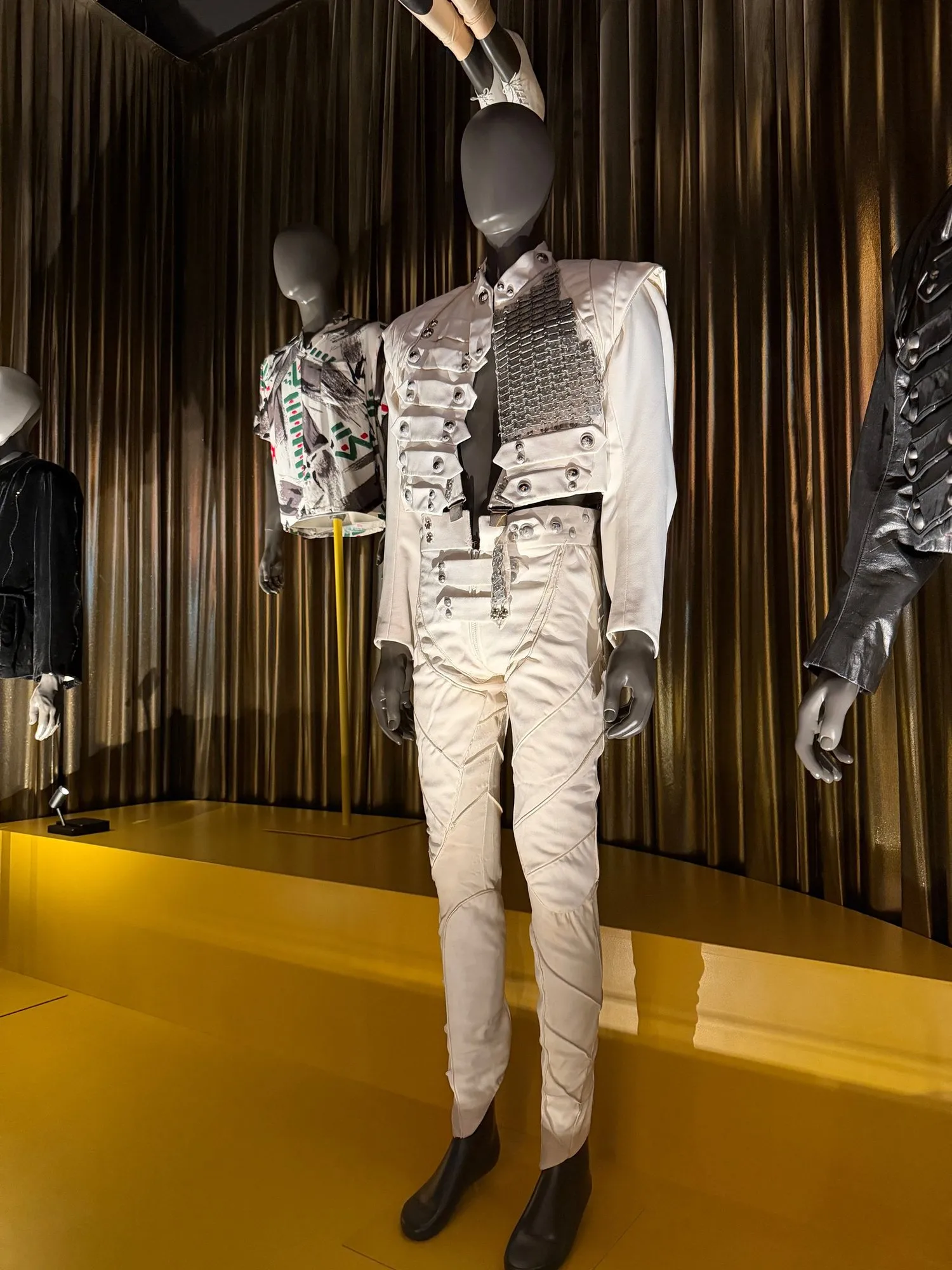
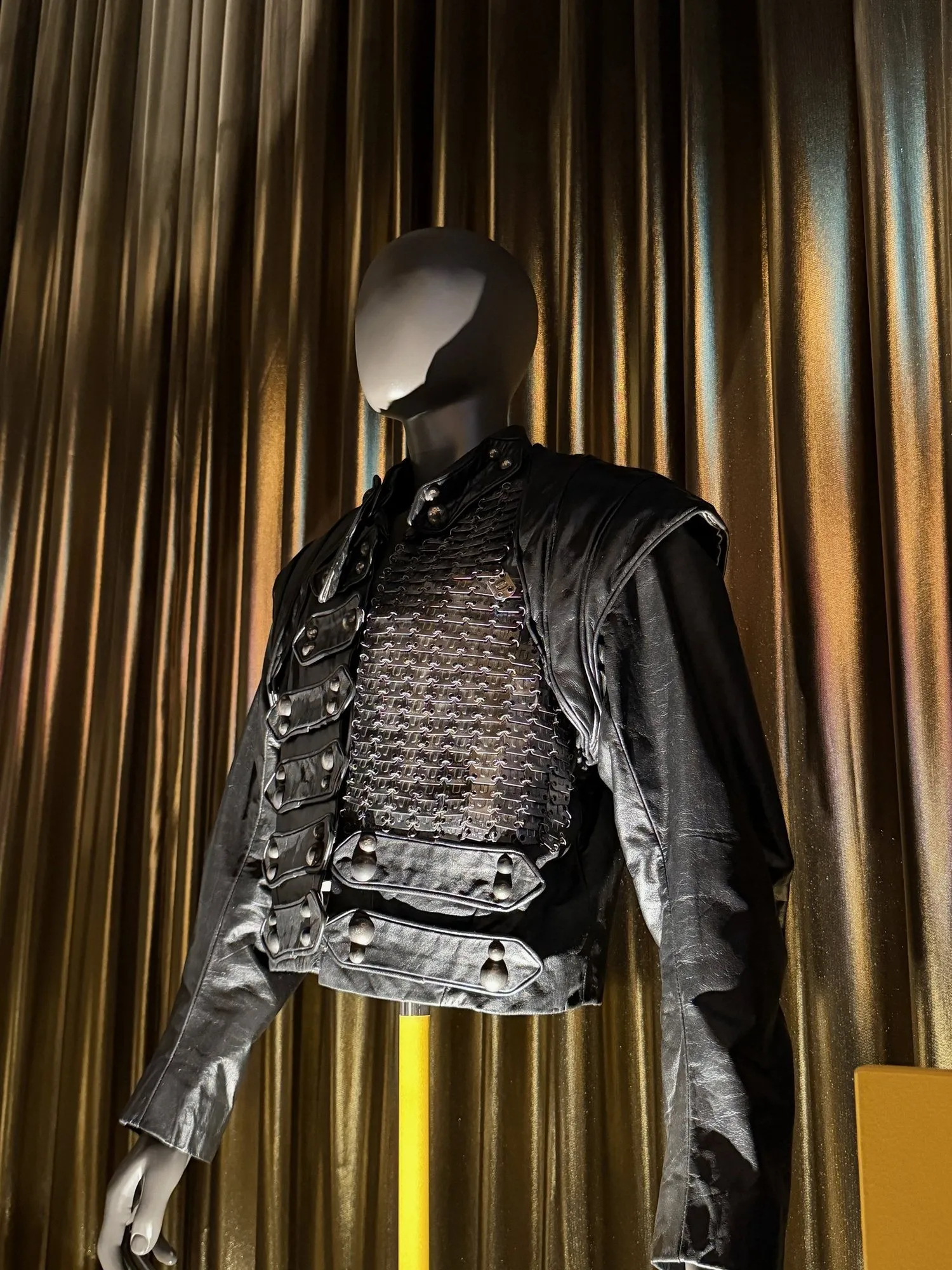
A white jacket with strong shoulders and a metal panel on the left side, designed by Diana Moseley for the “I Was Born to Love You” video from the solo album “Mr. Bad Guy”. The panel looks like a piece of armour, but according to the Sotheby’s auction description it was made from the material used for butcher’s aprons, to give the effect of armour without the weight. Freddie liked the design so much that he ordered a black copy to wear off set. At the exhibition, both stand side by side.
The awards gala suit
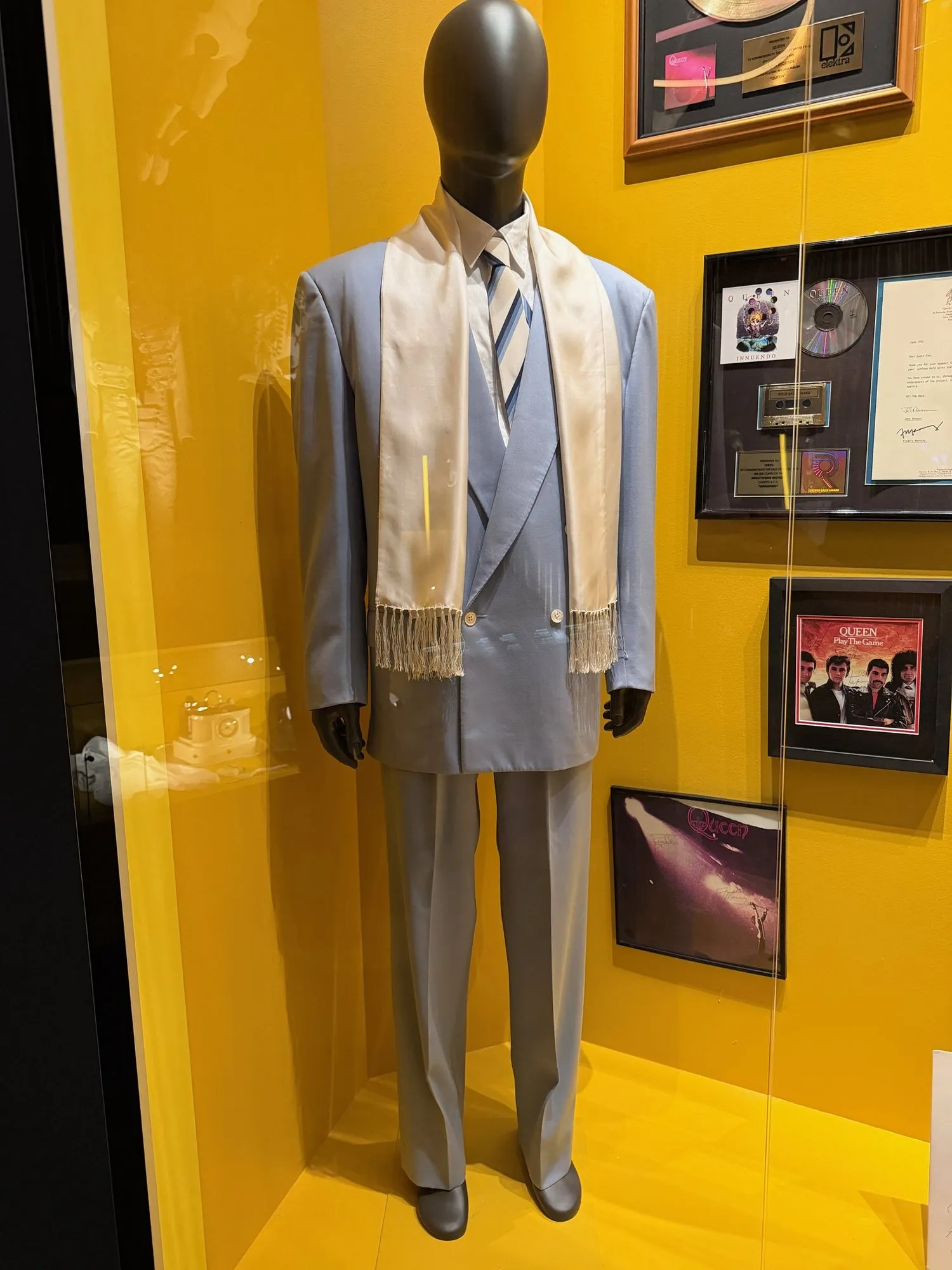
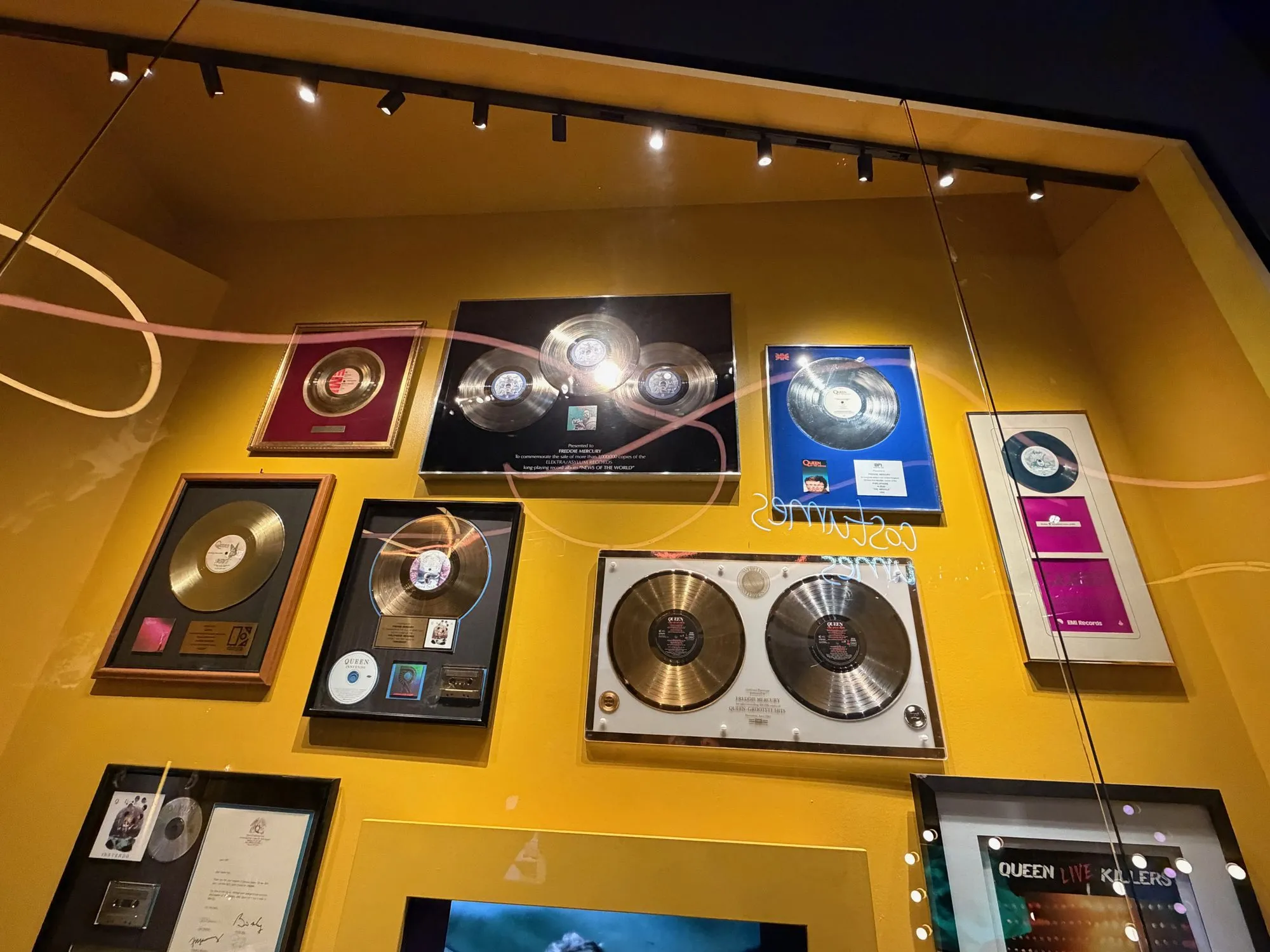
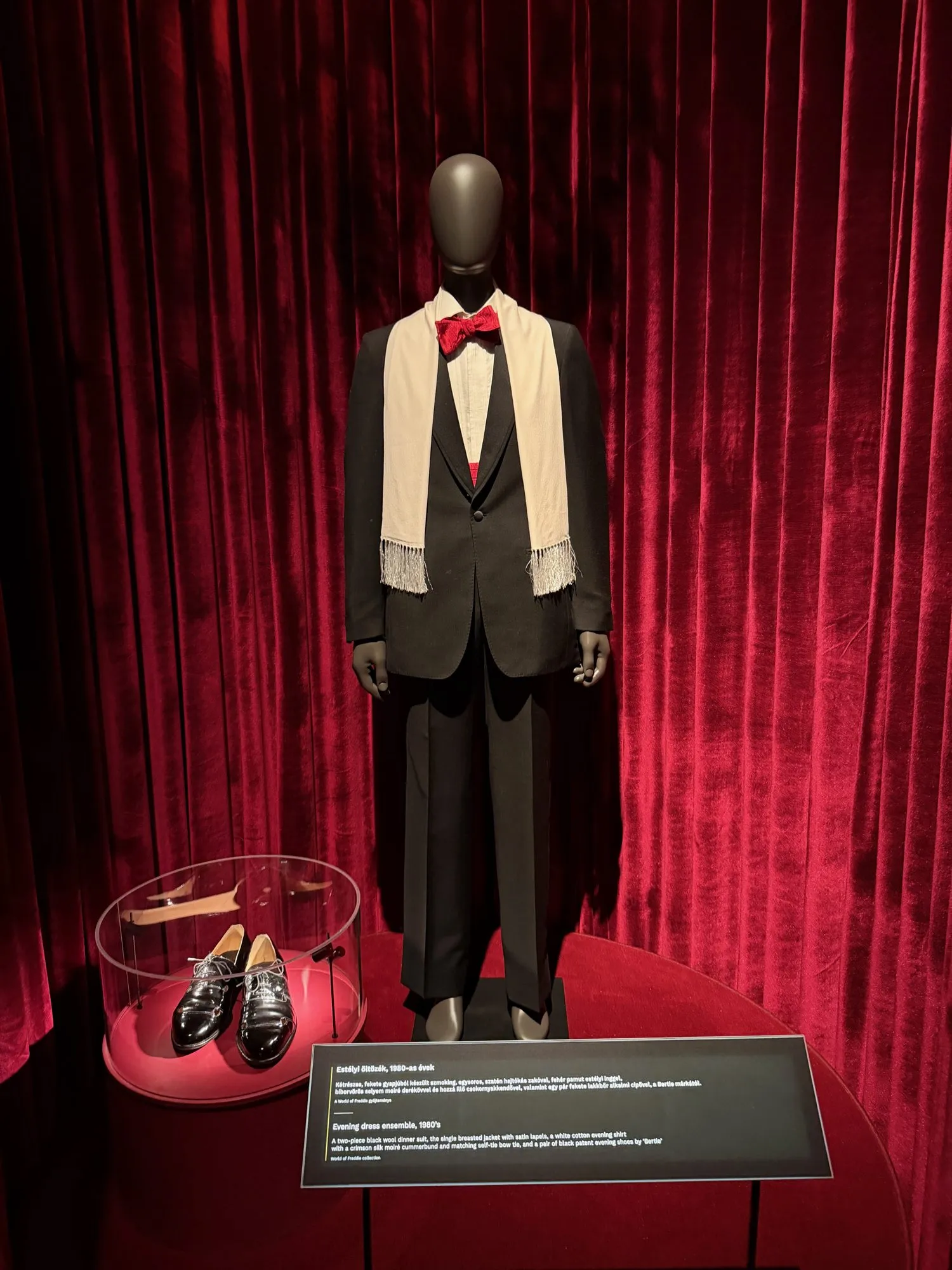
The third display is a light blue double-breasted suit with a white silk scarf, set against gold discs and signed sleeves. Freddie wore it to the British Phonographic Industry (BPI) awards, today known as the BRIT Awards. The photo by the label shows him in exactly this suit and scarf.
That gala carries weight. On 18 February 1990 Queen received the award for Outstanding Contribution to British Music there. Brian May gave the speech; Freddie just said a brief thank you and waved. It was one of his last public appearances, and the display shows how elegantly he dressed for it.
Songs on paper
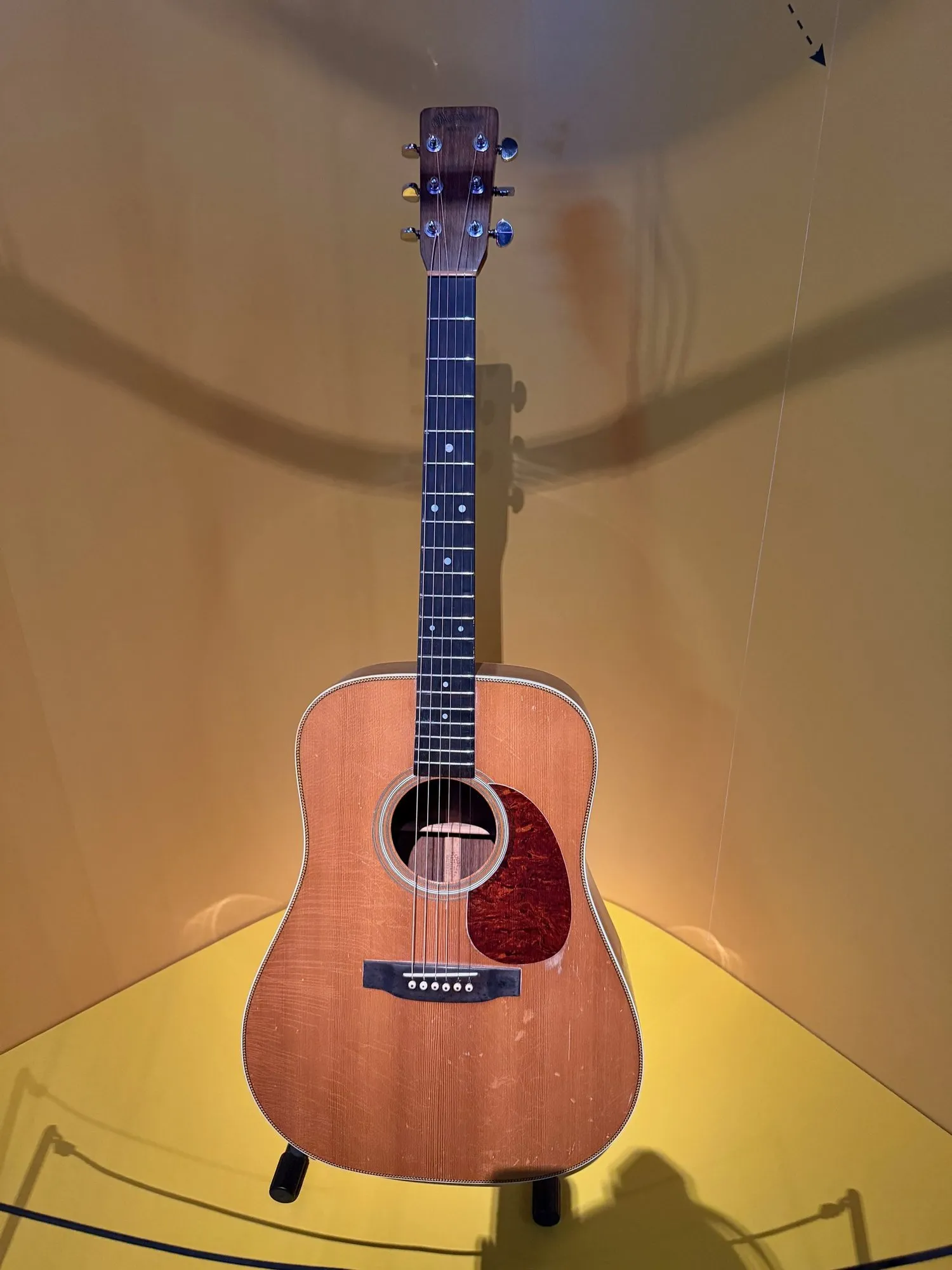
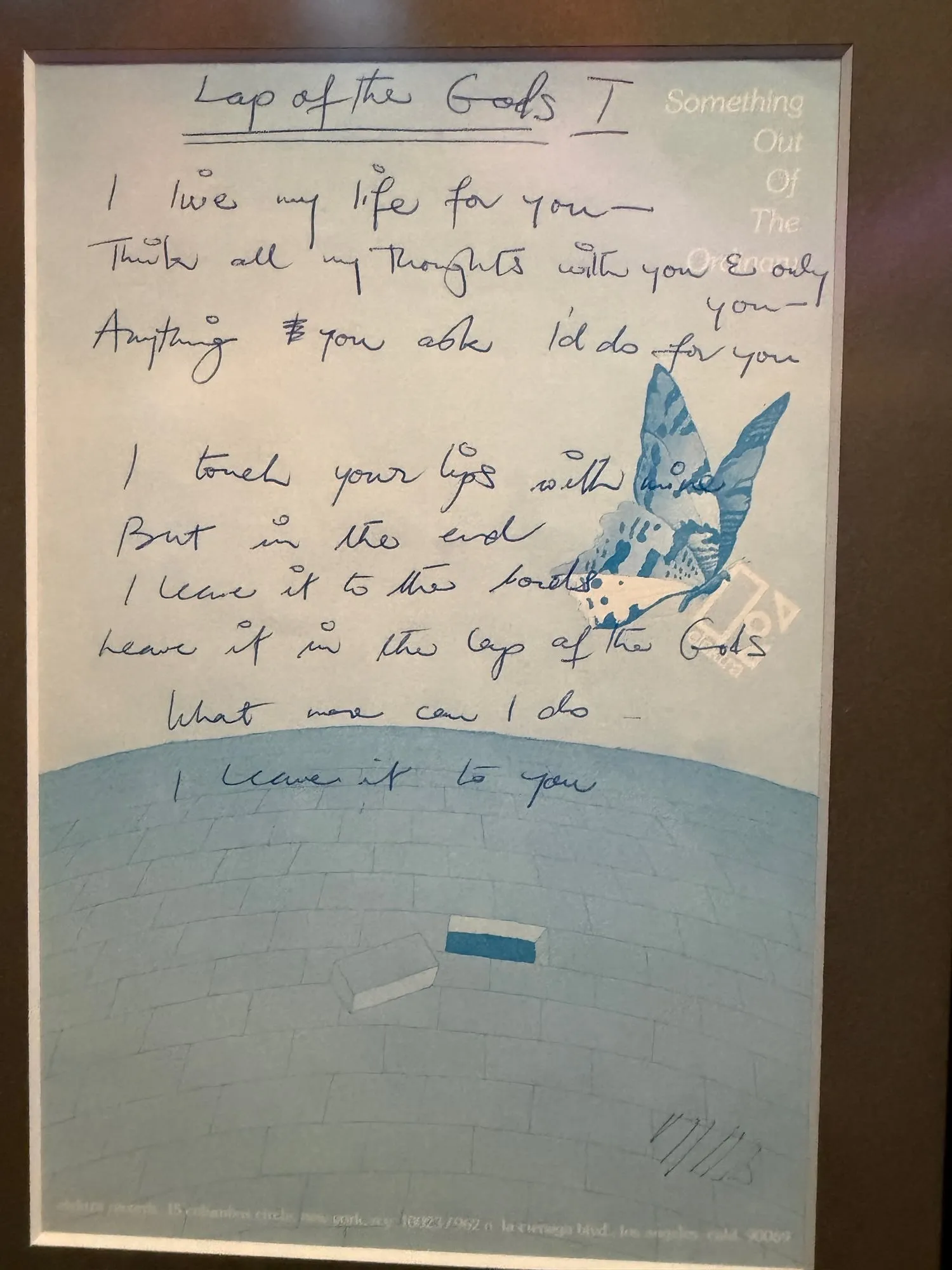
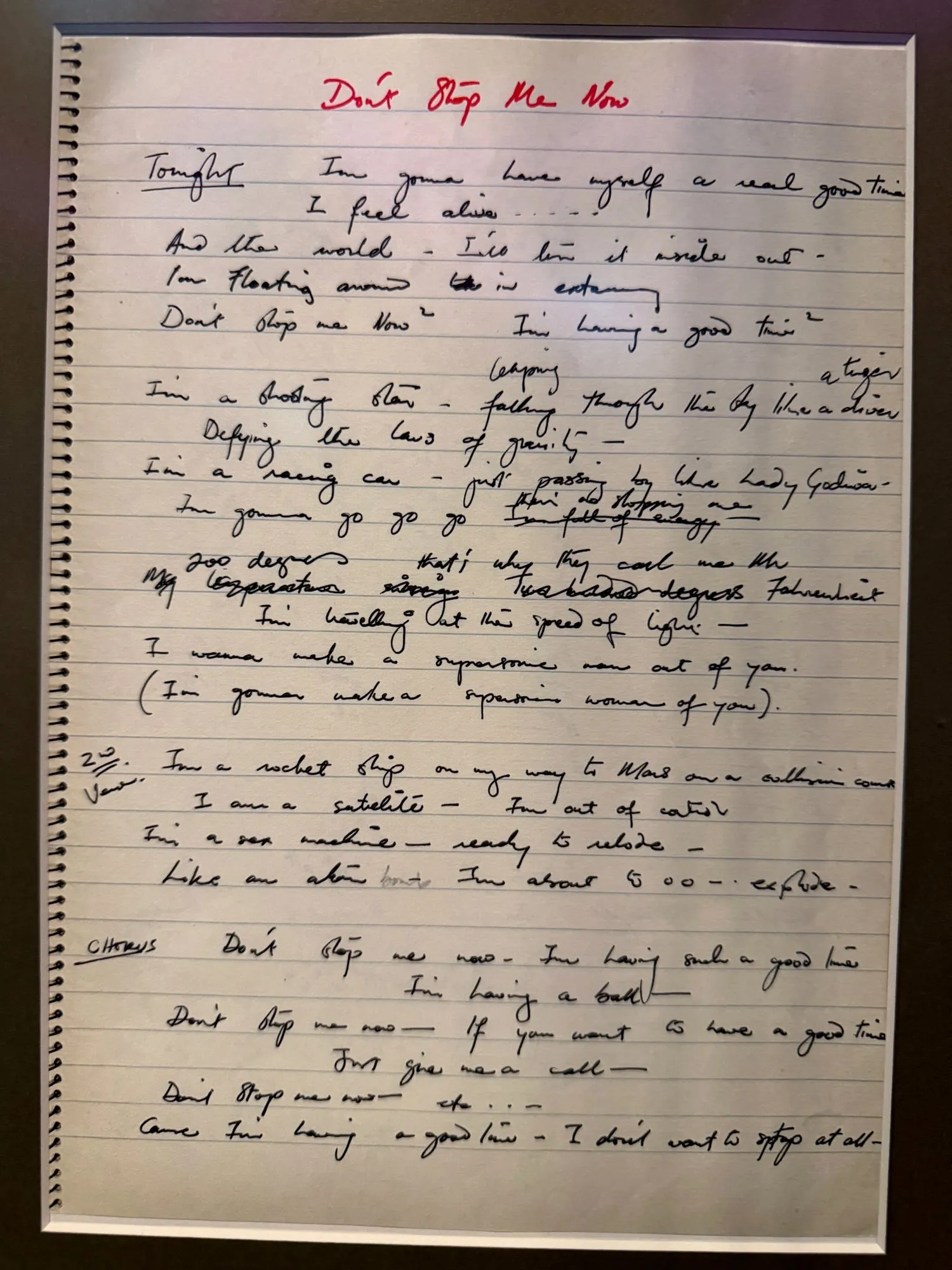
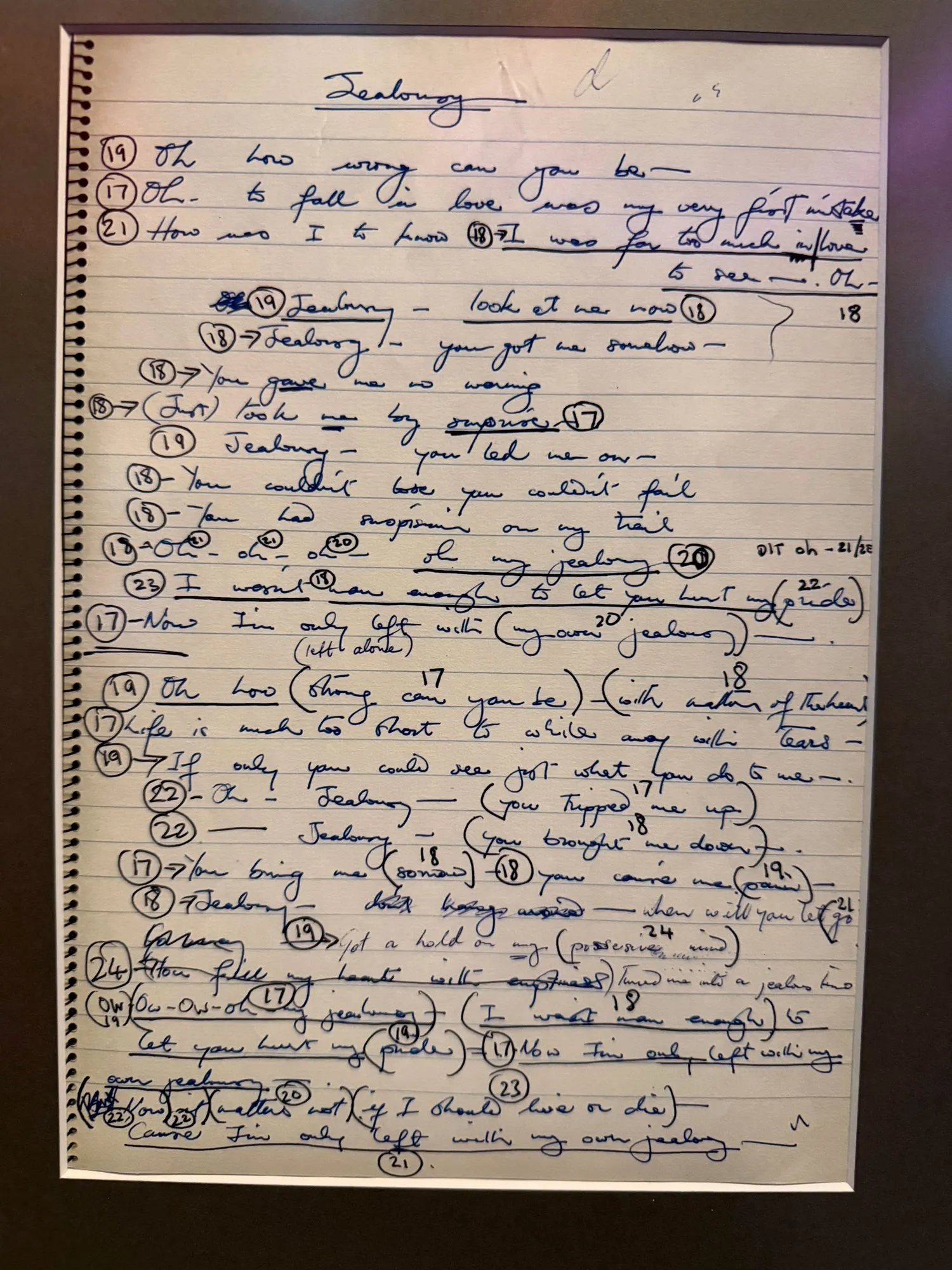
Peter often said that Freddie could compose music very quickly and then spent a very long time on the lyrics. The exhibition has a whole wall of lyrics in his own hand, with corrections, crossings-out and additions. Unfortunately, a large part of them are copies rather than originals. There is also an acoustic Martin HD-28 that belonged to Freddie, with a slightly bitter story of its own: Freddie gave it to his assistant Paul Prenter, who later sold the guitar.
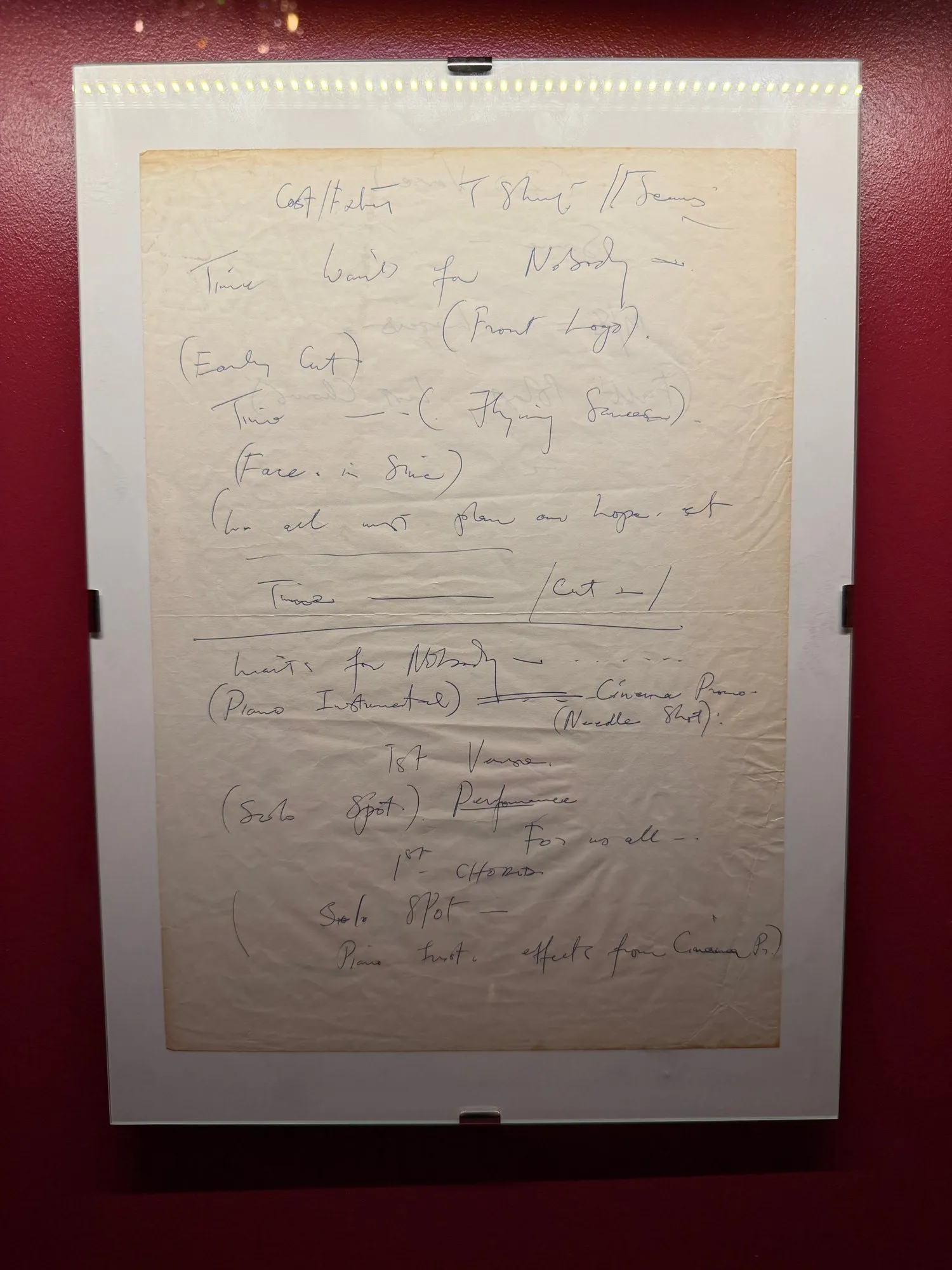
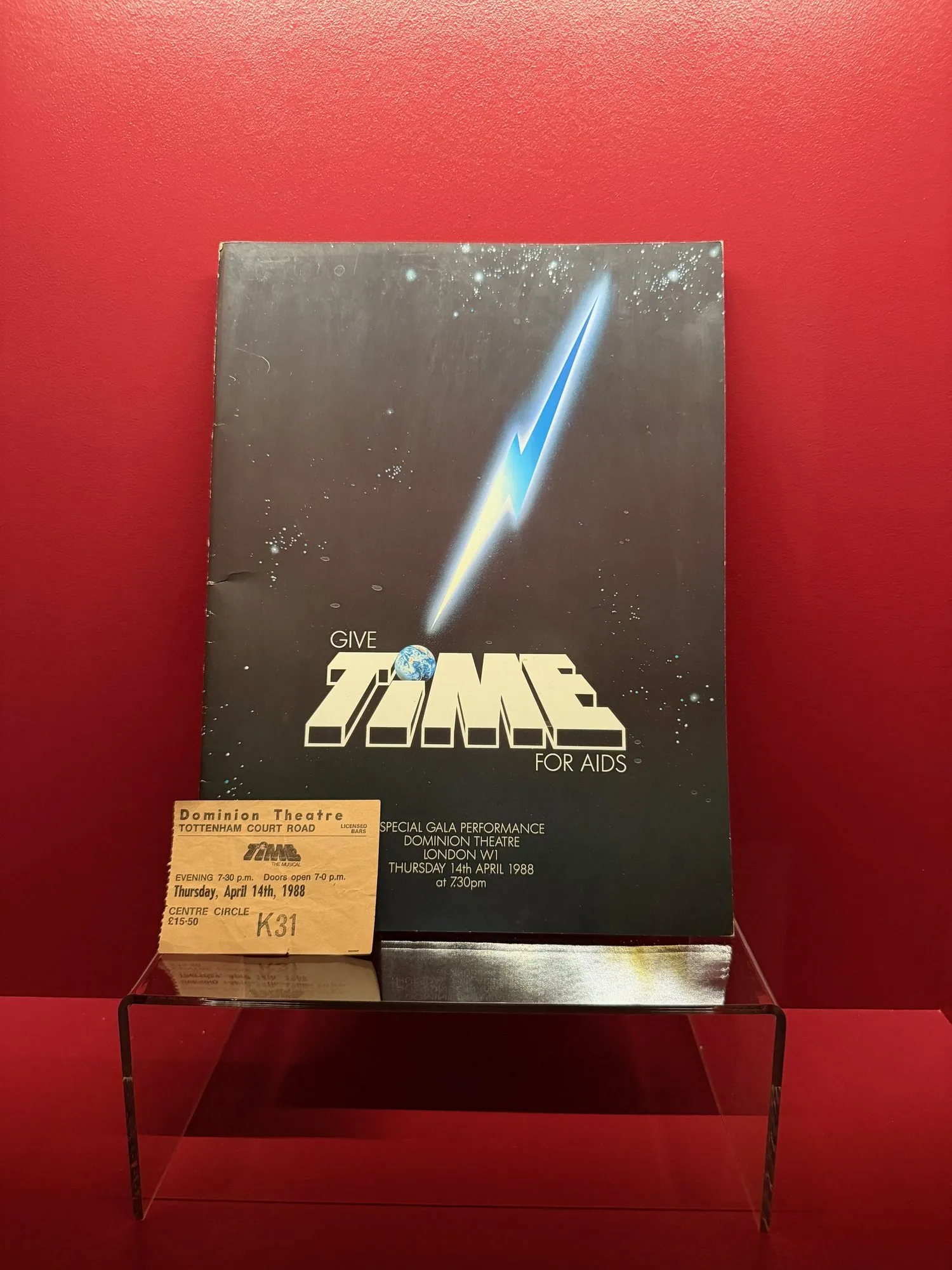
The most precious of the manuscripts are the pages with handwritten lyrics and notes for “Time”, the song from Dave Clark’s musical. On 14 April 1988 a charity performance of “Time” took place at London’s Dominion Theatre for the Terrence Higgins Trust, an AIDS charity, and Freddie appeared as a guest, including a duet with Cliff Richard. According to the label, these are the very pages he used on stage that night, during his last ever live performance. The programme and a ticket from that evening are on display too: seat K31 in the Centre Circle, £15.50.
Home, friends and cats
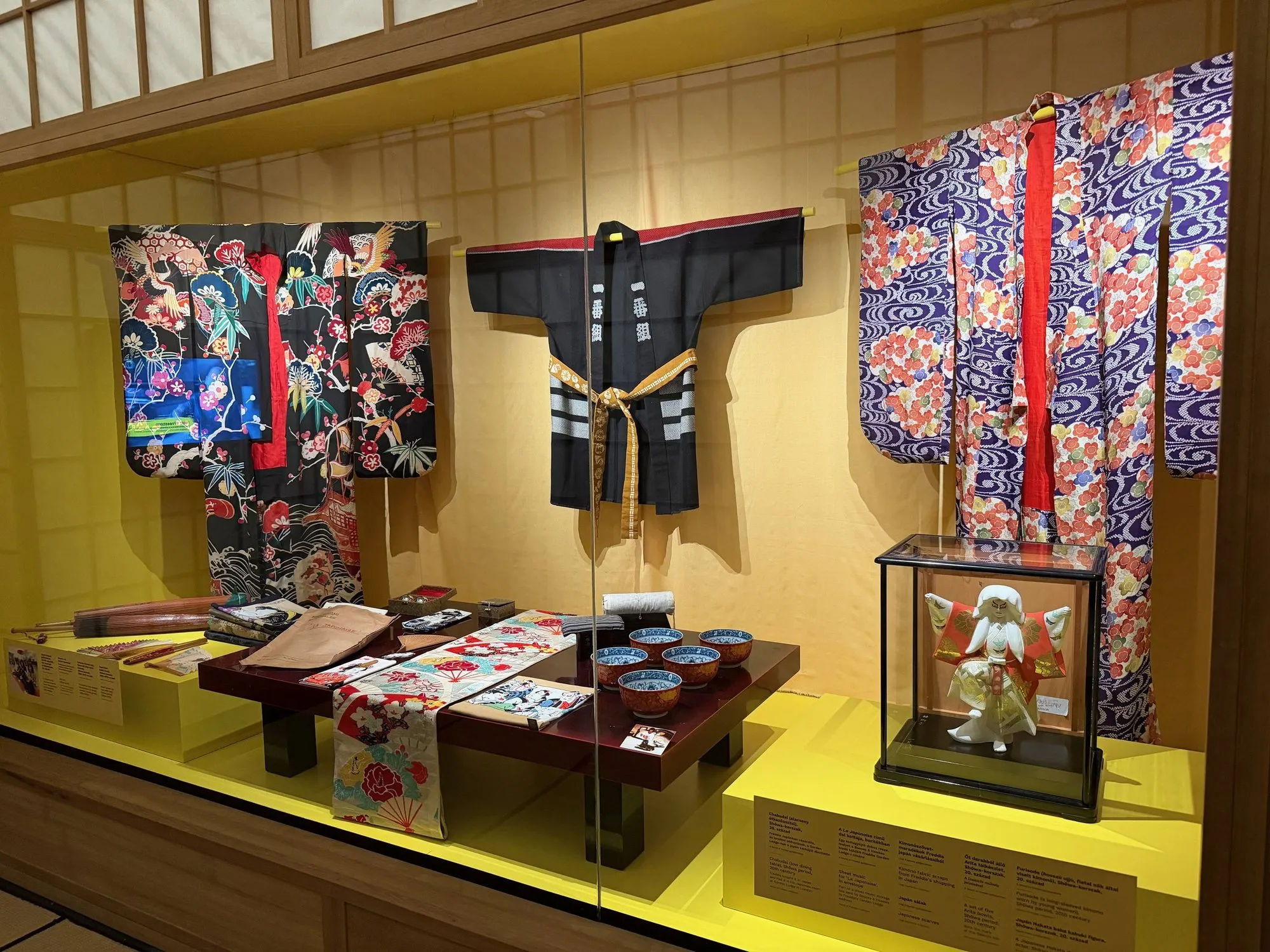
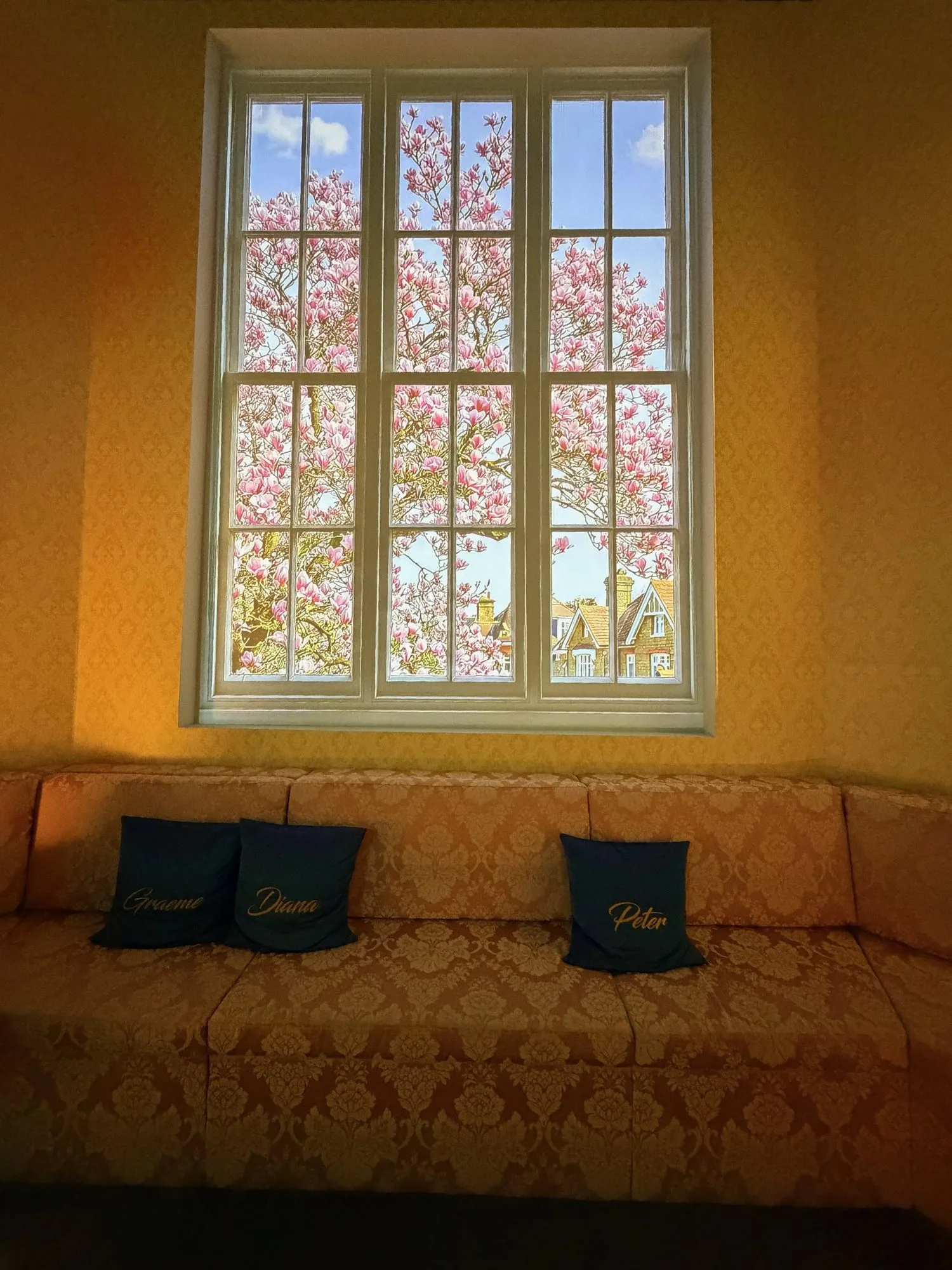
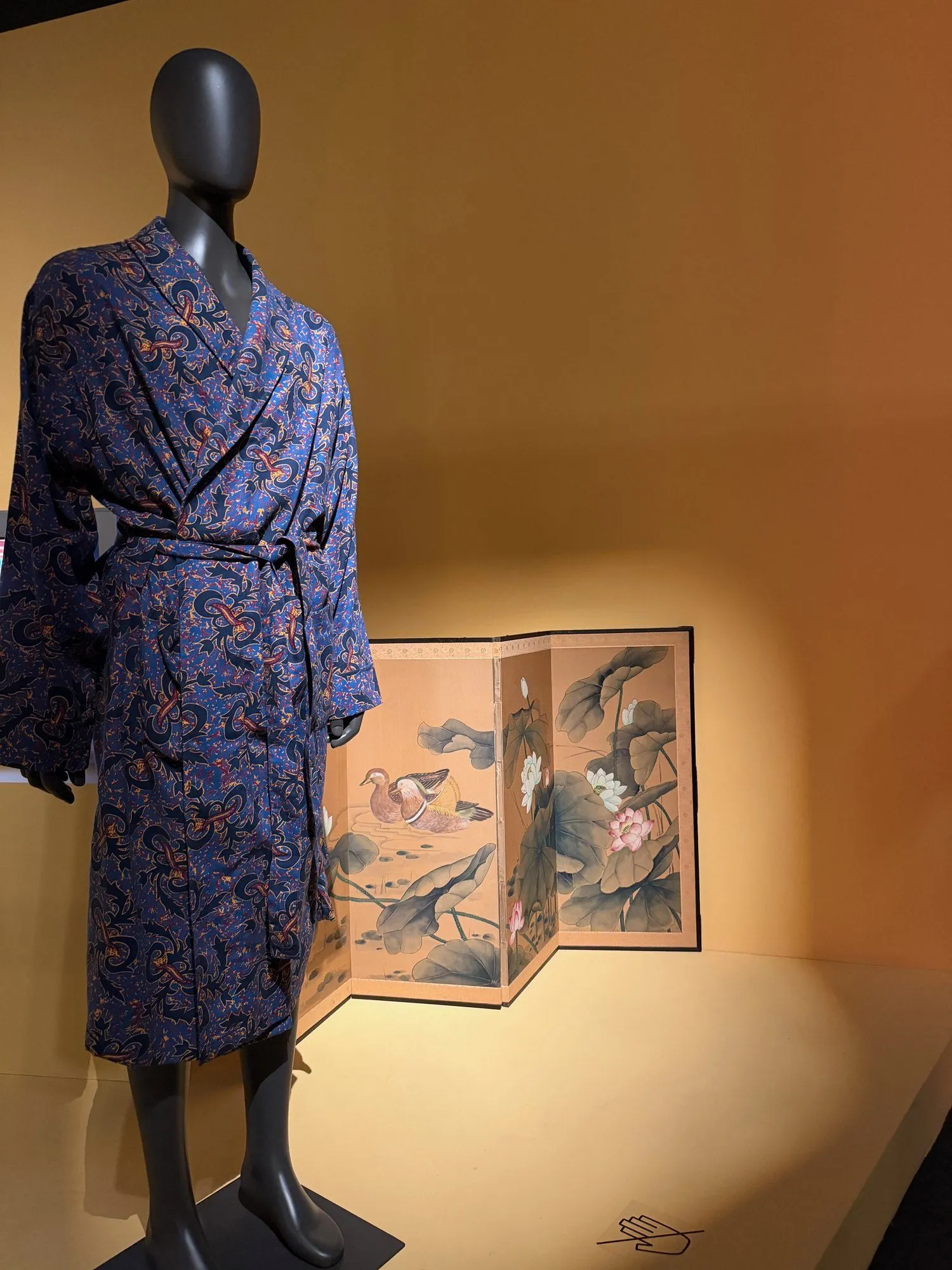
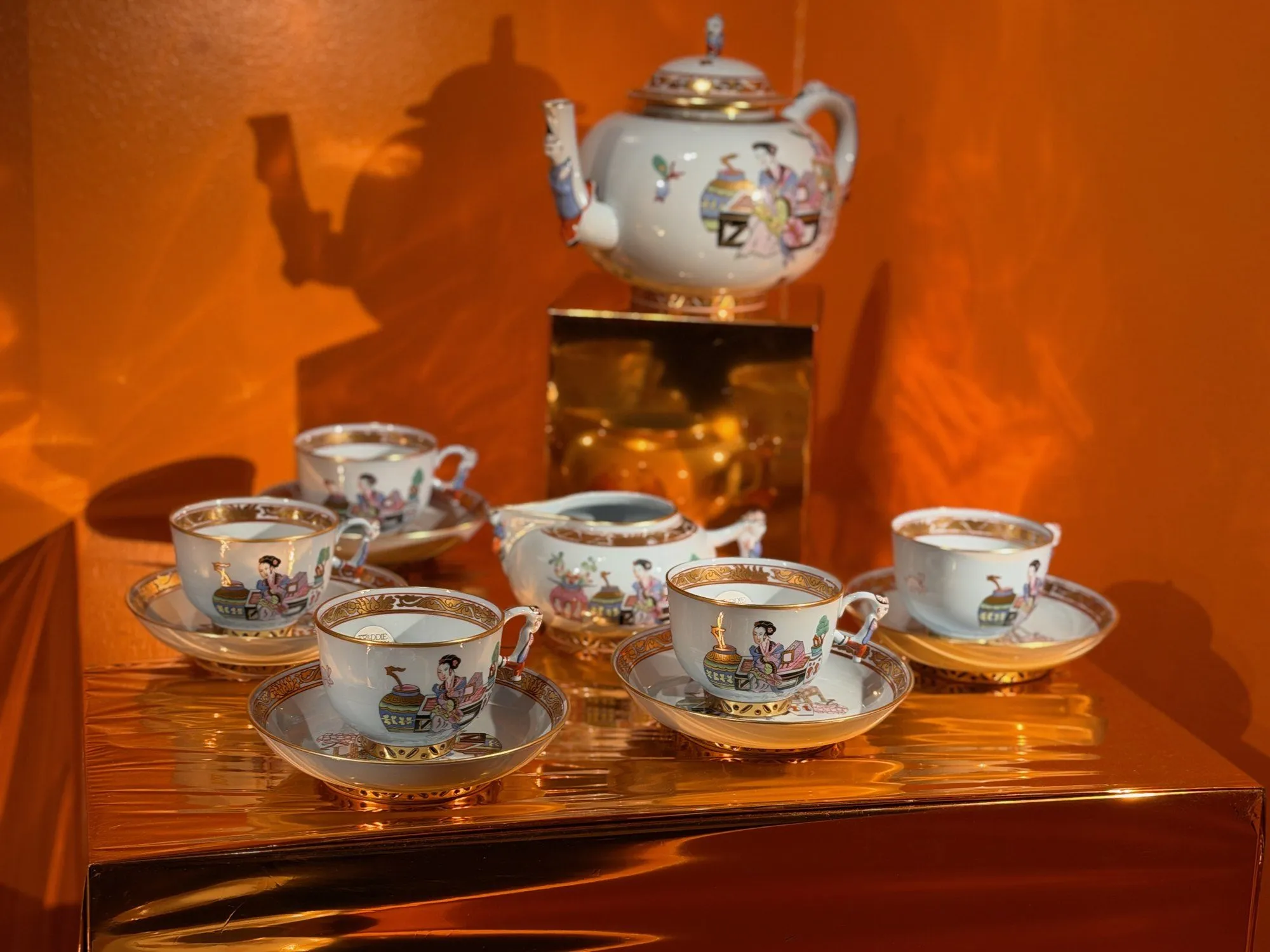
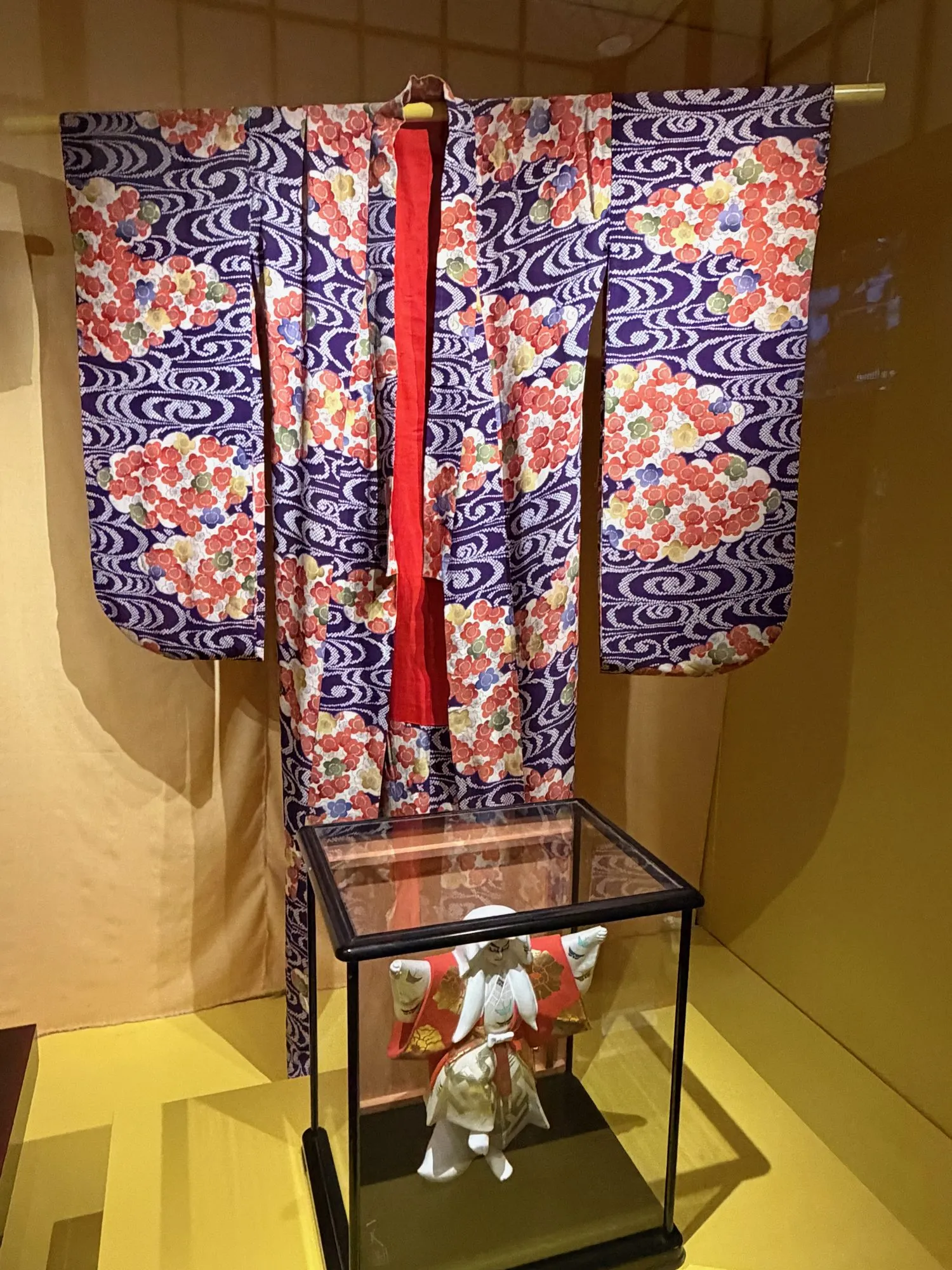
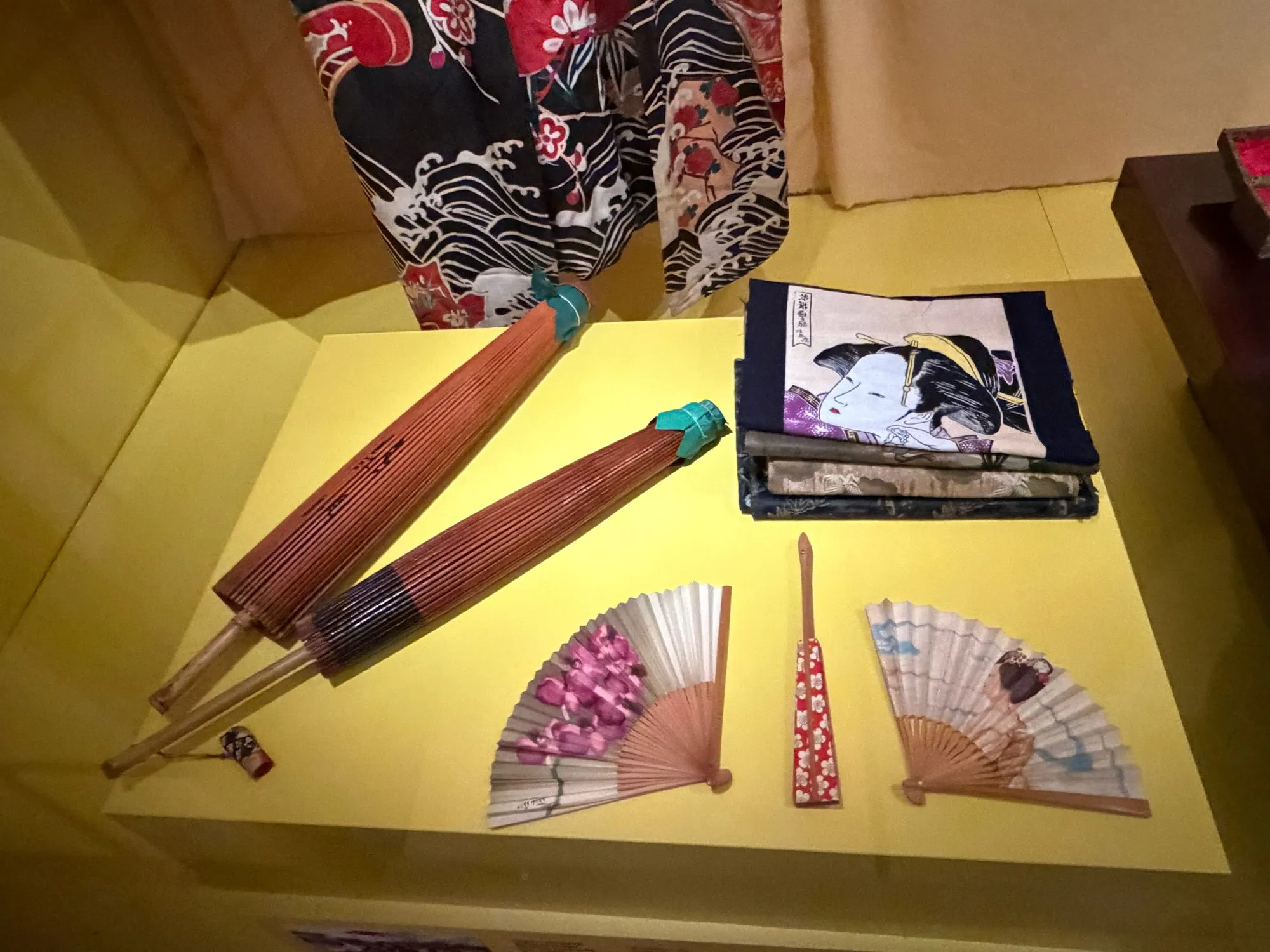
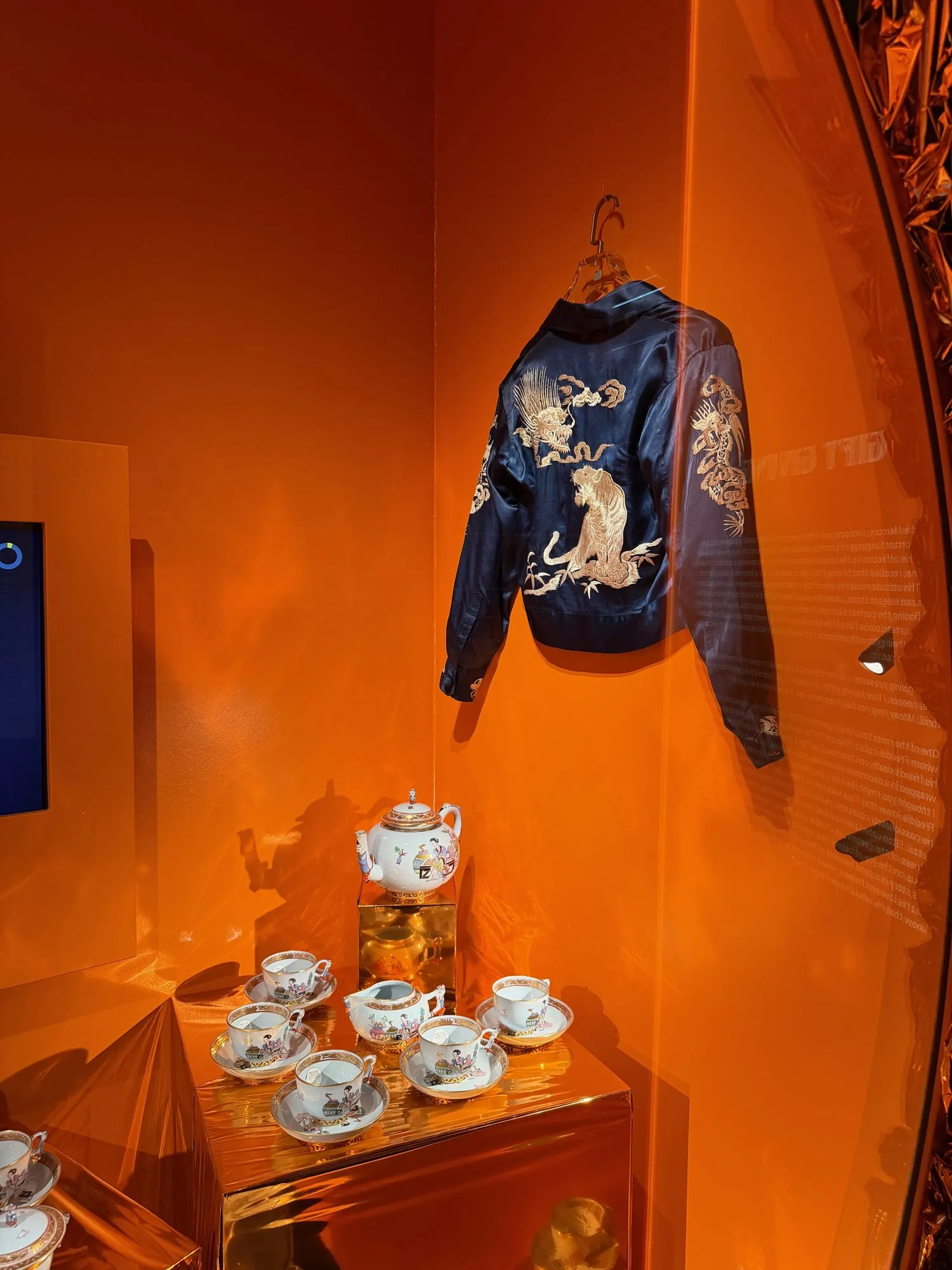
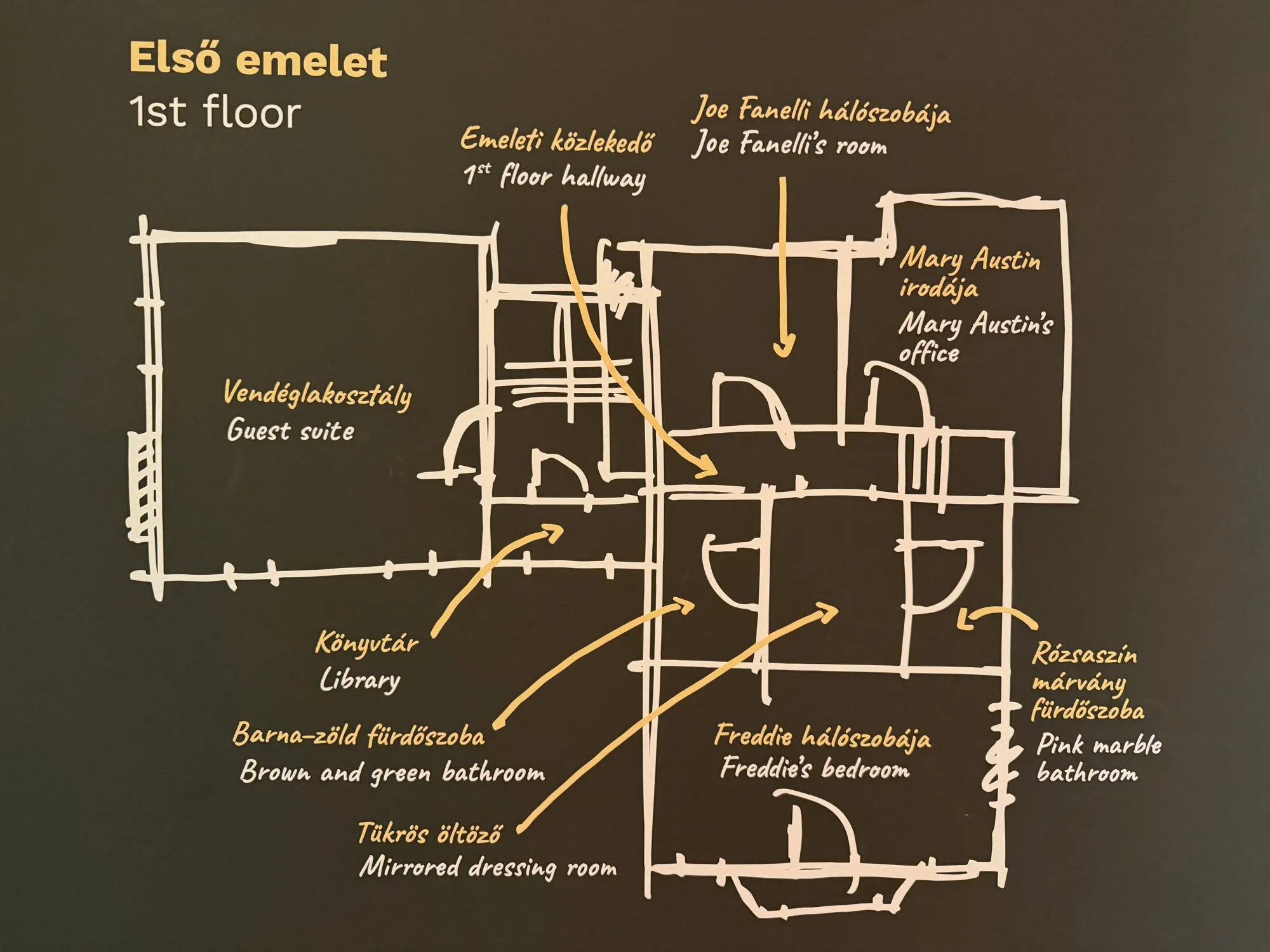
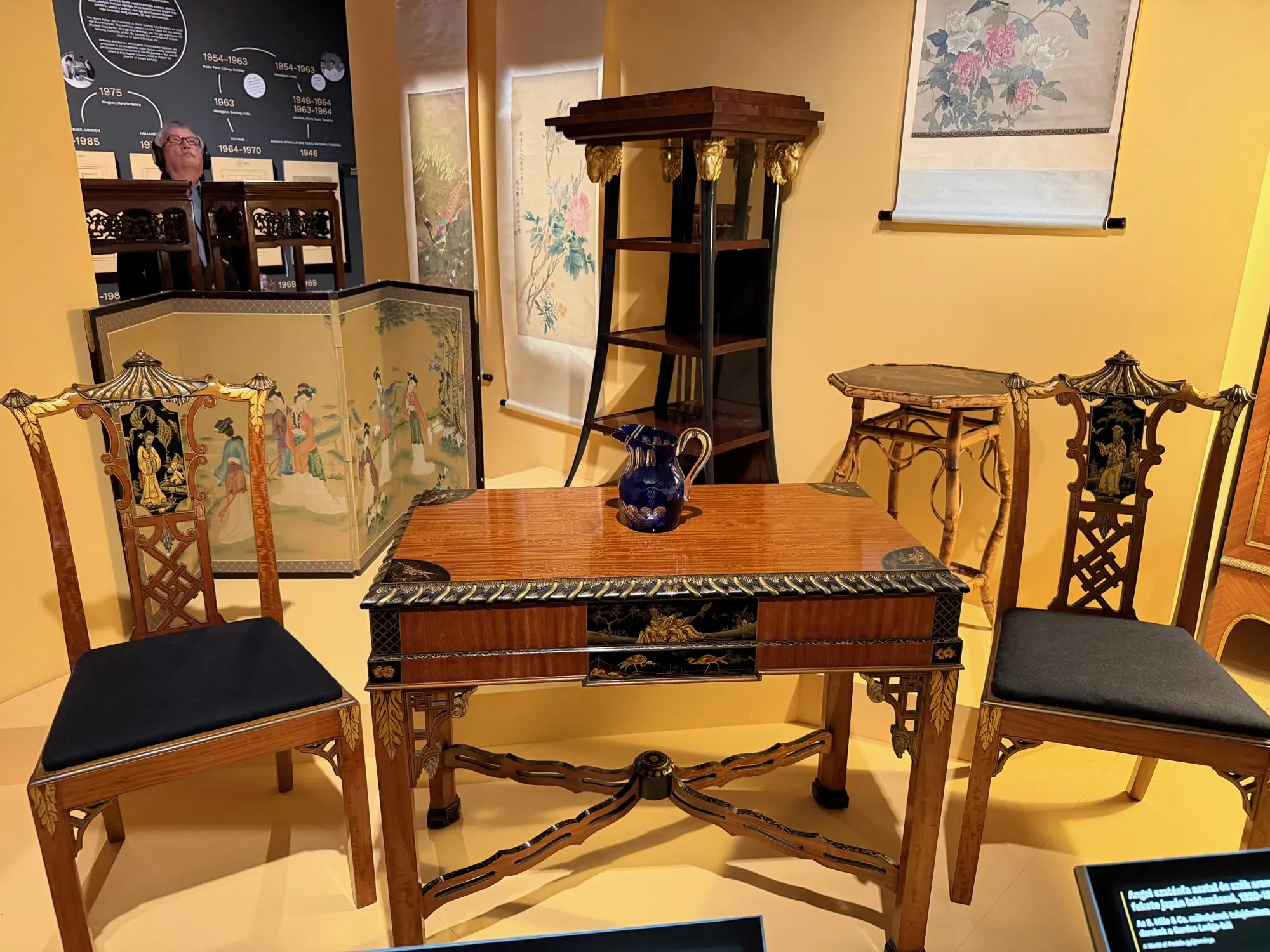
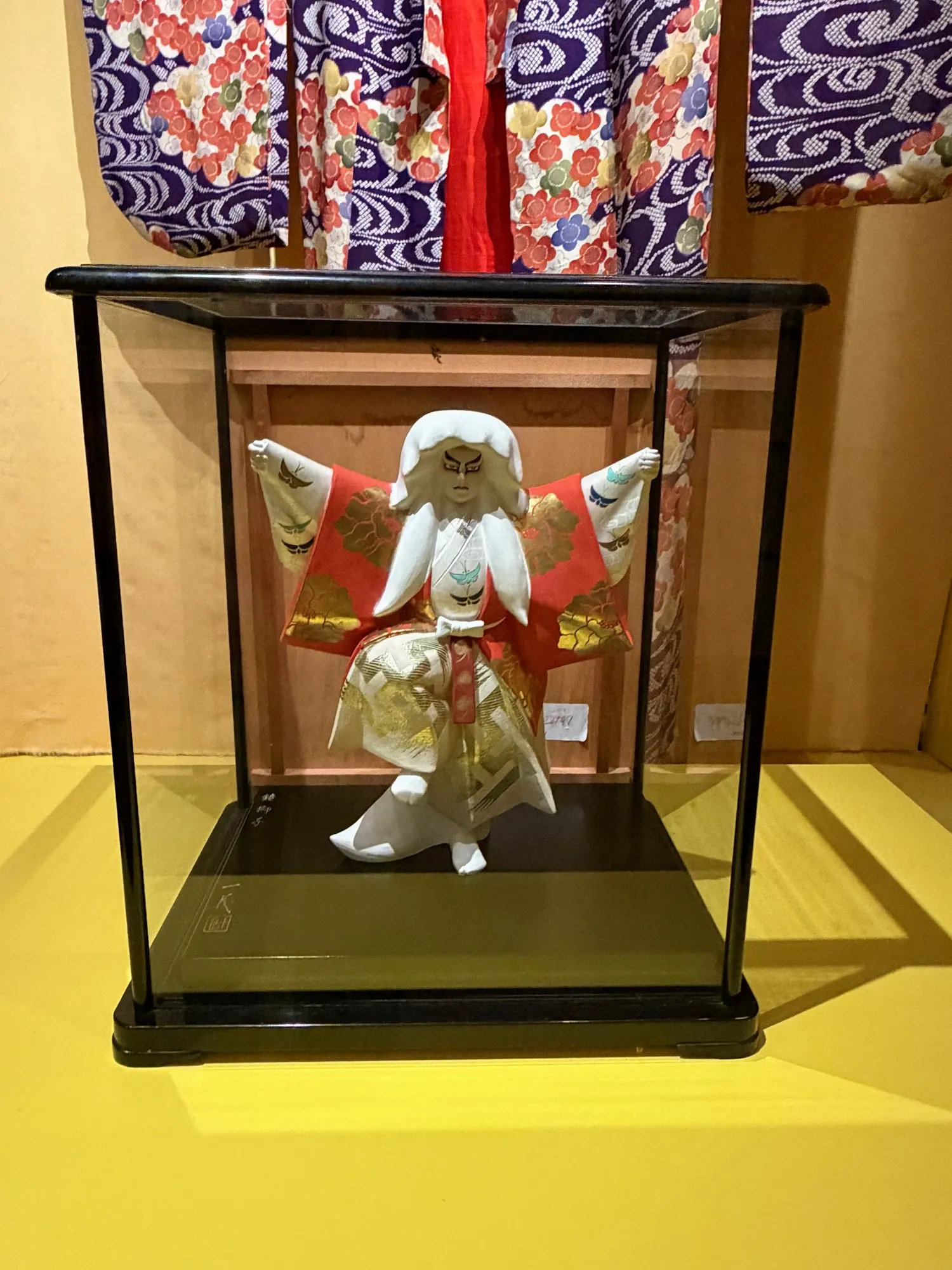
A large part of the exhibition shows Freddie offstage, at home and among his things. A room full of Japanese kimonos, porcelain and prints, because Japan was one of his great loves. Furniture, a dressing gown, cosmetics. The perfumes he wore, which you can smell. A sofa modelled on the one at Garden Lodge, with a visualisation of a magnolia in bloom outside the window.
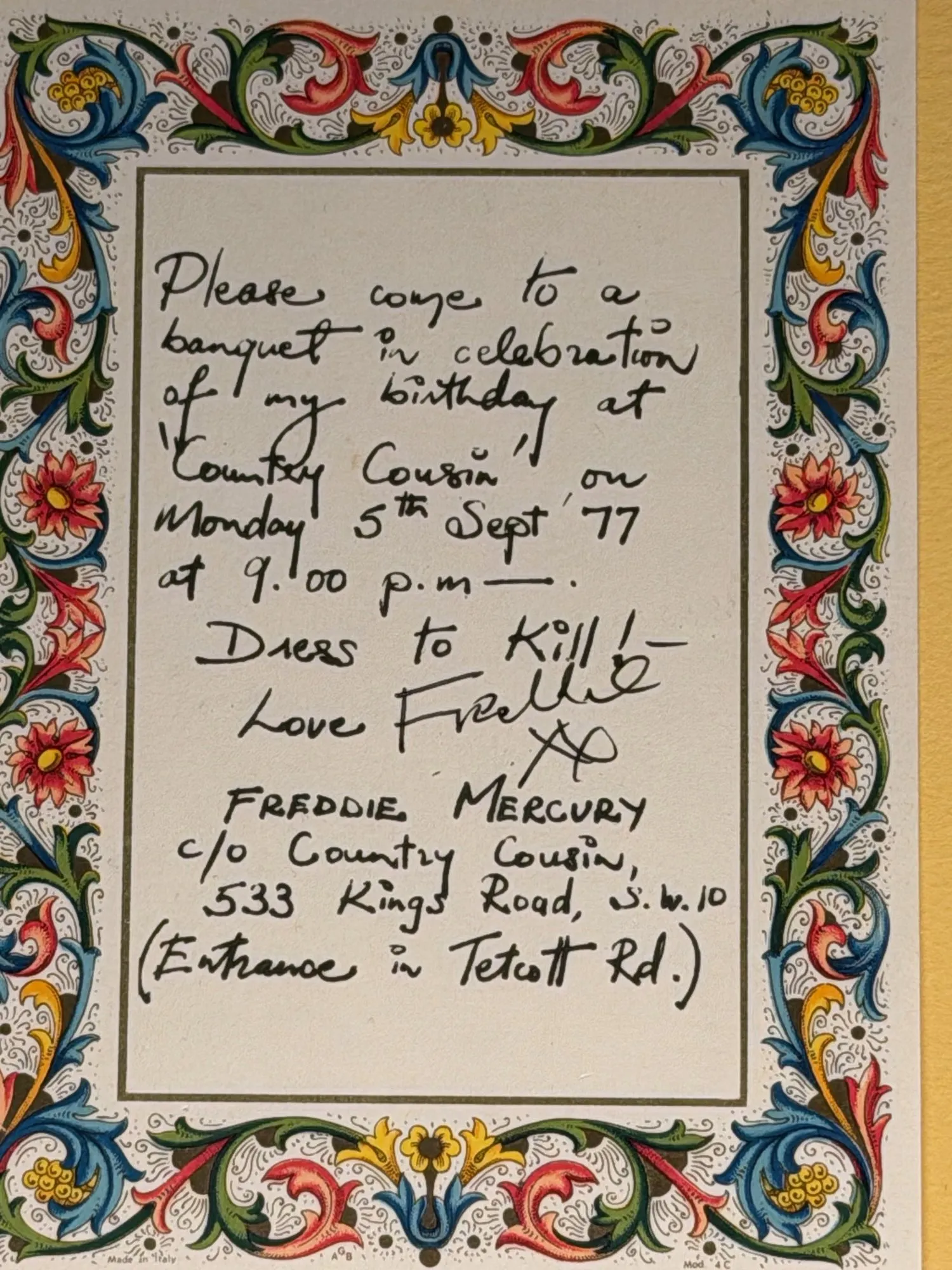
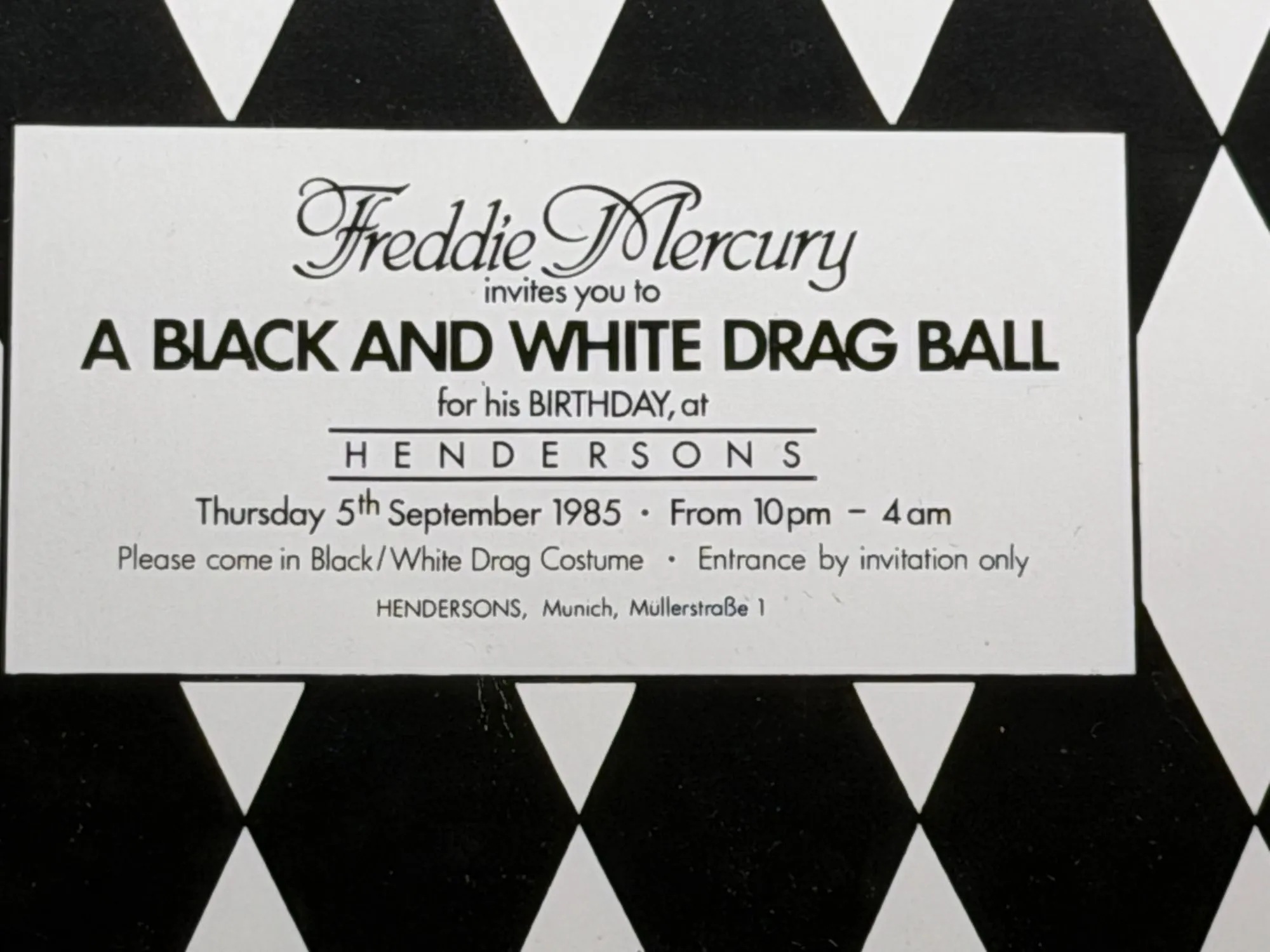
There is also a handwritten invitation to a birthday banquet on 5 September 1977 at the Country Cousin restaurant on King’s Road, with the note “Dress to Kill!” and signed “Love Freddie”.
After the evening with Peter, one display drew me in especially. It holds a postcard Freddie sent from Montreux to “Phoebe”. He asks how Peter is coping with the empty house and worries about his cats. According to the label, he sent it less than nine months before he died. The postcard comes from Peter’s private collection.
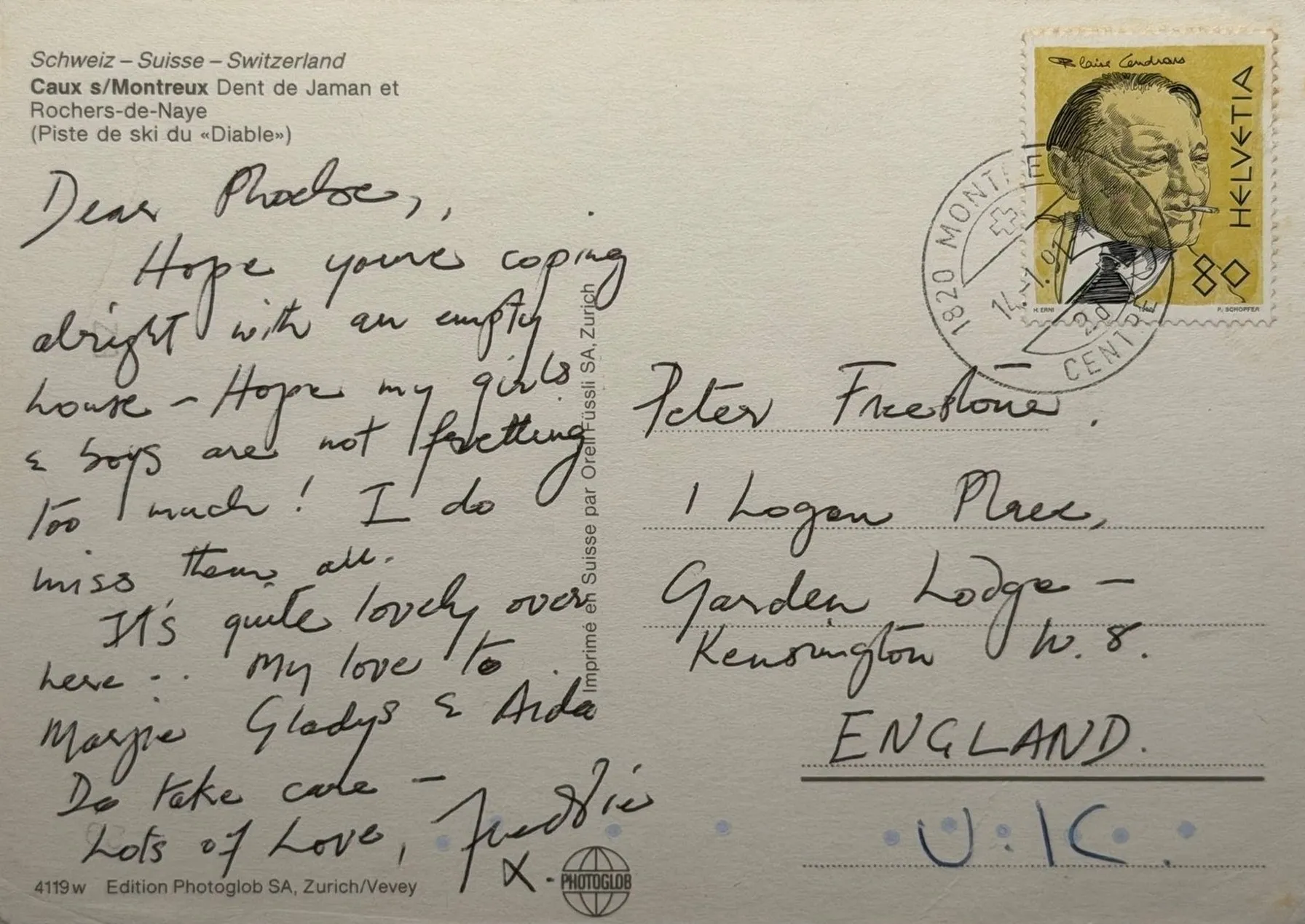
Dear Phoebe, Hope you’re coping alright with an empty house - Hope my girls & boys are not fretting too much! I do miss them all. It’s quite lovely over here. My love to Margie, Gladys & Aida. Do take care - Lots of Love, Freddie X
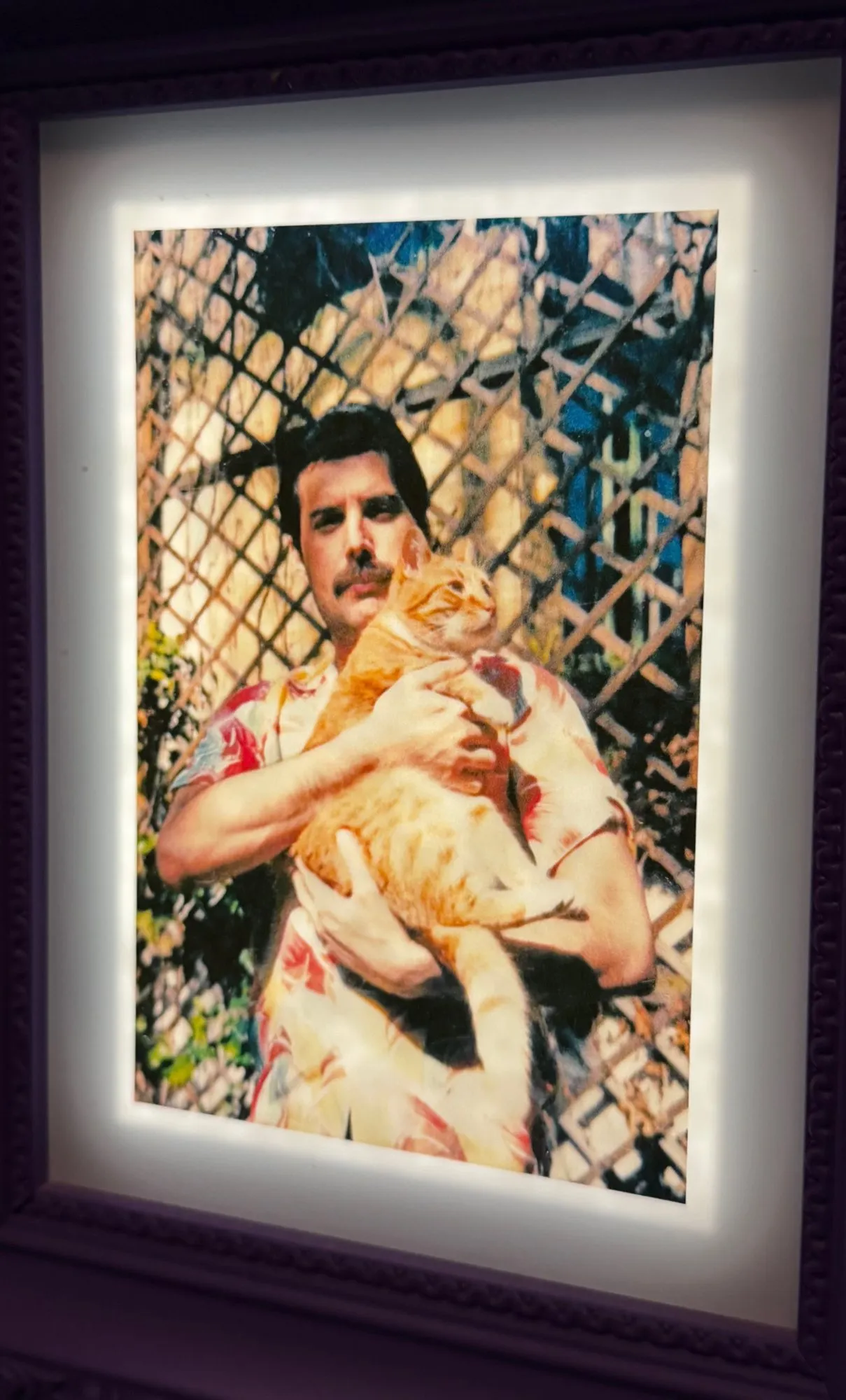
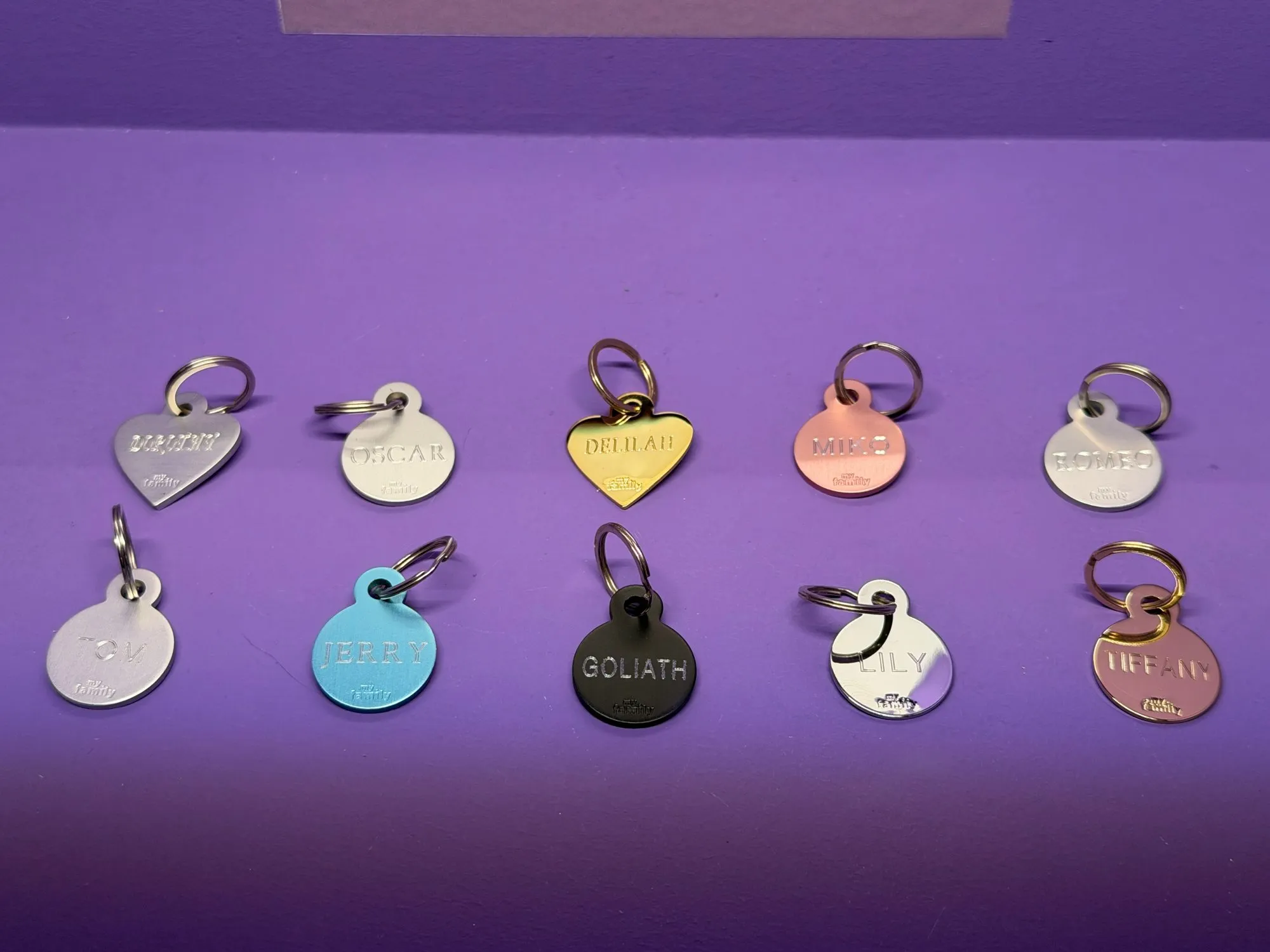
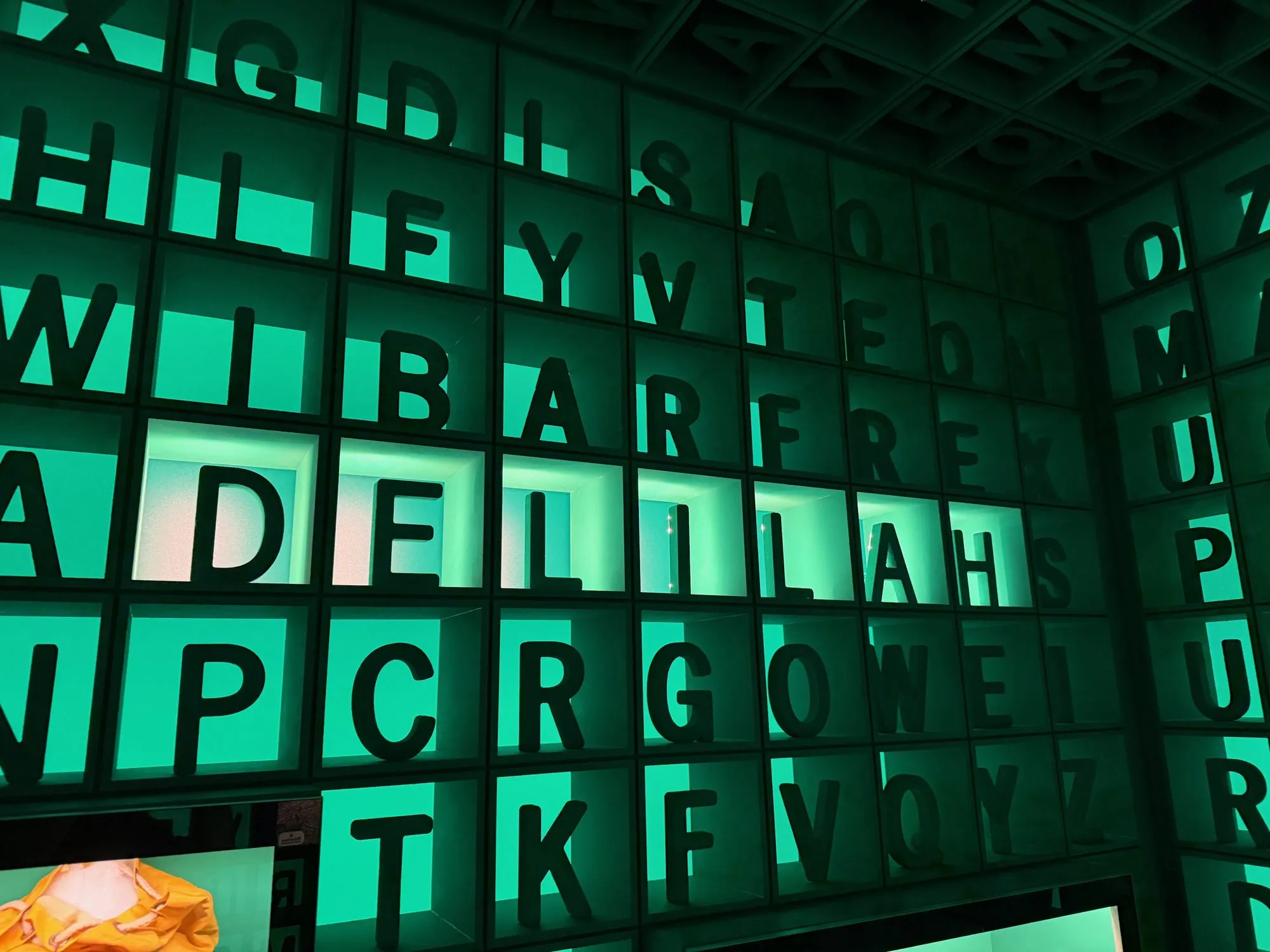
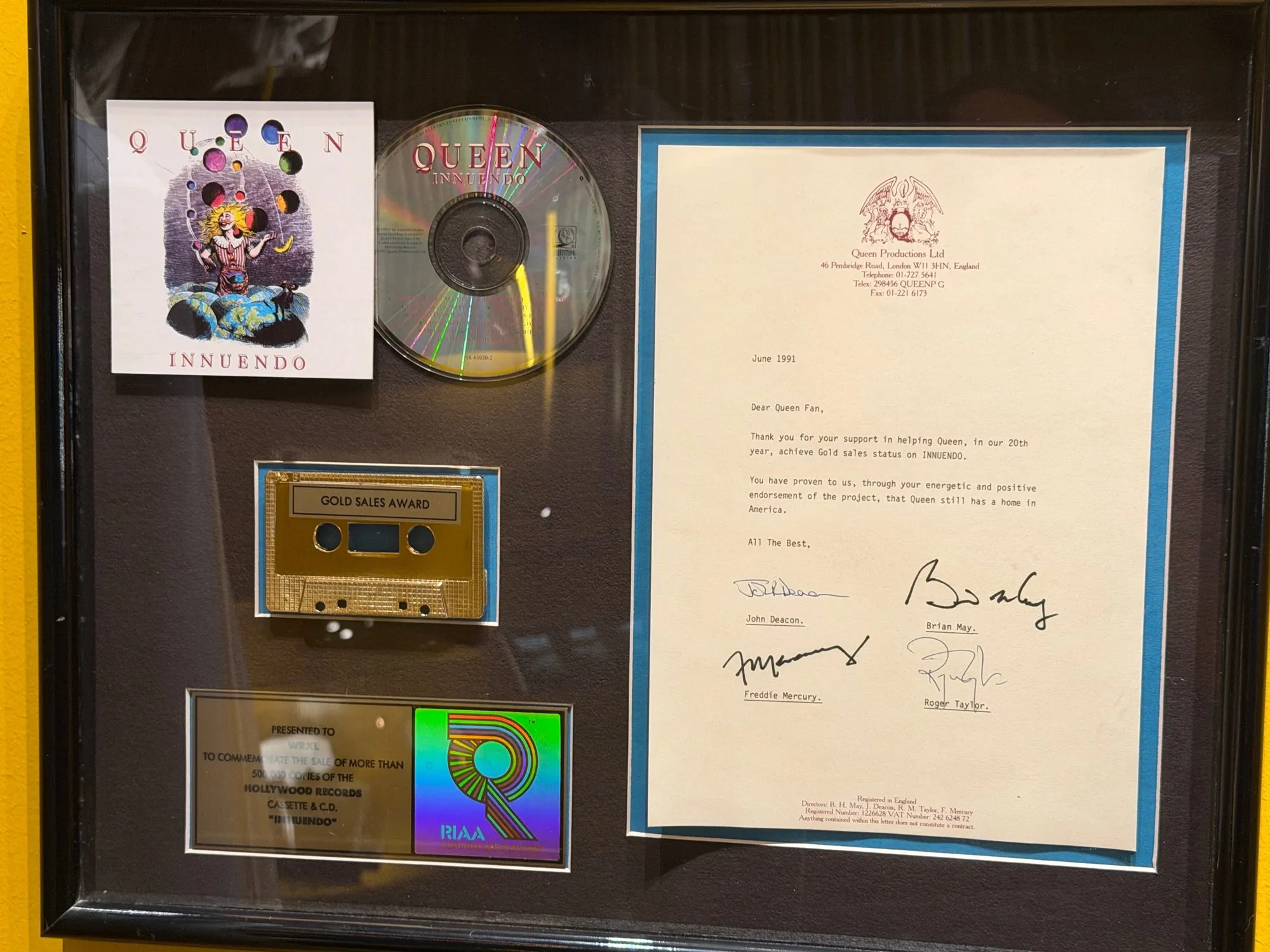
The cats got their own place at the exhibition, and rightly so. Freddie treated them as family, phoned them from tour, and dedicated a song on “Innuendo” to one of them, Delilah.
Barcelona and an evening with Mike Moran
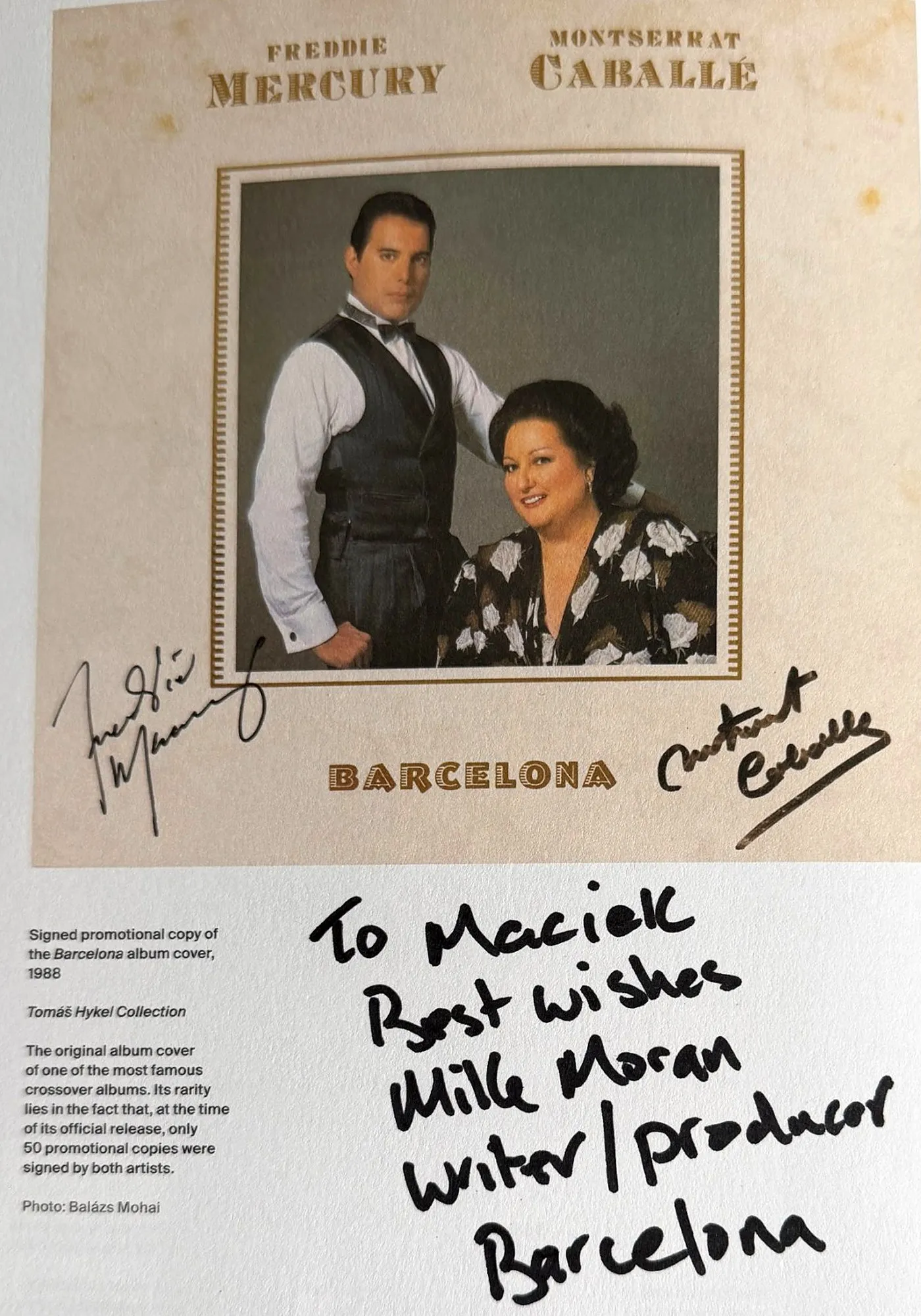
“Barcelona” has its own display: the album signed by Freddie and Montserrat Caballé, plus a pass and a ticket from the concerts. They recorded it from 1987 to mid-1988, and Mike Moran was co-writer, producer and pianist. The title song became the anthem of the 1992 Barcelona Olympics. Freddie didn’t live to see them.
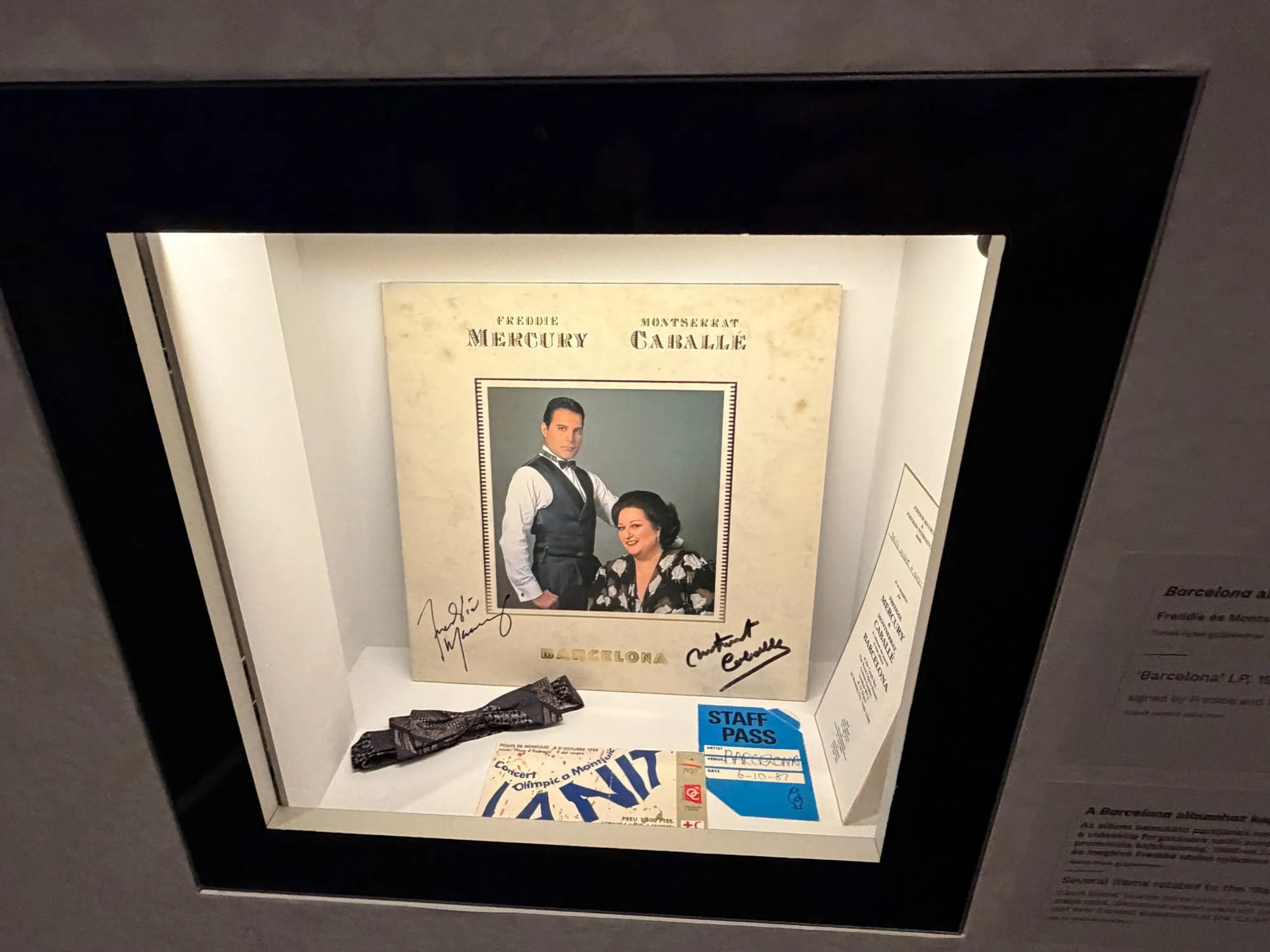
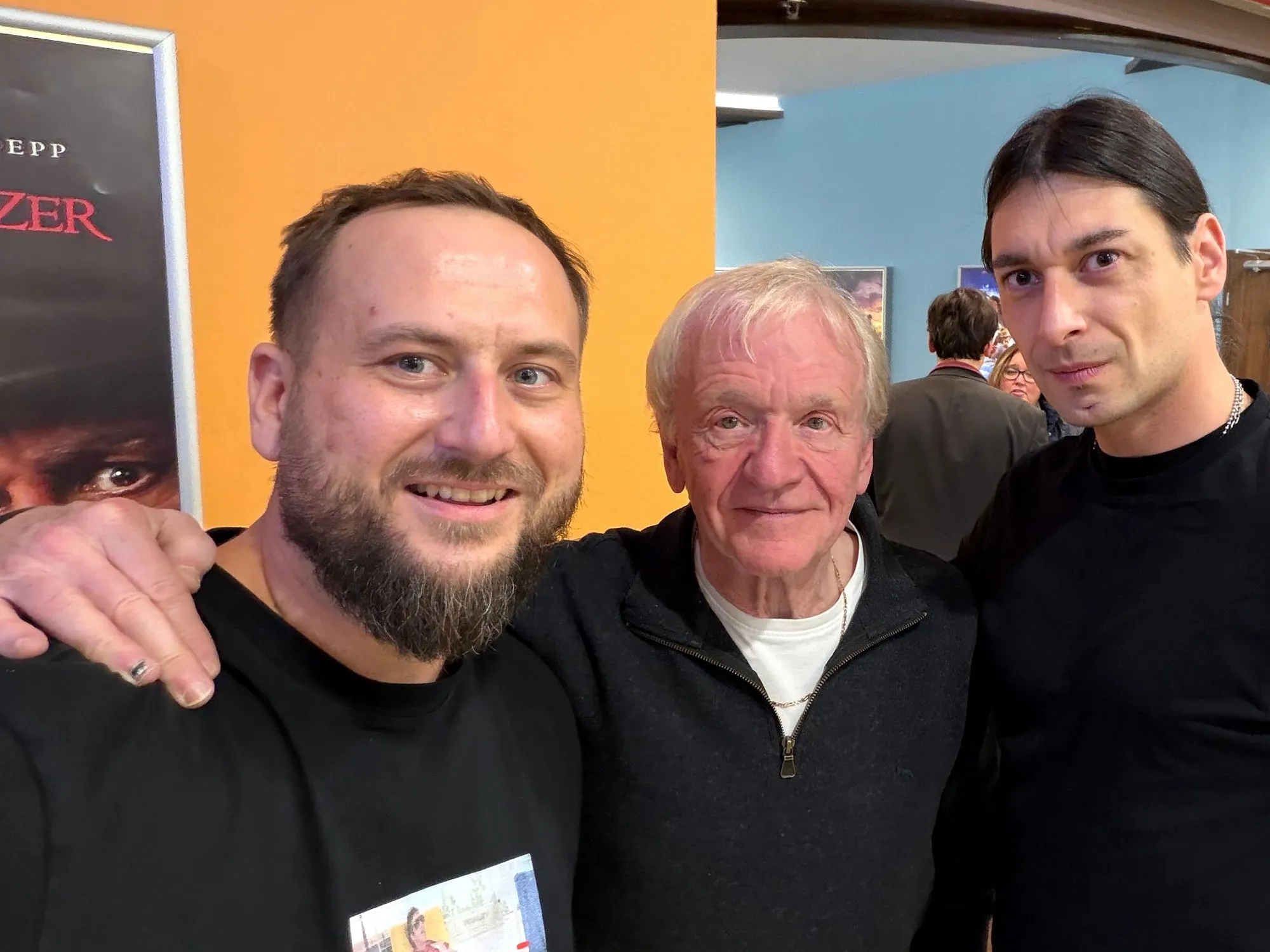
That same evening I got to hear about the album from the source. At the Spielberg cinema, Mike Moran talked about working with Freddie and accompanied opera singers Nóra Duczy and Mátyás Balázs on piano. The album in a display case in the morning, the man who co-created it, live, in the evening. After the concert Mike signed the book published for the Budapest exhibition for me, right on the page with the “Barcelona” cover. I couldn’t have imagined a better end to the day.
1991: the final months
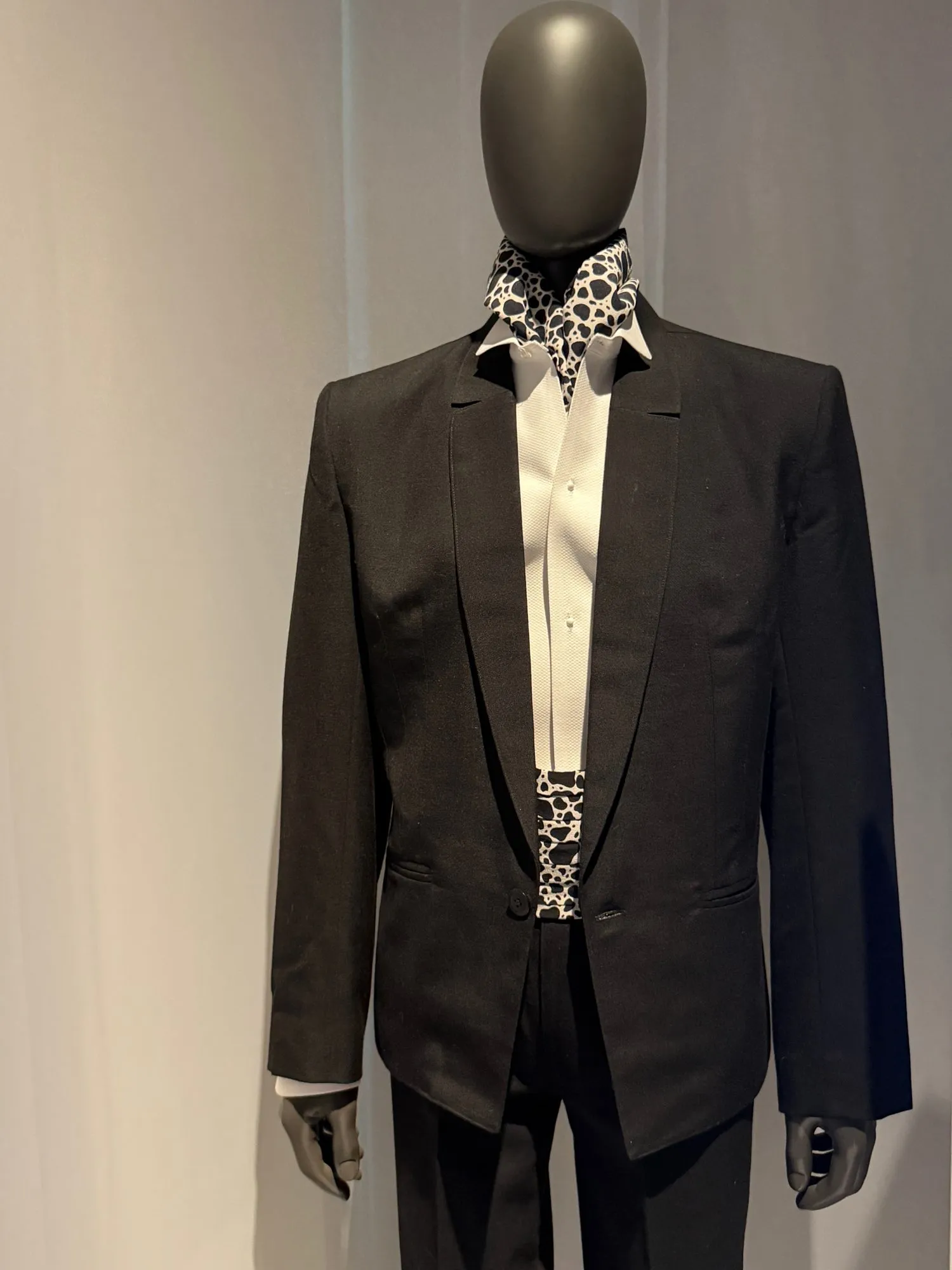
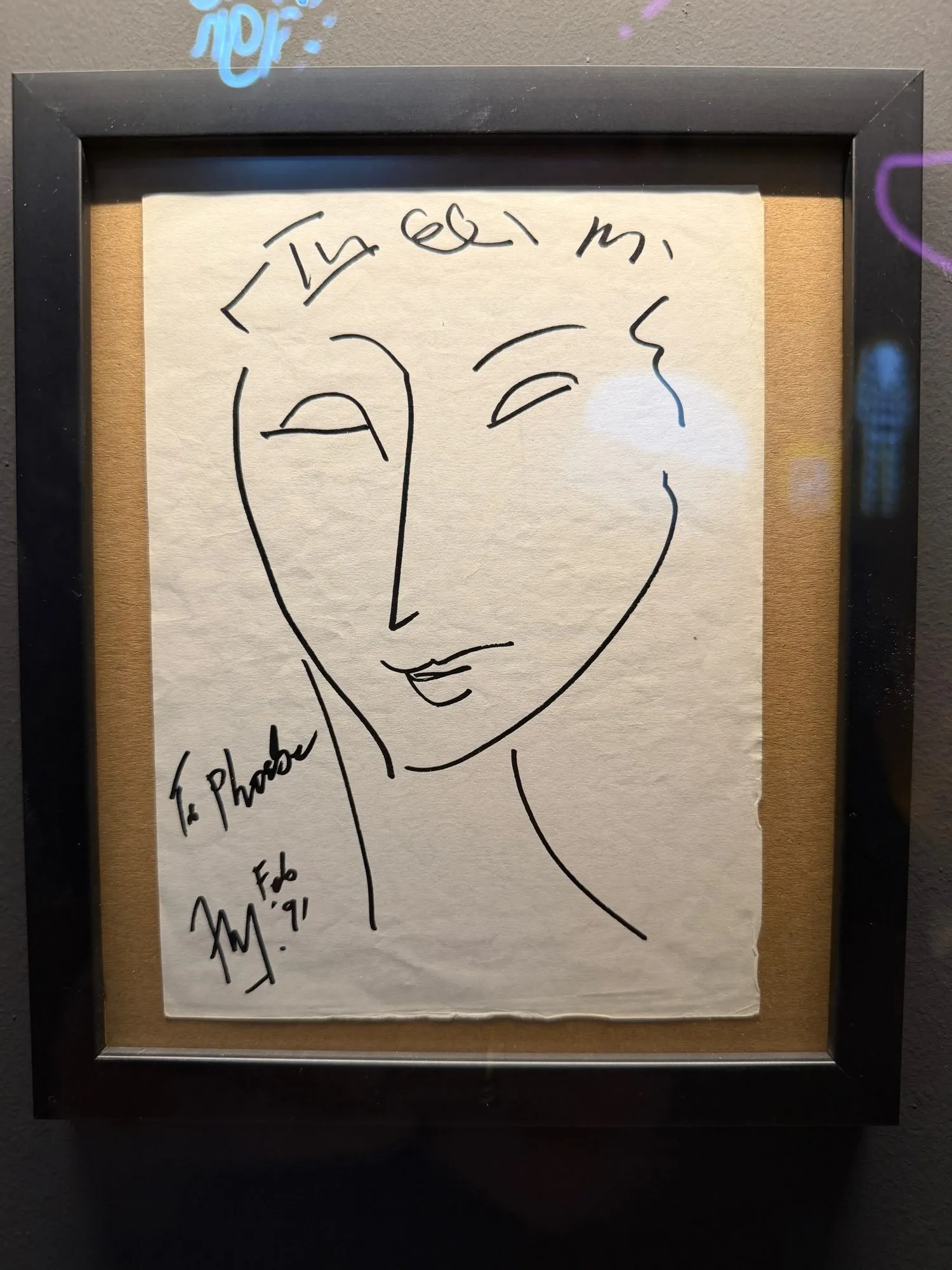
The quietest part is the one about the final years. “Innuendo” came out in February 1991, and Freddie, already very ill, shot the video for “I’m Going Slightly Mad”. The complete outfit from that clip is here: suit, black and white silk scarf and cummerbund by Diana Moseley, plus long pointed shoes. From the same month comes a drawing Freddie dedicated to Peter: a few confident lines and the note “To Phoebe, Feb ‘91”.
The Montreux section is called “Stillness”. Queen bought Mountain Studios there in 1979, and towards the end of his life Freddie rented a house on Lake Geneva, Duck House. His words are quoted there: “If you want peace of mind, come to Montreux”. That’s where his last vocal recordings were made, released in 1995 on “Made in Heaven”. Freddie died on 24 November 1991 at Garden Lodge.
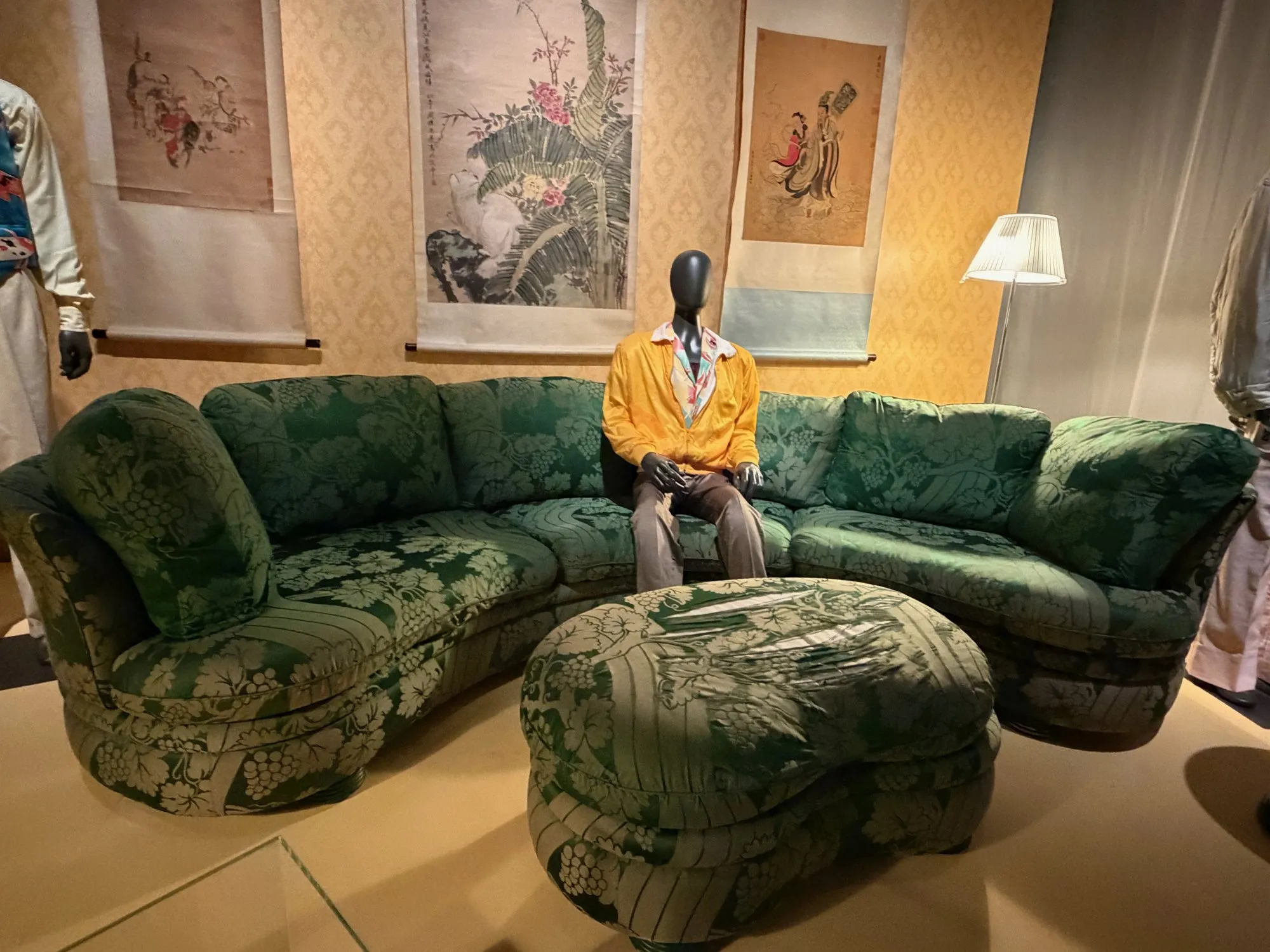
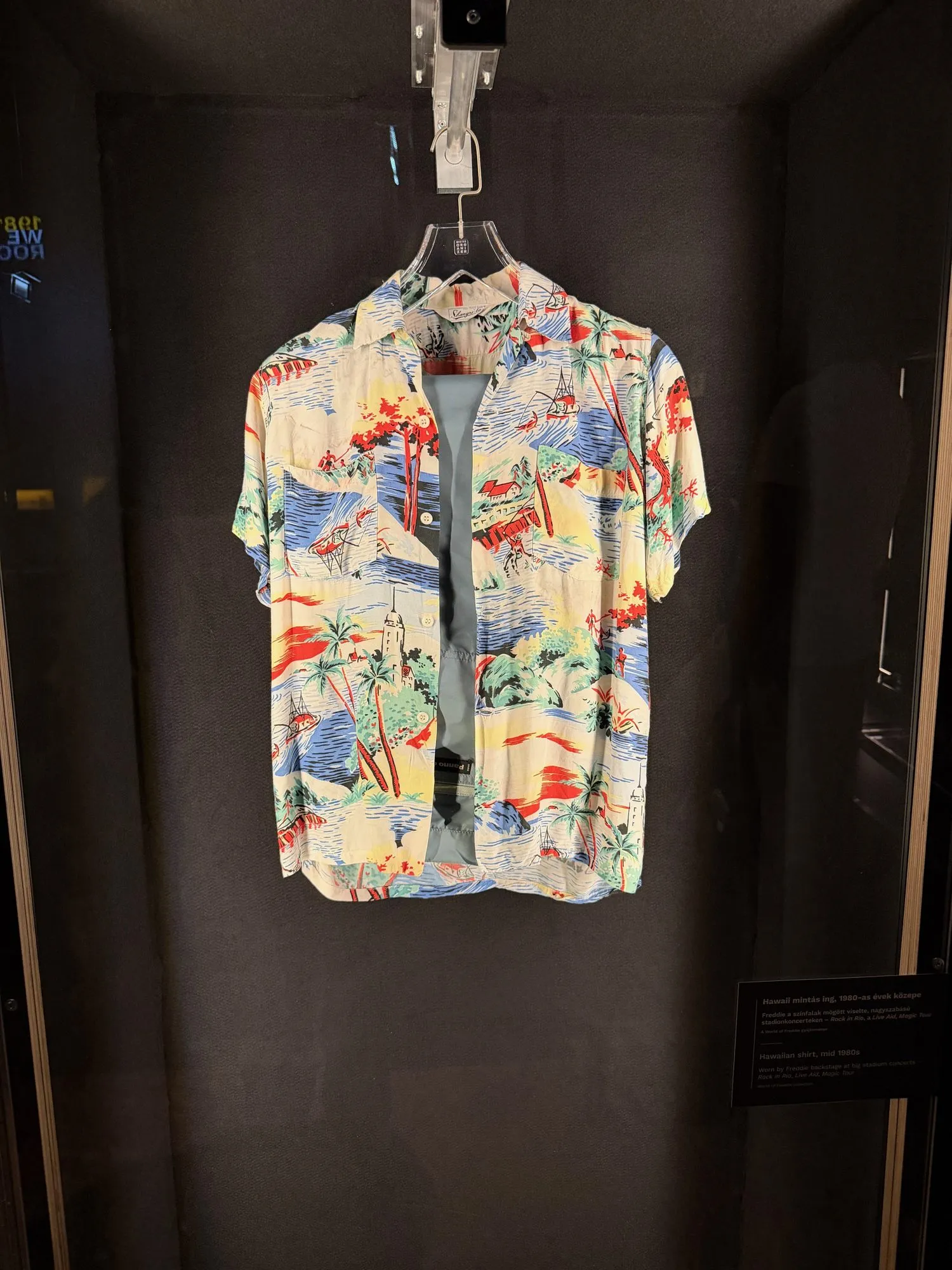
Montreux is also the source of one of the most interesting exhibits of the whole show: a large green sofa in a vine leaf pattern, with a pouffe and side tables. It isn’t a reconstruction: according to the label, the sofa and tables come from Freddie’s flat in Montreux, from around 1990, and now belong to Lucien Müller’s collection. On the sofa sits a mannequin in clothes Freddie wore off stage: a yellow nylon bomber jacket and a Hawaiian shirt.
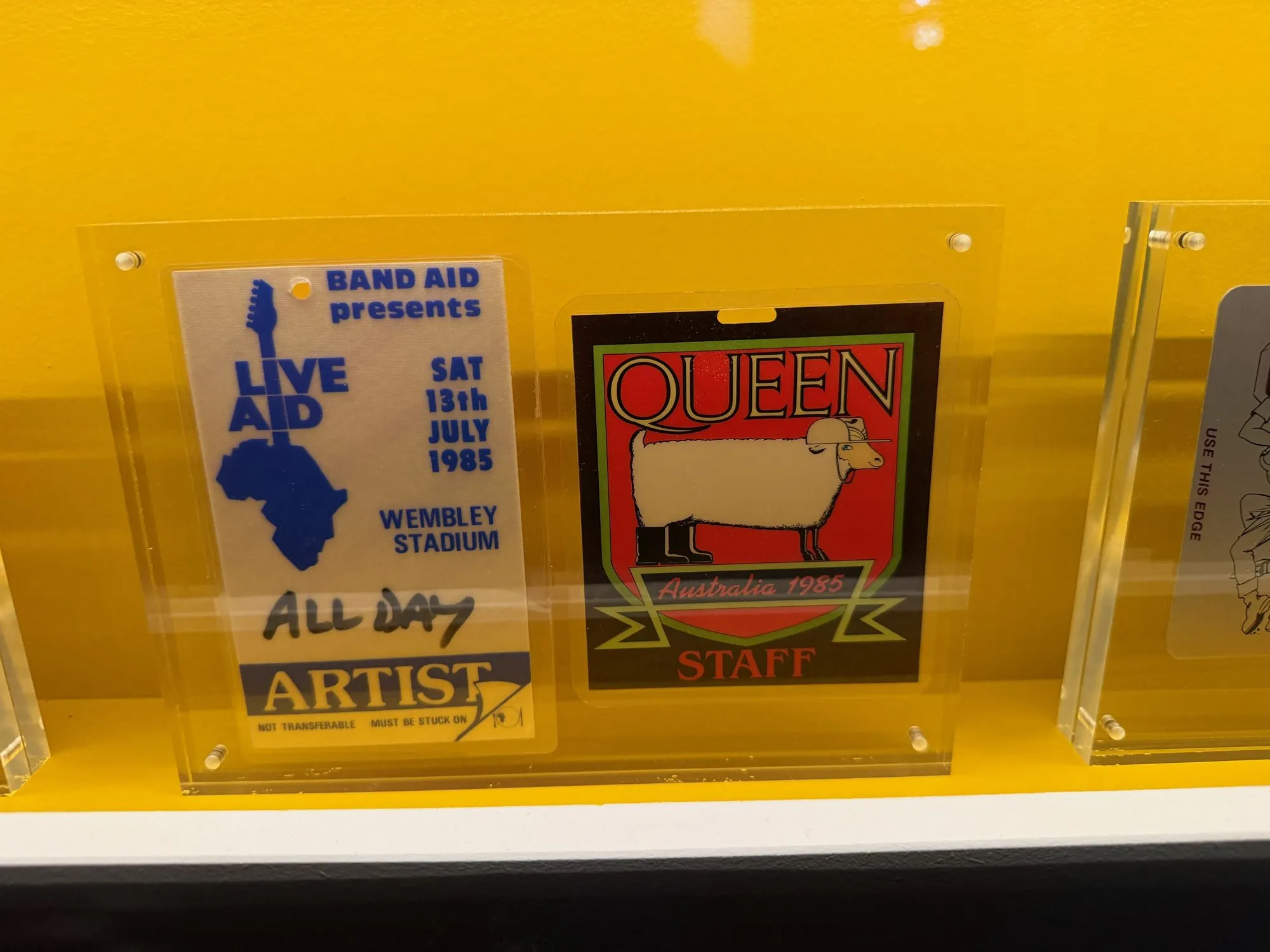
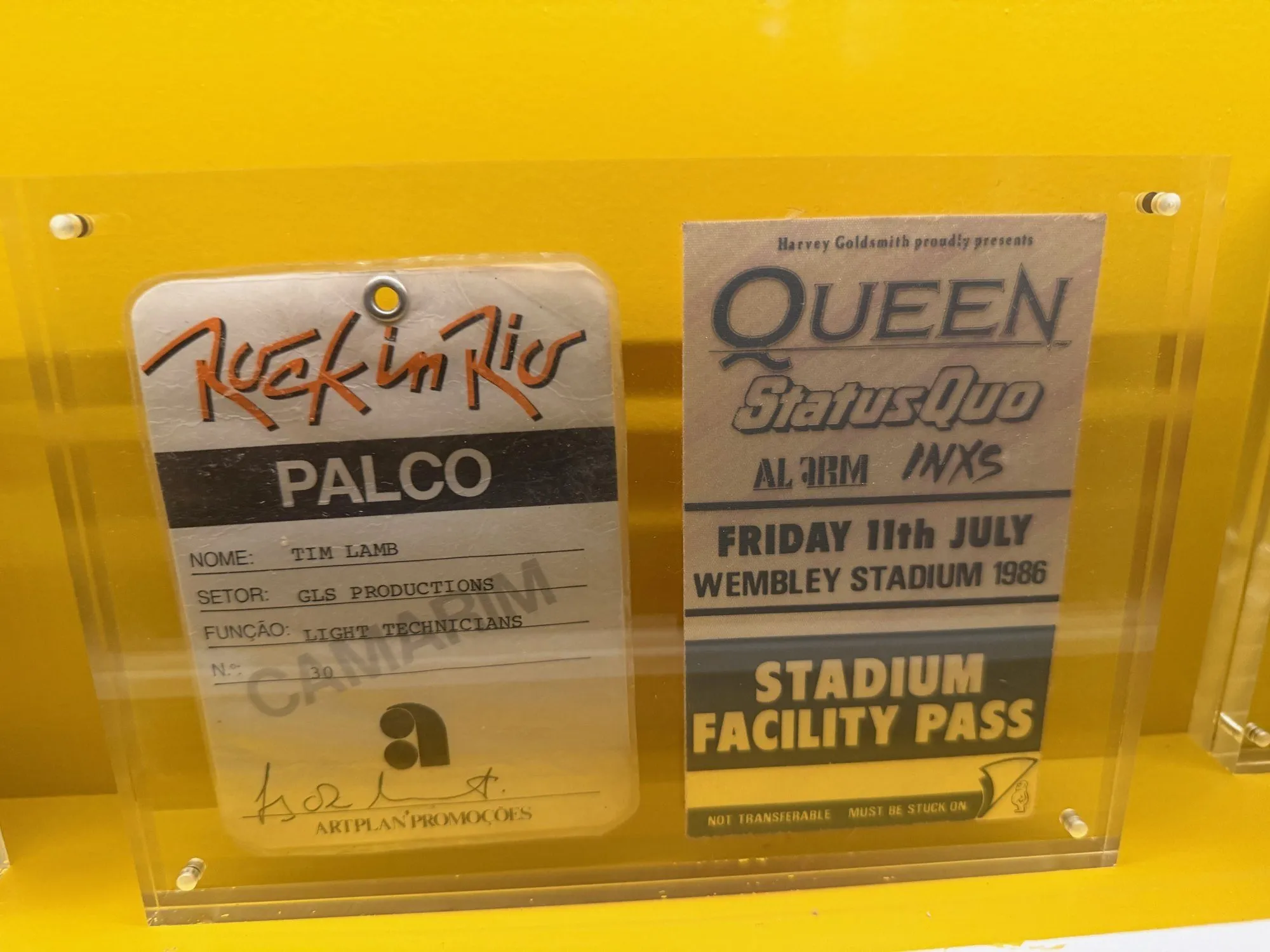
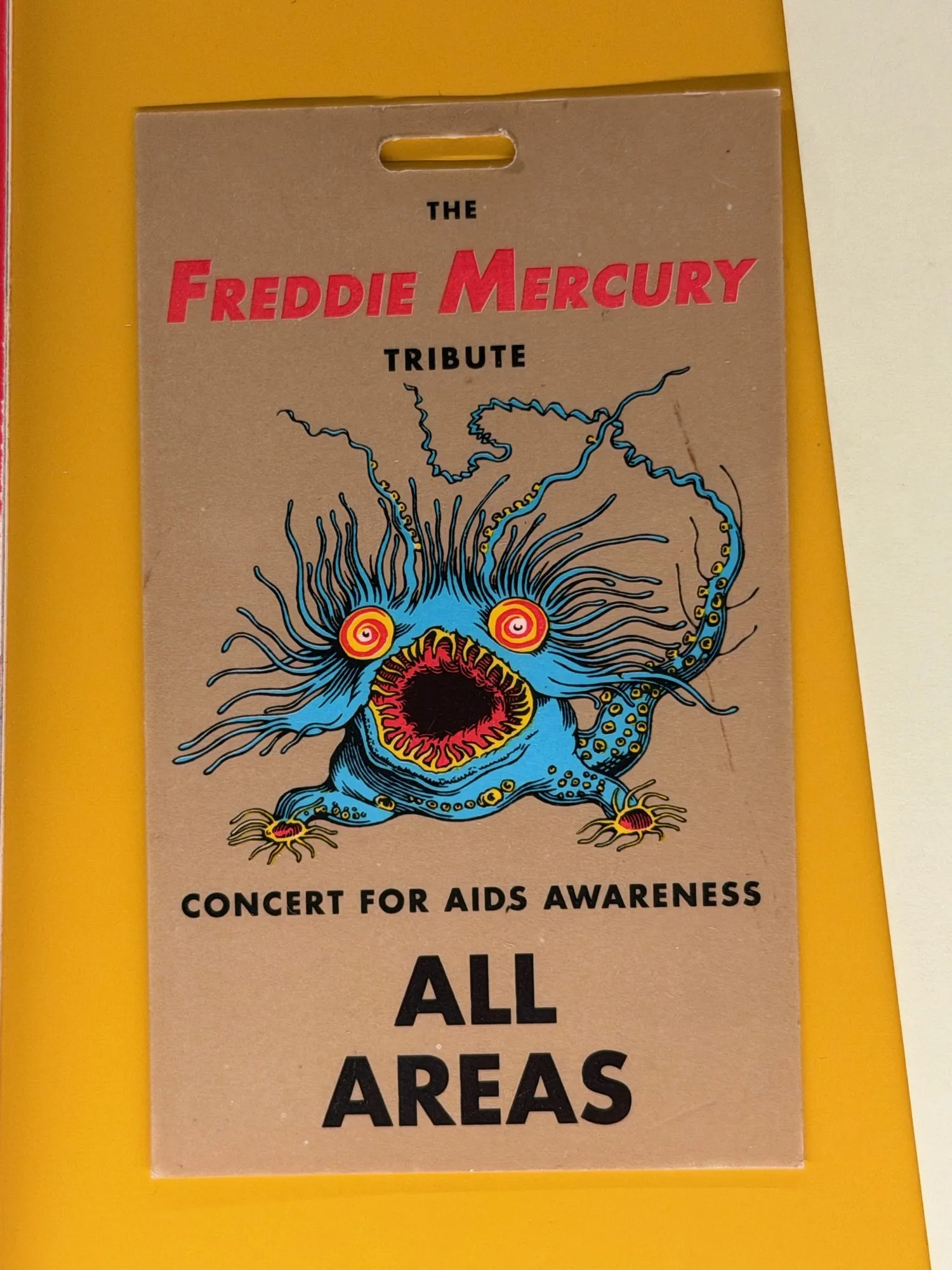
The exhibition doesn’t end with that date, though. Among the exhibits are passes and programmes from The Freddie Mercury Tribute Concert for AIDS Awareness, held at Wembley on 20 April 1992, which gave rise to the Mercury Phoenix Trust.
More photos from the exhibition
55 photos · click to see up close
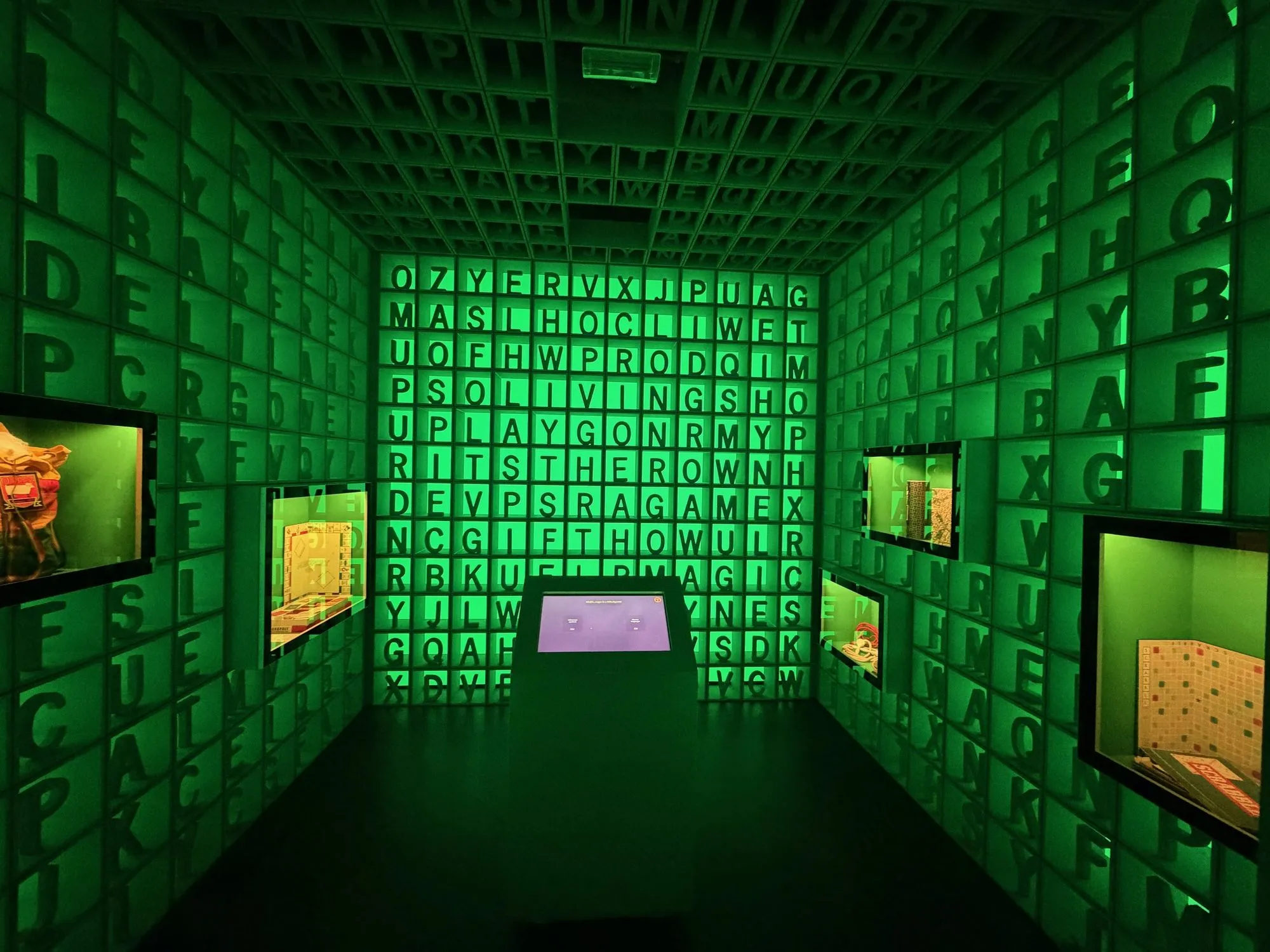
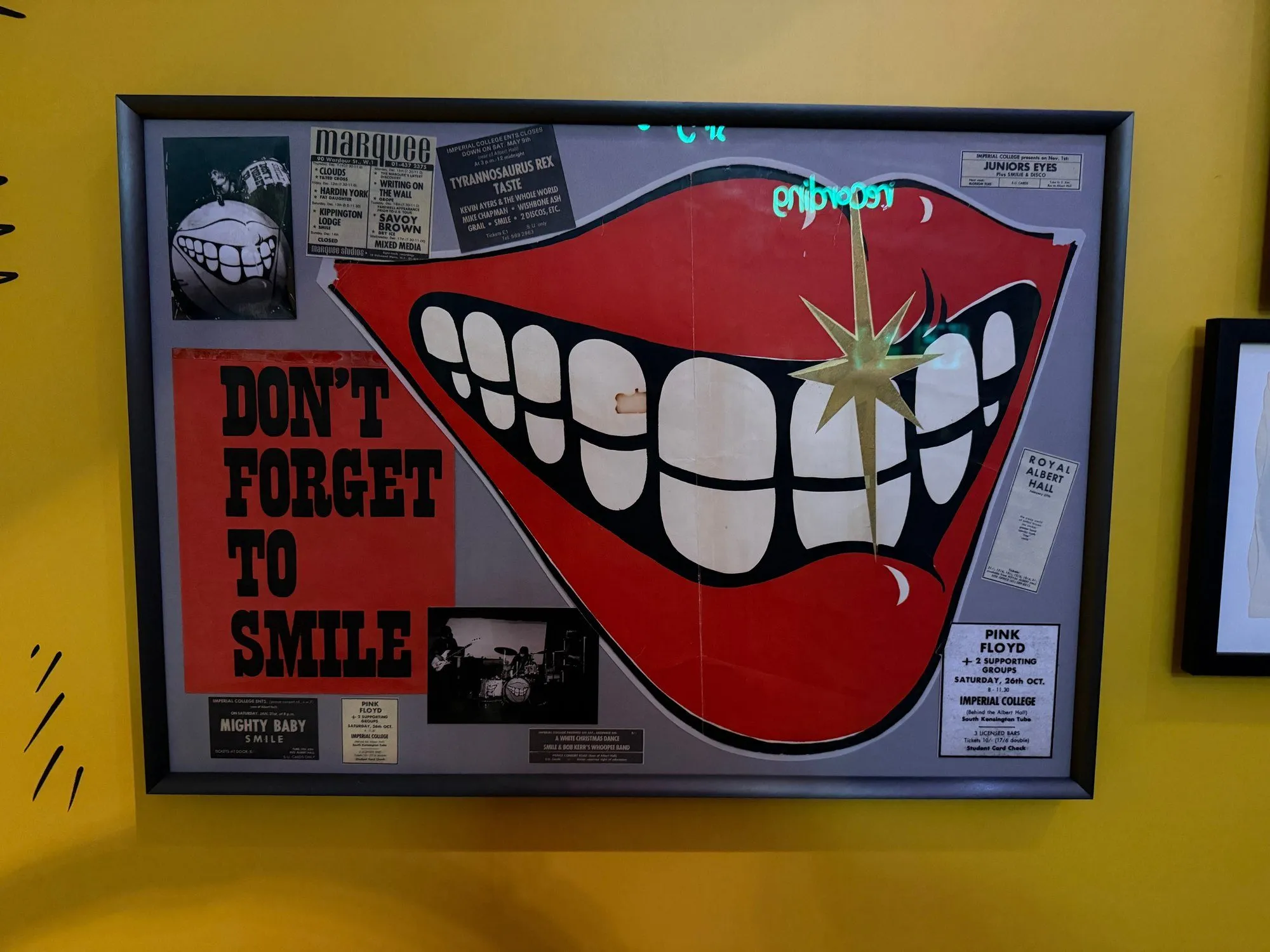
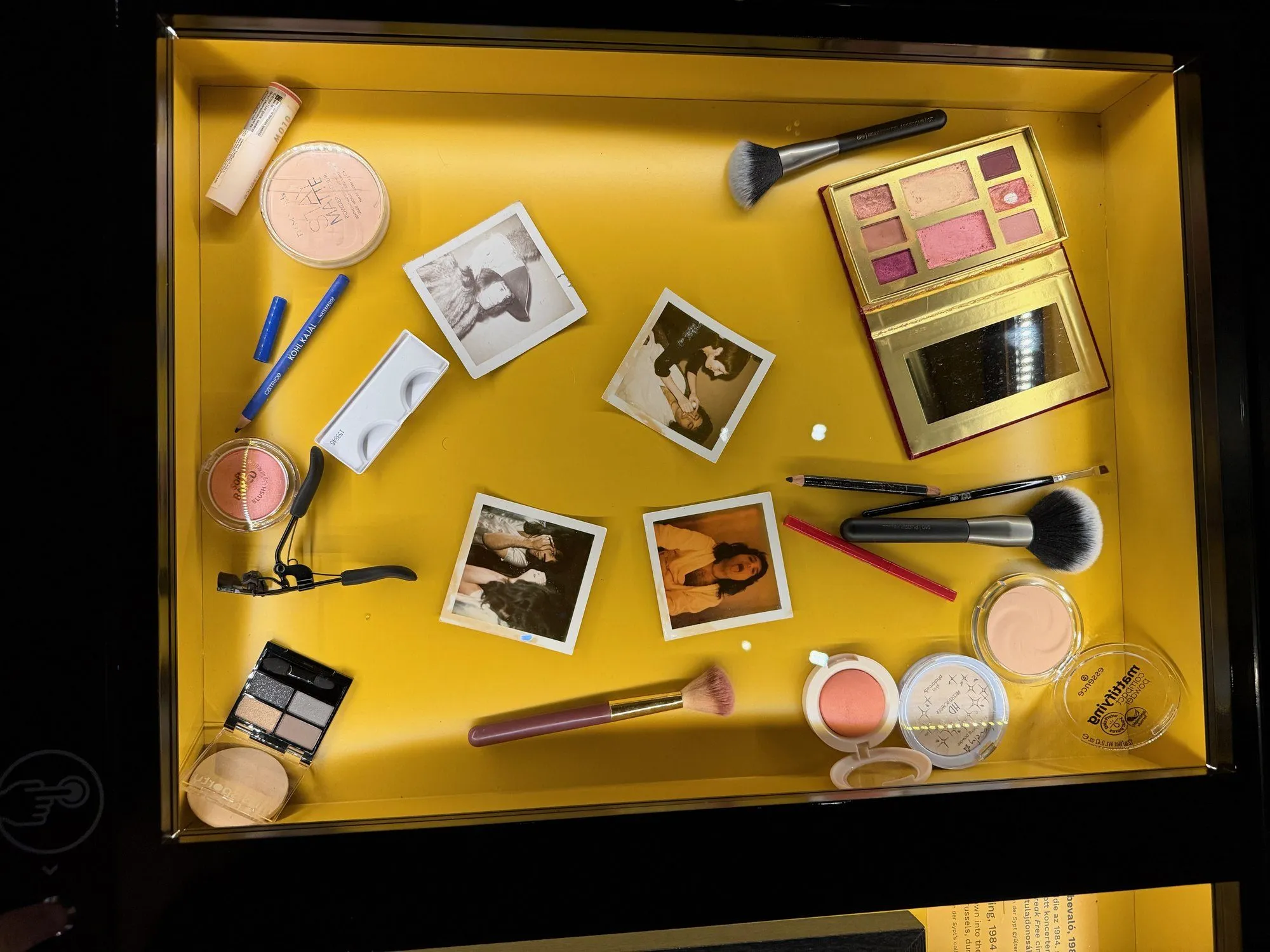
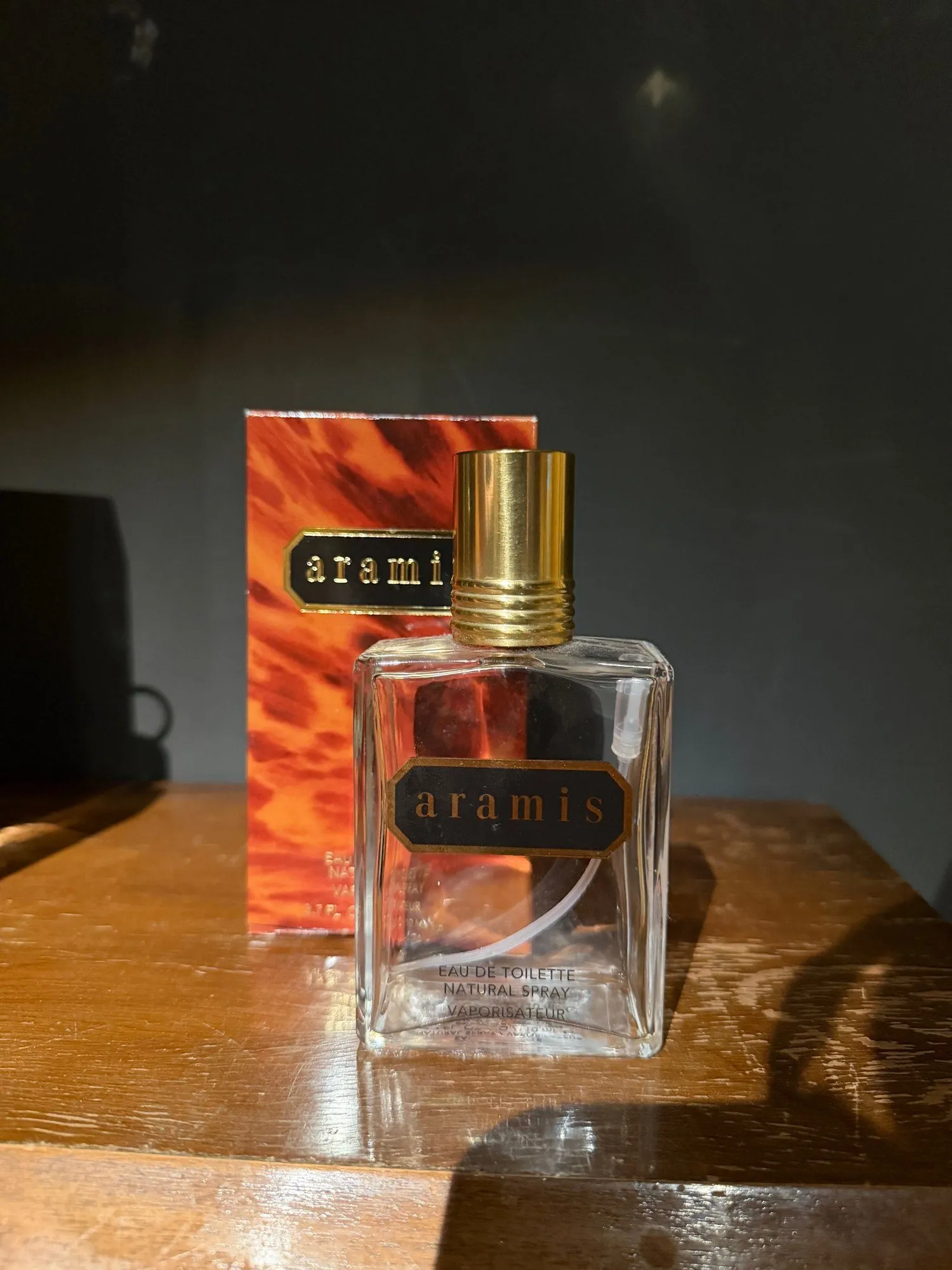
Is it worth the trip?
Yes, especially if you already know Queen’s concerts and albums by heart and want to get to know Freddie up close: his costumes, manuscripts, letters and little things from home. The exhibition works best with Peter’s audio guide, so don’t rush it. It’s easy to stay at each display longer than you planned. For the record: this is an exhibition by World of Freddie and the House of Music, made without the involvement of Freddie’s estate or the record label.
Practical info:
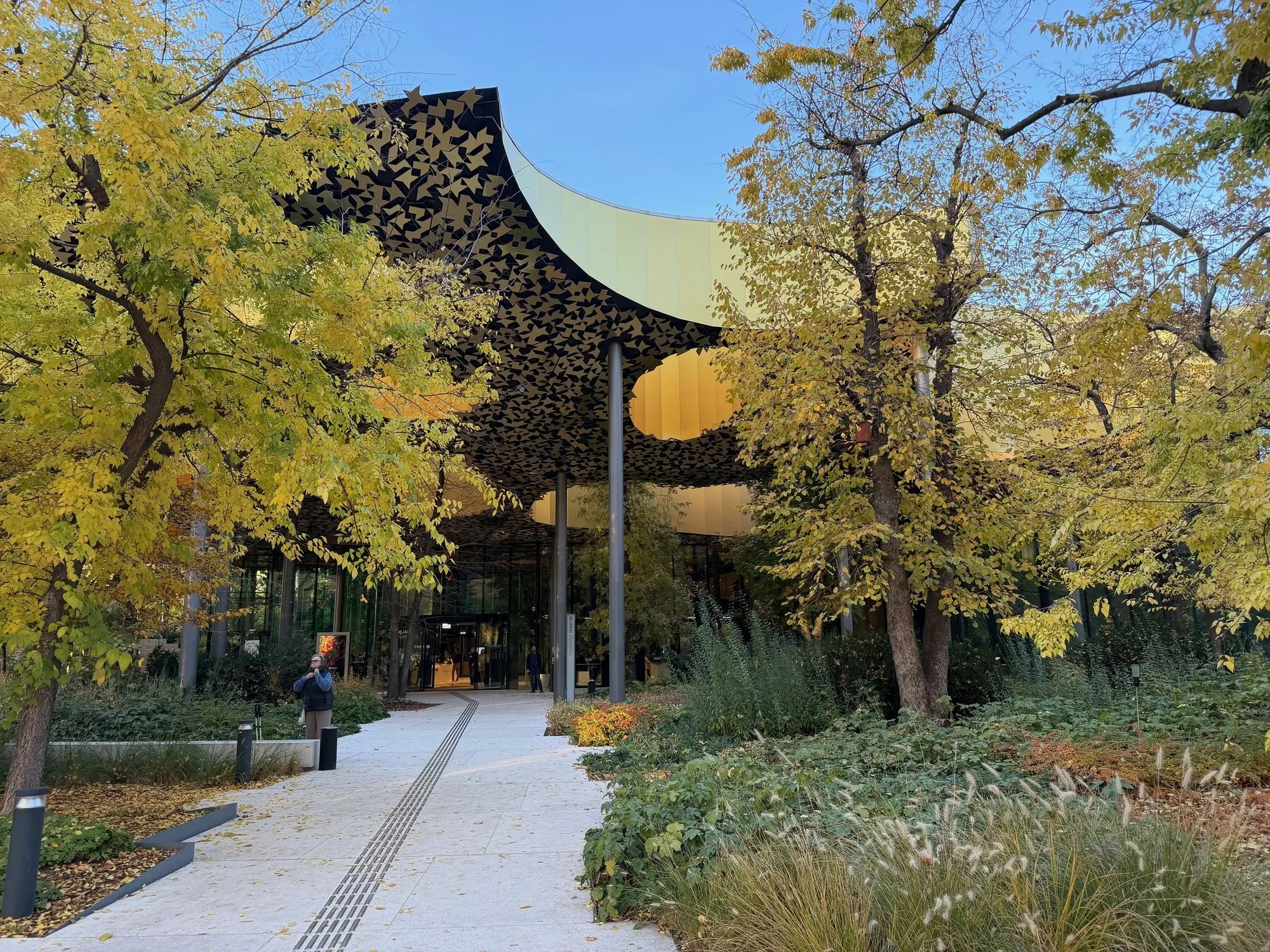
- Where: House of Music Hungary (Magyar Zene Háza) in City Park (Városliget), Budapest
- Until: 28 February 2027
- Tickets: adult 8,900 HUF (about €25) on weekdays and 10,900 HUF (about €30) at weekends, students and seniors 6,300 / 8,500 HUF (about €17 / €23); timed entry every 15 minutes, best booked online
- Time: the organisers say about two hours; it took Tomek and me about three and a half
- Opening hours: closed on Mondays, Tuesday-Thursday and Sunday 10:00-18:30, Friday and Saturday 10:00-20:30 (last entry two hours before closing)
- On site: headphones are handed out at the entrance (audio guide in English or Hungarian), the cloakroom is free and compulsory, bags and backpacks stay there
- Who for: the organisers don’t recommend it for children under 6
Frequently asked questions
Where is Freddie - The Exhibition held?
At the House of Music Hungary (Magyar Zene Háza) in City Park (Városliget), Budapest. The nearest stops are on the yellow M1 metro line: Hősök tere or Széchenyi fürdő.
How long is the exhibition open?
The exhibition is open until 28 February 2027.
How much are tickets?
An adult ticket costs 8,900 HUF (about €25) on weekdays and 10,900 HUF (about €30) at weekends. Students and seniors pay 6,300 HUF (about €17) on weekdays and 8,500 HUF (about €23) at weekends. Euro amounts are approximate, at November 2026 exchange rates. Entry is timed, every 15 minutes, so it is best to book online.
How long does a visit take?
The organisers say about two hours. It took us about three and a half, because at many displays you want to stay longer and listen to the audio guide to the end.
What are the opening hours?
Closed on Mondays. Tuesday to Thursday and Sunday 10:00-18:30, Friday and Saturday 10:00-20:30. Last entry is two hours before closing.
Is there an audio guide in English?
Yes. The audio guide, narrated by Peter Freestone, is available in English or Hungarian. Headphones are handed out at the entrance.
Can I bring children?
The organisers do not recommend the exhibition for children under 6.
Is this an official Queen exhibition?
No. It was put together by the House of Music Hungary and the World of Freddie collection, without the involvement of Freddie’s estate, Mercury Songs Ltd. or the record label. The exhibits come from private collections, including those of Tomáš Hykel, Luigi Esposito and Peter Freestone.